The Supreme Court's Central Empowered Committee (CEC) has given a conditional green signal for the removal of 2,777 trees within the protected Taj Trapezium Zone (TTZ). This step is crucial for the widening and strengthening of the vital Kosi–Mathura corridor and the Mathura–Raya–Yamuna Expressway link, a major infrastructure project in the Braj region.
Sharp Reduction from Initial Demand
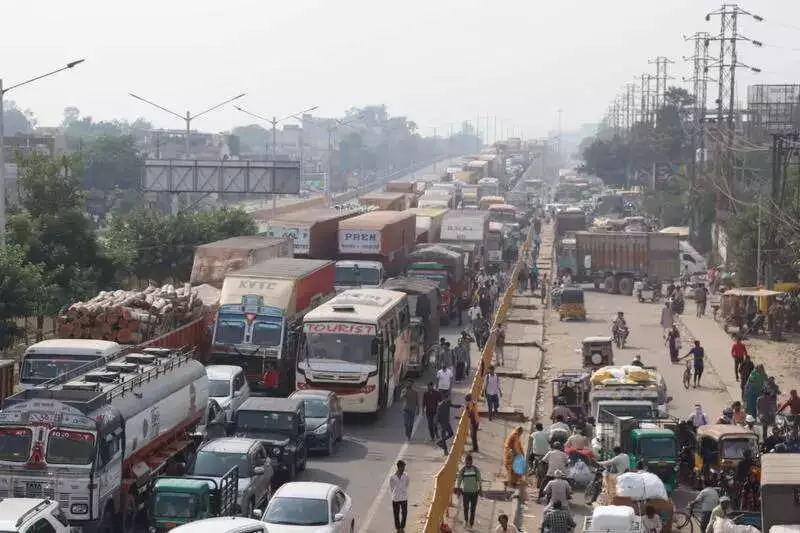
The Uttar Pradesh Public Works Department (PWD) had initially requested permission to cut down a staggering 9,563 trees. They justified this large number by citing severe traffic congestion and the annual pilgrimage of 6 to 7 million devotees through the holy towns of Mathura, Vrindavan, and Govardhan.
However, after conducting multiple hearings and thorough field inspections, the CEC concluded that only 2,777 trees were "absolutely unavoidable" for the project's execution. This decision slashed the state's original request by over 70%, demonstrating a strong emphasis on minimizing ecological damage.

Stringent Environmental Safeguards Imposed
In its detailed 55-page report dated December 4, the CEC has recommended approval but attached rigorous ecological conditions. The key mandate is a massive compensatory plantation drive.
The committee has ordered the planting of 27,770 saplings—exactly ten times the number of trees being felled. This plantation is to be carried out at Tatrauta village in Mathura. The CEC specified strict guidelines for this green compensation:
- All saplings must be 8 to 10 feet tall at the time of planting.
- Only indigenous species like neem, peepal, arjun, and jamun are to be used.
- The 28-hectare plantation site must be properly fenced and irrigated.
- It must be protected from grazing and meticulously maintained for a period of 10 years.
Final Approval Awaits Supreme Court Nod
The CEC's report has now been forwarded to the Supreme Court for final approval. If the apex court accepts the recommendations, the road project is expected to significantly ease movement on Braj's busiest pilgrimage routes. This will be particularly beneficial during major festivals like Govardhan Parikrama, Janmashtami, and Holi.
The Taj Trapezium Zone, spanning 10,400 sq km across seven districts in Uttar Pradesh and Rajasthan, is a designated eco-sensitive area. Since a 2015 order, any tree felling within the TTZ requires explicit permission from the Supreme Court. The PWD has previously received clearance for similar projects, including the removal of 318 trees for the Mathura-Vrindavan road in 2022 and 1,032 trees for the Yamuna Expressway-Vrindavan link, with the CEC noting satisfactory compliance.
Reacting to the development, Agra-based environmentalist Dr. Sharad Gupta stated, "The CEC has made its recommendations. Now the ball is in the Supreme Court's court, which must also carefully consider the imposed conditions. The TTZ is an eco-sensitive zone—its green cover acts as the lungs for the entire region."