

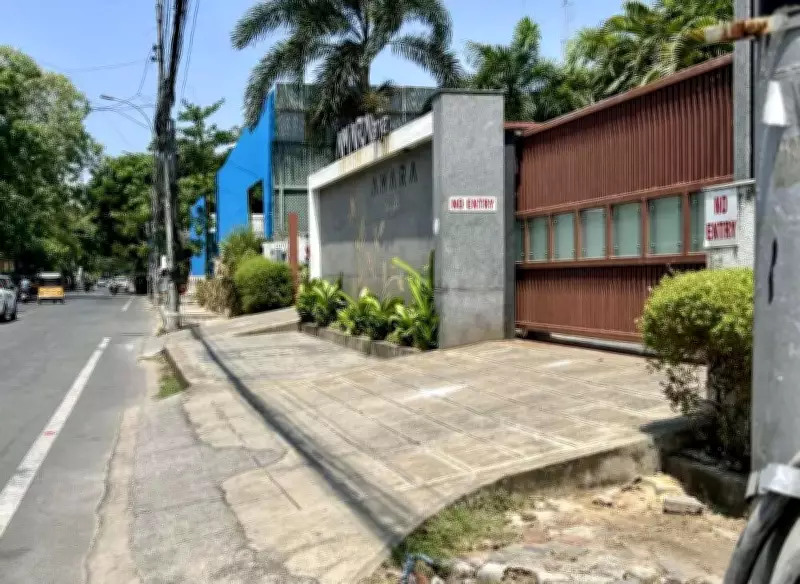
Chennai: In several affluent neighbourhoods across Chennai, residents are encroaching upon public land to construct staircases, gardens, and ramps, significantly reducing pedestrian space. As discussions on walkability and pedestrian-friendly streets gain momentum, homeowners in areas such as RA Puram, Boat Club Road, T Nagar, Kodambakkam, Anna Nagar, and Thiruvanmiyur are extending their properties onto pavements or parking vehicles on both sides of the carriageway. Unlike street vendors, who can be relocated, these encroachments appear permanent and are often backed by local political connections.
Residential Encroachments on the Rise
Civic activist and secretary of the Federation of Anna Nagar Residents Association, Sandhya Vedullapalli, highlighted apartments in several streets of Anna Nagar East that have encroached on public land with mini lawns, plants, and flowerpots blocking walkways. “When a compound wall juts out beyond the perimeter, it is considered a serious encroachment. Why are residential encroachments not being considered?” she questioned.
Property developer Yogesh T noted that such encroachments are common in recently developed plots. “To park vehicles within their compound, many residents construct ramps extending 3–4 feet beyond the property line onto public space. Many such residents are backed by local politicians,” he said.

Impact on Pedestrians and Vulnerable Groups
“A blocked footpath is problematic for everyone. Apart from wheelchair users, senior citizens, children, parents with strollers, and regular walkers are all forced onto the road when pavements are obstructed, putting them at risk of injury,” said K Guruswamy, an advocate for disability rights who uses a wheelchair.
Venugopal AV, programme manager at ITDP India, explained that the Tamil Nadu Combined Development and Building Rules, 2019, require buildings to maintain setbacks from the property boundary and street alignment, and ramps must be contained within the site. “Driveways have colonised pedestrian space, and there are widespread violations that go largely unchallenged,” he added.
Architectural and Infrastructure Concerns
Architect Murali M pointed out that ramps are deliberately built on a higher level as roads are re-laid every three to four years. “Gardens and plants outside the premises might add aesthetic value to the streets, but they should not affect pedestrians. Without a width of at least 1.8 metres, walking becomes difficult,” he added.
A Greater Chennai Corporation (GCC) official stated that the civic body does not maintain a separate count of such encroachments and addresses them on a case-by-case basis. “There is no need to give a notice to the house owner if the encroached land belongs to GCC. We give oral instructions. If they don’t remove the encroachment themselves, GCC can remove it,” he said.
“Mud from makeshift ramps seeps into the stormwater drains and creates blockages, so they must be built with concrete,” the official added. He noted that roads are milled before being re-laid, and records of road height are maintained to ensure levels do not rise.
Official Response and Action Plan
When contacted, GCC Commissioner Dr G S Sameeran stated that permanent encroachments obstructing pathways will be identified and removed. “Officers and engineers will be on rounds marking encroachments and removing them. Only if violators are seen being penalised will others be deterred,” he said.






