

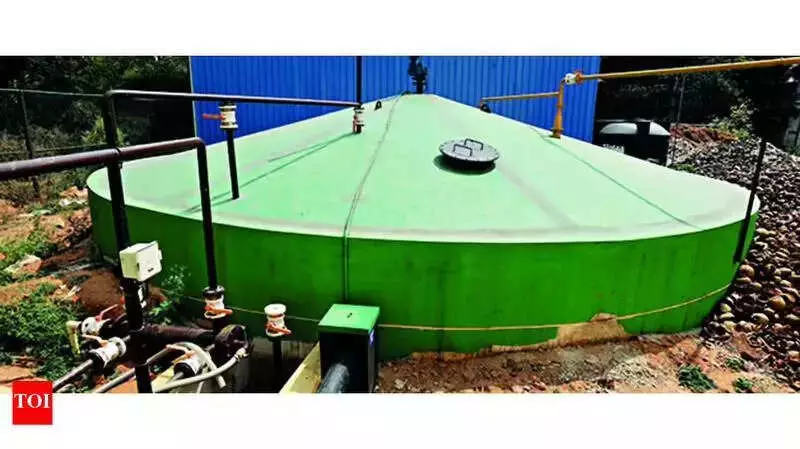
In a significant push towards sustainable energy and environmental education, the Greater Chennai Corporation (GCC) is planning to introduce biogas plants in its schools. The initiative aims to promote the use of biogas for cooking and to sensitize young students to the benefits of renewable energy sources.
GCC's Collaborative Plan for Biogas Expansion
GCC Commissioner J. Kumaragurubaran outlined the civic body's strategy, which involves collaborating with non-governmental organizations (NGOs), interested individuals, and residents' welfare associations. The primary goal is to reduce dependence on traditional LPG cylinders, leading to substantial cost savings for the institutions.
The plan will initially focus on four centralized or 'cloud' kitchens, where large quantities of vegetable and food waste are generated daily. These sites are ideal for connecting to composting and biogas production facilities. Kumaragurubaran emphasized that such setups can be implemented at an optimal cost and do not require extensive hours for maintenance, making them practical for school environments.

Successful Pilots Pave the Way
This GCC initiative draws inspiration from successful pilot projects already operational in the city. In a notable example, members of the Kasturba Nagar Residents Association (ROKA) and the Rotary Club of Madras installed a 75 kg capacity biogas plant at Chennai Higher Secondary School on Bharathidasan Street in the last week of November.
The installation cost was approximately ₹5.7 lakh. This school's kitchen prepares breakfast for ten different schools. The plant, which currently serves only the primary school on the campus, is connected to a single stove. It processes between 15 to 20 kg of food waste every day, converting it into usable cooking gas.
School Headmistress Stella Rosaline reported that the plant helps save one LPG cylinder every two months. She also highlighted the educational value, noting that students were given a tour of the facility to learn about alternative energy. Around 250 students benefit directly from this project.
Proven Benefits and a Self-Sustaining Vision
Another similar plant was set up last year at the Corporation High School on Kamaraj Avenue in Adyar, in collaboration with the Environmentalist Foundation of India (EFI). This plant caters to over 150 students. School staff confirmed that this facility helped them save seven LPG cylinders over a ten-month period.
Providing detailed data, ROKA Secretary Janani Venkitesh stated that in one year (excluding holidays), the plant helped divert 3,200 kg of food and wet waste from landfills. The gas produced was used for a total of 270 hours of cooking.
Srivatsan from EFI explained the broader environmental cycle. Biogas reduces reliance on LPG, and the process of using kitchen waste also generates nutrient-rich compost. This compost can be used as manure for plants. "If schools have ample space, they can grow their own food using this manure, creating a complete, self-sustaining cycle," he said, underscoring the long-term vision behind such projects.
The GCC's move represents a concrete step towards integrating practical sustainability into the education system, aiming to save costs, manage waste effectively, and instill green values in the next generation.






