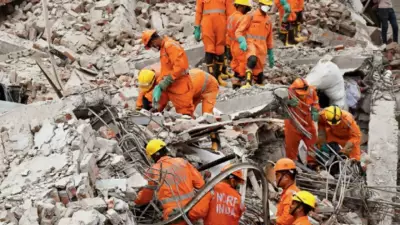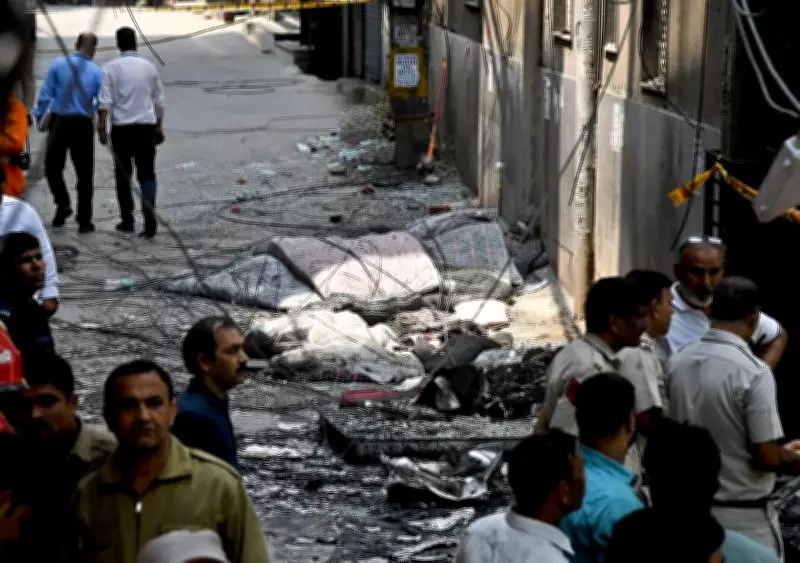
The devastating fire at Flourish Stay in Malaviya Nagar, which claimed 21 lives, has once again exposed a troubling reality about Delhi's governance where several buildings continue to operate in a regulatory grey zone, outside the scrutiny of the very safety mechanisms designed to protect lives.
According to a senior Delhi Fire Services (DFS) official's statement to The Tribune, the building structure housing Flourish Stay was never referred to the Fire Department by the competent building authority for issuance of a fire safety certificate (FSC). The competent authority was the Municipal Corporation of Delhi (MCD).
The accountability exists beyond the Fire Department and towards the chain of approvals that should have brought the building under official scrutiny long before tragedy struck.

"This building was not referred to the DFS by the building authority for the issuance of the fire safety certificate," a fire official said.
Under Delhi's regulatory framework, the fire authorities examine and certify buildings after receiving references from the competent building authority. If such a referral never takes place, the fire certification process does not begin and hence will never fall under fire safety scrutiny.
The revelation raises a critical question that how a commercial establishment housing guests was allowed to function while remaining outside the formal fire-safety certification system.
Familiar pattern
The Flourish Stay tragedy bears disturbing similarities to previous disasters that have claimed lives in the Capital.
In a very recent incident, a building structure in Delhi's Saket, which was being constructed illegally, collapsed killing several people. Many of the victims were students preparing for competitive examinations. The MCD later suspended two of its officials.
The Vivek Vihar fire in 2026 triggered outrage after nine people, including infants, were killed. This too highlighted alleged violations related to permissions, safety compliance and operational practices, once again raising questions about oversight by the civic and regulatory authorities.
Amid promises, departmental inquiries and action against officials, the recurring nature of such incidents suggests that systemic weaknesses remain largely unaddressed.
The Flourish Stay fire now joins a growing list of disasters that expose gaps not only in fire preparedness but also in the broader system of construction approvals, occupancy certification and enforcement.
Occupancy certificate question
Sources familiar with Delhi's building regulation framework say one of the most significant issues concerns occupancy-cum-completion certificates (OCCs). Without occupancy certification, buildings are effectively outside the final stage of regulatory approval. The absence of such certification can also affect whether a structure enters the formal process for fire clearance.
Questions beyond fire safety
The issue extends beyond the Delhi Fire Services. If a building lacks final approval or occupancy certification, questions inevitably arise regarding how it continues to access essential civic services and operate as a functioning commercial property.
The regulatory ecosystem involves multiple agencies, including building authorities, licensing bodies, utility providers and local enforcement units.
The Malaviya Nagar tragedy has therefore again triggered broader scrutiny of authorities like the MCD.
The incident is likely to intensify demands for greater transparency in how buildings are approved, monitored and allowed to operate, especially commercial buildings.
Accountability gap
In the aftermath of almost every major fire, the authorities announce inquiries, suspend officials and promise reforms. Yet recurring tragedies continue to reveal familiar shortcomings.
The key issue emerging from the Malaviya Nagar fire is not simply whether the building lacked a fire safety certificate. It is whether the structure should have been operating in the first place if it had not entered the statutory approval process that leads to fire clearance. This answer may ultimately determine where responsibility lies.

For now, the tragedy has exposed what appears to be a regulatory blind spot - a building operating as a commercial establishment, allegedly outside the fire certification framework, until a deadly blaze brought it into public focus.