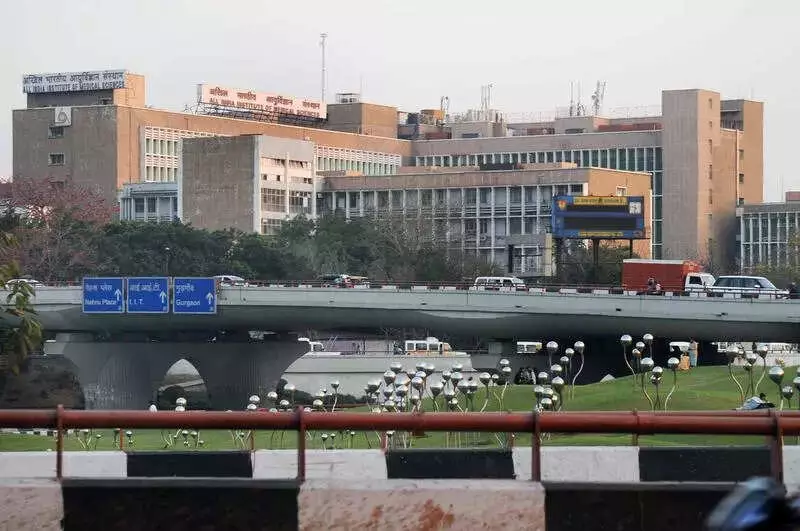
Resident welfare associations (RWAs) in south Delhi have made a formal plea to authorities, urging them to officially declare the crucial AIIMS–Safdarjung corridor a "local congestion and pollution hotspot." This move aims to trigger immediate and structured intervention to tackle the severe daily gridlock and persistent infrastructure gaps plaguing this vital artery.
Chronic Chaos on a Critical Link
The stretch in question is a major mobility link, connecting Ring Road, Aurobindo Marg, and routes to the airport. It serves two of the city's premier hospitals—AIIMS and Safdarjung—along with metro stations, residential colonies, and institutional hubs. Residents argue that any slowdown here has a domino effect, directly hampering ambulance movement, peak-hour traffic, and overall mobility across a significant medical and administrative belt of the capital.
Despite its strategic importance, the corridor routinely grinds to a halt during rush hours. In a recent letter, the RWAs pinpointed a primary cause: the near-total absence or severe fading of mandatory road markings as per the Indian Roads Congress (IRC) Code of Practice for Road Markings.

Missing Markings and Mounting Problems
"Uniform centre lines, lane lines, stop lines and pedestrian crossings are either faint, discontinuous or missing at key junctions," explained Pankaj Agarwal, general secretary of a Safdarjung Enclave RWA. He listed problematic intersections connecting Safdarjung Enclave to Ring Road, Outer Ring Road, Africa Avenue, and Aurobindo Marg. The lack of clear markings leads to chaotic lane-changing, vehicle bunching, blocked intersections, and frequent conflicts between vehicles and pedestrians.
The situation is worsened by several other factors:
- Inadequate overhead and roadside signage.
- Inconsistent traffic police presence.
- Rampant illegal parking and encroachment.
Vehicles routinely spill onto footpaths and carriageways, especially around the commercial pockets of Safdarjung Enclave and the Safdarjung Hospital area.
Demands for a 60-Day Overhaul
In their submission, the RWAs have laid out a clear set of demands for urgent action. They are calling for:
- Full restoration of carriageway and intersection markings in line with IRC:35 standards within 60 days.
- Upgraded and clear signage.
- Visible and consistent police deployment.
- A comprehensive audit and retiming of traffic signals.
- Strict enforcement against illegal parking.
This corridor is not a new problem area. It features among the 12 critical stretches identified by the Delhi Traffic Police. Their assessments highlight specific bottlenecks near the AIIMS loop, unsafe pedestrian crossings, poor signage, queues spilling over from a nearby CNG pump, and road narrowing near the Raj Nagar, Hyatt, and Moti Bagh flyovers.
Traffic officers acknowledged that proposals for widening, repainting, improved signage, and other engineering measures are on the table, with some work already in progress. However, they emphasized that the ever-increasing volume of vehicles remains a major, persistent concern. The Public Works Department (PWD) did not offer a comment on the matter.