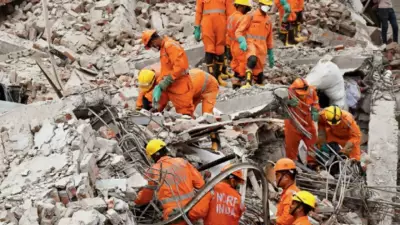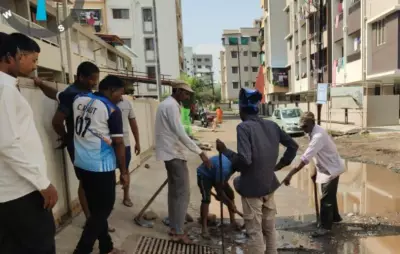
Two incidents shocked Delhi recently: a building collapse in Saket and a fire at a bed and breakfast in Malviya Nagar, which killed 21 people. Not many would have noticed the exact locations of these sites. The first accident was in Said-ul-Ajaib village (near Saket) and the second one in Hauz Rani village (near Malviya Nagar). Both involved illegal and unauthorised buildings in urban villages. While inquiries have now been launched, there is still the bigger question: why are the capital’s urban villages dotted with such unsafe structures?
Historical Context of Urban Villages
To understand how gaons like Hauz Rani, Khirki, Said-ul-Ajaib, Ber Sarai, Munirka, and Shahpur Jat became a key part of Dilli sheher, one would have to rewind a little. As the city expanded after Independence, it engulfed the agricultural land around it. Most of that land was acquired and developed as planned colonies. The exception was Lal Dora land—the inhabited part of a village, marked in red on colonial revenue maps to distinguish it from agricultural land. In 1963, these areas were exempted from acquisition and several building bye-laws. At the time, the exemptions applied to only 20 villages. By the time the municipal authority clarified in 2009 that these exemptions no longer applied to urban villages, their number had grown to 227. More importantly, over four decades had passed. In that period, construction—both residential and commercial—had proliferated with little oversight. Today, Delhi has 357 urban villages, with the latest round of urbanisation taking place in May 2026, when 48 more villages were notified.
Role of Urban Villages in Delhi's Housing
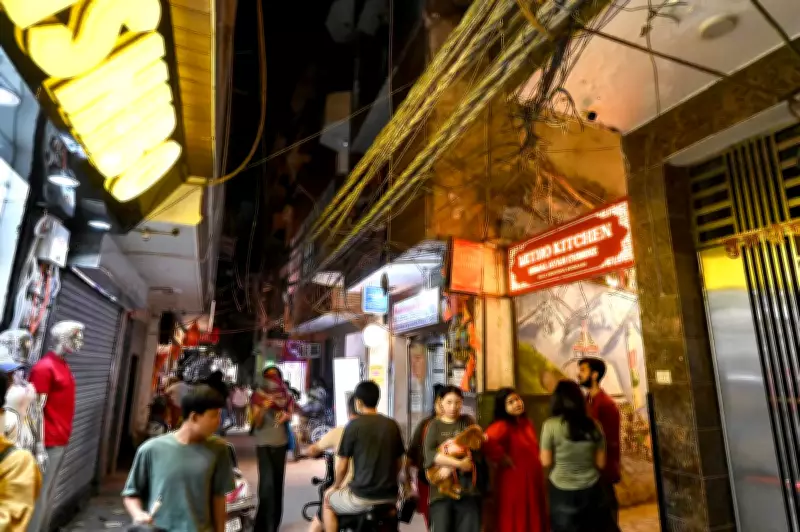
These villages now provide affordable housing to millions of people — from students to the working class, who would otherwise struggle to find accommodation in the capital. Several of these villages have become hipsterized with boutiques, restaurants, and galleries, and are regularly described in various articles as melting pots of culture and places worth exploring for their diversity and food. Hauz Rani itself is known for its many Afghan, Nigerian, and Malayali restaurants, reflecting the communities that live there, as well as the long-term visitors who stay in the area while receiving treatment at Max Hospital across the road. The deadly fire claimed the lives of several such foreign nationals who were here for medical aid.

Dilemma of Regulation
Having grown up in a bylane of nearby Khirki village, right next to Hauz Rani, too narrow for even a two-wheeler to pass, let me offer an example of how these exemptions are used. Imagine a building on a 100 sq m plot at the end of a lane barely five feet wide, which may once have housed a single family, accessed on foot or perhaps by bullock cart. Today, it is a five- or six-storey rental housing or commercial establishment designed to maximise returns. Under modern planning norms, its height would be linked to road width, fire access, ventilation, and public safety, but not here. Flourish Inn, which caught fire in Hauz Rani, had clearance for only two floors but added four more, without plan approval or a fire-safety certificate. The Said-ul-Ajaib building was similar. Such activities can flourish because the locality falls within a Lal Dora area and often receives less scrutiny under the assumption that it is still a village settlement. Here lies the dilemma: if building regulations are enforced with complete rigidity, most of Delhi’s urban villages would not obtain fresh approval. But then what would happen to the many students and professionals looking for affordable rooms, the families who have lived here for generations, the working-class migrants who live in shared accommodations, and the small businesses that sustain these neighbourhoods? Urban villages are not peripheral spaces; they are central to how Delhi functions. On the other hand, if regulations are ignored entirely in favour of rapid growth, as is happening now, fire safety, structural safety, and public safety are placed at serious risk.

Need for Systemic Change
That is why the conversation cannot end with arrests, demolitions, or the identification of individual violators. The larger question is whether the city is willing to acknowledge the reality it has created. For decades, Delhi has depended on urban villages to absorb growth, provide housing, and support economic activity, while ignoring the difficult task of integrating them into a coherent planning and safety framework. This has created the ‘Delhi mein sab chalta hai’ attitude that Lovkesh Bajaj, owner of the Hauz Khas B&B that caught fire, talked about.
The tragedies in Said-ul-Ajaib and Hauz Rani are not aberrations. They are warnings. Unless we confront the contradictions between planning laws, building regulations, land records, and lived urban reality, these neighbourhoods will continue to exist in a dangerous limbo—essential to the city, yet inadequately governed by it.
(Chauhan is assistant professor, O P Jindal Global University and author of ‘Sheher Mein Gaon: Culture, Conflict and Change in the Urban Villages of Delhi’. Views are personal)