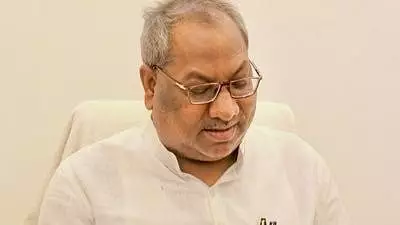
New Delhi: Emphasizing that Delhi has entered a new phase of urban transformation, Lieutenant Governor VK Saxena on Friday outlined a comprehensive roadmap for the national capital to transition from a 'metro city' into a true 'metropolis,' driven by integrated planning, sustainability, innovation, and quality of life.
Five Key Pillars for Future Development
Speaking at an event on Indo-Japanese relations in the capital, Saxena said Delhi's future development must rest on five key pillars: smart mobility, sustainable development, water and environmental management, disaster resilience, and the transformation of Dwarka into a global hub for innovation and investment. He emphasized that the city's focus can no longer be limited to creating infrastructure alone but must shift towards building complete urban ecosystems that are efficient, resilient, and future-ready.
'A metropolis is defined by efficiency, sustainability, innovation, and quality of life,' the LG said, underscoring the need for a holistic approach to urban planning.

Dwarka: A Global Innovation Hub
A major focus of his address was the future development of the Dwarka sub-city, which he described as a unique opportunity to reshape Delhi's economic landscape. Dwarka should not remain merely a residential zone, he said, but evolve into a center for knowledge-based industries, innovation hubs, research institutions, and global partnerships. 'With the right planning, infrastructure, and policy support, Dwarka can become a symbol of the next phase of India's bilateral and multilateral collaborations, where investment, technology, and talent come together to create new economic ecosystems,' he added.
Smart Mobility and Sustainable Development
Highlighting smart mobility as a key priority, the LG said the future of urban transport lies in seamless integration of metro rail, buses, last-mile connectivity, and digital platforms. He added that AI-based traffic management, real-time monitoring, and data-driven systems could significantly improve the commuter experience in Delhi. On sustainable development, Saxena noted that rapid urban expansion has made the adoption of cleaner energy, green mobility, energy-efficient buildings, and improved waste management increasingly urgent. He pointed to Japan's expertise in hydrogen energy, electric mobility, and energy-efficient infrastructure as potential models to accelerate Delhi's transition towards sustainability.
Water Management and Disaster Resilience
The LG also underlined the importance of water and environmental management, stating that urban sustainability cannot be achieved without addressing pollution control, wastewater recycling, flood management, and climate resilience through advanced technologies and international collaboration. Furthermore, he stressed that cities must be prepared for environmental and structural challenges, citing Japan's globally recognized expertise in resilient infrastructure and emergency response systems as a model Delhi could learn from.
This roadmap signals a new era for Delhi, aiming to enhance quality of life while fostering economic growth and global partnerships.