

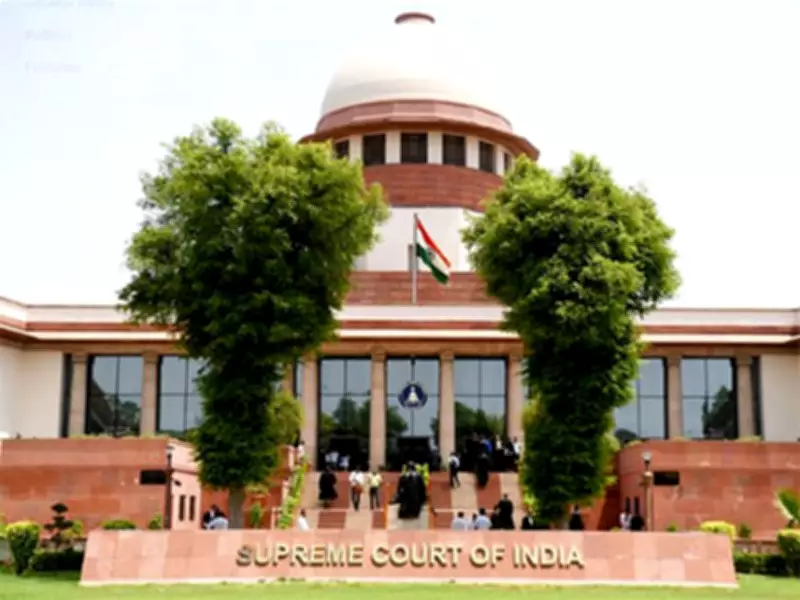
The Supreme Court amended its Rules in 2014, reducing the maximum duration of the summer vacation from 10 weeks to only seven weeks.
Legacy of the Raj
After the revolt of 1857, the British Crown took over the reins of India from the East India Company through the Government of India Act, 1858, passed by the British Parliament. In the following years, it tried to set up a modern judiciary by establishing the Calcutta High Court (July 1, 1862), the Bombay High Court (August 14, 1862), the Madras High Court (August 15, 1862) and the Allahabad High Court (March 17, 1866), headed by white judges. Even district courts had British judges. British judges used to get a three-month summer recess as it would take a month for them to sail to Britain, stay there for a month and return to India in the third month. The practice continued even after Independence, with the Supreme Court and high court judges going on vacation for two months during which many judges travelled abroad for conferences and for personal reasons. During vacations, only urgent matters would be heard by ‘Vacation Benches’ designated by the Chief Justice of India or the Chief Justice of a high court.
Historic Judgments of Vacation Benches
It was a vacation judge of the Supreme Court (Justice VR Krishna Iyer) who on June 24, 1975, granted a conditional stay on the Allahabad High Court’s verdict allowing Indira Gandhi to continue as Prime Minister even as she was debarred from taking part in parliamentary proceedings and drawing salary as an MP. During the 2015 summer vacation, a Constitution Bench of the Supreme Court heard petitions challenging the National Judicial Appointments Commission (NJAC) which was ultimately declared unconstitutional. In 2017, petitions against instant triple talaq were taken up during the summer vacation.

Winds of Change
The Law Commission of India, in its 230th Report on ‘Reforms in the Judiciary — Some Suggestions’ submitted to the Government in 2009, recommended that vacations in the higher judiciary should be reduced by 10 to 15 days and daily working hours extended by at least half an hour. As activists consistently questioned the need for such a long summer vacation, things have changed in recent years. In May 2014, the then Chief Justice of India RM Lodha said the Supreme Court, high courts and trial courts should remain open 365 days a year. The Supreme Court amended its Rules in 2014, reducing the maximum duration of the summer vacation from 10 weeks to only seven weeks. Instead of Vacation Benches two days a week, now the Supreme Court is having ‘Partial Court Working Days’ Benches each working day to deal with the increasing pendency of cases that has touched 93,428.

Saving Judges, Lawyers from Burnout
Supreme Court Bar Association president and senior advocate Vikas Singh justifies summer vacation, saying it saves both judges and lawyers from burnouts. “I think the way the lawyers and judges work, the ones who work… they really require this vacation. If they don’t take this holiday, they will burn out. Like the finance professionals have a burnout at 40-45 and they can’t work anymore and end up playing golf or writing books,” Singh told The Tribune. “So if you want to keep working and at the same kind of energy level, you need to take this break.” Singh feels that nobody appreciates the kind of work judges do in reading the briefs and writing judgments. “They only see what the judges do during the hearing day. If they start writing judgments in courtrooms, there will not be any cases called out for hearing for several days. So, people have to realise this.” Similarly, lawyers also, he adds. “The way we work till midnight, because every day in the Supreme Court when you take up a new matter, you have to really prepare a thesis… if you don’t do that kind of hard work, you can’t survive. So, this is a break which is definitely required to recharge.” Activist-lawyer Prashant Bhushan says there are not many vacations now. “Summer vacation in the Supreme Court is one-and-a-half months and in high courts just a month. In trial courts, it’s generally two-three weeks only.” Judges are not merely working when they are in court, he adds. “Conscientious judges have to read the briefs of 50-60 cases each day. They also have to write judgments outside of court time. Therefore, it’s not correct to say there are excessive vacations in courts. The pendency in courts is due to not having enough judges.”





