

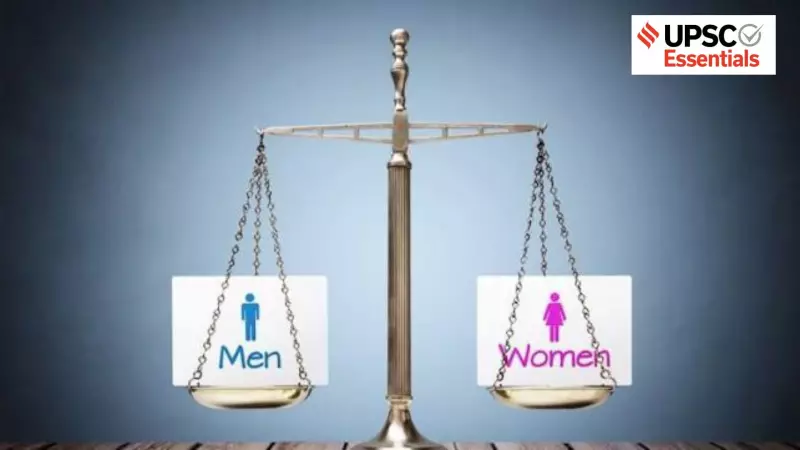
India's constitutional framework and a series of progressive judicial pronouncements have laid a formidable legal foundation for gender justice. Yet, the translation of these rights into the lived reality for women across homes, workplaces, and public spaces remains a complex and ongoing challenge. While the law promises equality, dignity, and safety, the everyday experience for many is still shaped by deep-seated patriarchy and custom.
The Constitutional Promise and Judicial Milestones
The Constitution of India provides a robust framework for gender justice. Article 14 guarantees equality before the law, while Article 15 explicitly prohibits discrimination on grounds of sex. The state is empowered under Article 15(3) to make special provisions for women. Article 16 ensures equality of opportunity in public employment, and the expansive interpretation of Article 21 (right to life) has come to encompass privacy, dignity, and personal autonomy.
Directive Principles further strengthen this vision. Article 39 mandates equal pay for equal work for men and women, Article 42 provides for maternity relief, and Article 51A(e) makes it a fundamental duty of every citizen to renounce practices derogatory to the dignity of women.

The judiciary has played a critical role in breathing life into these provisions through landmark judgments:
- In Air India v. Nergesh Meerza (1981), the Supreme Court struck down discriminatory service rules that prohibited air hostesses from marrying or having children.
- The case of Mackinnon Mackenzie v. Audrey D’Costa (1987) affirmed that equal pay for equal work is a constitutional mandate, not merely a principle.
- More recently, in Babita Puniya v. Union of India (2020), the Court granted permanent commission to women officers in the Indian Army, asserting that equality must prevail even in the armed forces.
The Persistent Gap: Law vs. Lived Experience
Despite this progressive legal architecture, a significant chasm exists between rights on paper and reality on the ground. This gap manifests across multiple spheres of daily life.
In the political arena, the 73rd Constitutional Amendment was a watershed, reserving one-third of seats in village panchayats for women. The Supreme Court, in State of Rajasthan v Union of India (1993), upheld this as vital for participatory democracy. Today, lakhs of women serve in local governance. However, representation sharply declines at higher levels. The Women’s Reservation Act, 2023, which promises one-third reservation in State Assemblies and Parliament, awaits implementation, leaving top power structures largely male-dominated.
In the workplace, constitutional guarantees often falter. Women, particularly in the informal sector, frequently work without equal pay, job security, or maternity benefits. Even the Sexual Harassment of Women at Workplace (Prevention, Prohibition and Redressal) Act, 2013 (POSH Act), born from the landmark Vishaka guidelines (1997), is often poorly implemented or ignored.
Struggles in Private and Sacred Spaces
The battle for gender justice extends into the most personal domains—home and places of worship. Inheritance rights have been a major site of conflict. The Supreme Court's judgment in Vineeta Sharma v. Rakesh Sharma (2020) firmly established daughters as equal coparceners with sons in Hindu Undivided Family property, even if the father died before the 2005 amendment. Yet, social pressure often forces daughters to relinquish these legal rights.
Similarly, the judiciary has sought to open sacred spaces. In the historic Indian Young Lawyers Association v. State of Kerala (2018) verdict, the Supreme Court allowed women of all ages to enter the Sabarimala temple, stating faith cannot trump equality. The Madras High Court in G Subramanian v. State of Tamil Nadu (2019) struck down a ban on women becoming temple priests. These rulings, however, faced intense social resistance, highlighting that legal change does not automatically trigger social acceptance.

Critical advancements in reproductive rights and bodily autonomy have also been forged in court. In Suchita Srivastava v. Chandigarh Administration (2009), the Court upheld a woman's right to make decisions about her own body. The Medical Termination of Pregnancy (Amendment) Act, 2021, expanded access to safe abortion. Furthermore, in Joseph Shine v. Union of India (2018), the Supreme Court decriminalized adultery, affirming a woman is not the property of her husband.
Weaving Justice into the Fabric of Everyday Life
Bridging the gap between legal recognition and lived justice requires a multi-pronged approach that goes beyond legislation.
Firstly, enforcement mechanisms must be strengthened. Laws like the POSH Act, inheritance rights, and maternity benefit provisions need robust oversight, trained personnel, and clear accountability. Secondly, legal awareness and accessible aid, especially for women in rural and informal sectors, are crucial for claiming rights.
Thirdly, and most fundamentally, social attitudes must evolve. Sustained efforts through education systems, community engagement, and responsible media are needed to challenge entrenched gender norms. Finally, political representation must translate into real power. Empowering women in leadership positions to influence decision-making is key, moving beyond mere numerical presence in reserved seats.
Gender justice is inscribed in India's constitutional DNA. The unfinished task is to weave it indelibly into the fabric of everyday life—in homes, on streets, in offices, and in temples—where true safety, dignity, and equality are ultimately realized.





