

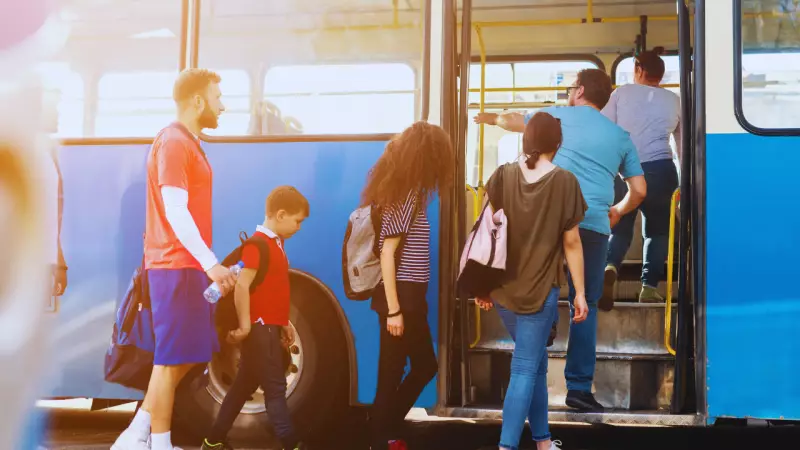
The concept of paying for a bus or train ticket is being permanently erased in several pioneering cities and even entire nations across the globe. This revolutionary approach, known as free public transport or zero-fare transit, is gaining momentum as a powerful tool to combat urban congestion, reduce pollution, and promote social equity. Instead of passengers paying per ride, the system is funded by governments through taxation or other means.
National Pioneers: Leading the Zero-Fare Revolution
On 29 February 2020, the small European nation of Luxembourg made history by becoming the first country in the world to implement completely free public transport nationwide. This bold policy covers all buses, trams, and trains for both residents and tourists alike. The primary goal was to tackle the country's severe road congestion, given it has one of Europe's highest rates of car ownership.
Following closely, the island nation of Malta launched its own free public transport system on 1 October 2020. However, Malta's scheme is reserved for its residents. The initiative aims to make public transit a more attractive option, especially in densely populated areas, and to decrease the island's heavy reliance on private cars.

Urban Trailblazers: Cities Transforming Mobility
Long before these national experiments, cities were testing the waters. The Belgian city of Hasselt became a global pioneer by abolishing public transport fares all the way back in 1997. The impact was staggering: by 2006, ridership had skyrocketed by an incredible 13 times compared to pre-1997 levels. Hasselt's success story remains a classic case study for how free transit can dramatically boost usage and cut car dependency.
In 2013, Tallinn, the capital of Estonia, introduced free public transport for all its registered residents after a public referendum. This policy had a dual purpose: to encourage sustainable mobility and to incentivize more people to officially register in the city, thereby expanding its tax base. The strategy worked, with increased revenue from new registrations helping to offset the system's operational costs.
Recent Adopters and Special Initiatives
The movement continues to spread. In the 2020s, the state of Washington, USA, saw 14 rural transit systems adopt zero-fare policies. Furthermore, from September 2022, all individuals aged 18 and under can travel free on most local and inter-city systems, including state-operated Amtrak trains and Washington State Ferries, creating one of America's most extensive youth mobility programs.
Since 2022, Kharkiv, Ukraine, with a population of 1.42 million, has held the title of the largest city in the world to offer universal free public transport. This policy ensures vital accessibility for all residents amidst challenging circumstances.
Looking forward, Belgrade, Serbia, announced a major move for its 1.38 million residents, introducing free local public transport in 2025. This measure is a key part of a broader plan to modernize the city's infrastructure, reduce crippling traffic congestion, and create a more inclusive urban environment.
The global shift towards free public transport highlights a growing recognition that mobility is a essential public service. While funding models vary, the core objectives remain consistent: creating cleaner, less congested, and more livable cities for everyone.






