

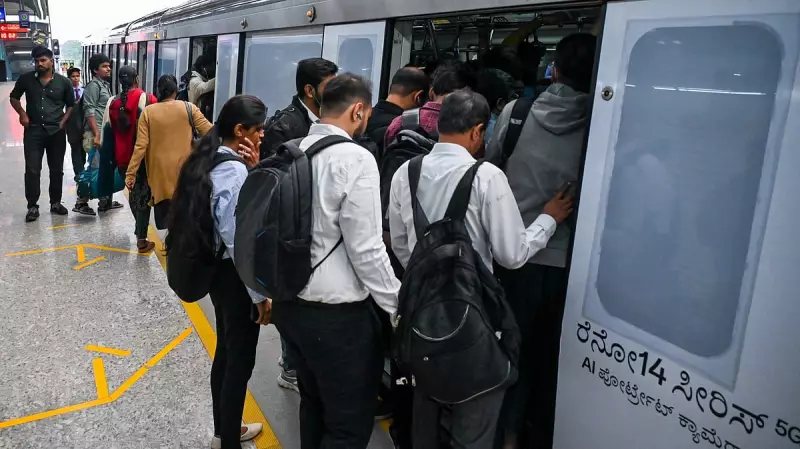
The daily grind on Bengaluru's Namma Metro is weaving a new social fabric for the city. What was once considered lost time in transit is now transforming into a fertile ground for building informal communities and forging lasting friendships among professionals. This unexpected social phenomenon is emerging from the shared experience of long commutes across India's tech capital.
The Commute That Connects
For countless professionals traveling between key hubs like Whitefield and the city center, the metro has become more than just a mode of transport. With journeys often exceeding 90 minutes one way, passengers are turning this enclosed, shared time into an opportunity for connection. Regular commuters on specific routes and timings are beginning to recognize familiar faces, leading to nods, smiles, and eventually, conversations.
These interactions start simply—a discussion about the crowded coach, a comment on the metro's punctuality, or a shared frustration over a delay. Over days and weeks, these small exchanges evolve. Commuters report forming impromptu groups that discuss everything from work challenges and industry gossip to personal life events and weekend plans. The metro coach, in essence, becomes a moving social club.

Beyond Small Talk: Building Support Systems
The relationships forged during these rides are moving beyond casual acquaintance. Professionals, especially those new to Bengaluru, find these metro-born connections invaluable. These informal groups often act as a support network, offering advice on everything from finding a good rental apartment in a specific locality to recommendations for doctors, schools, or even reliable electricians.
In a city known for its fast pace and sometimes impersonal environment, the metro provides a consistent, neutral space for socialization. Unlike workplace interactions, these conversations are free from corporate hierarchy and office politics. People from different companies and sectors mingle freely, leading to a unique cross-pollination of ideas and perspectives. A software engineer might get career advice from a marketing professional, while a teacher might learn about new tech trends from a startup founder.
The Impact on Urban Life and City Planning
This organic community-building has implications that reach beyond individual friendships. It highlights a human need for connection that persists even within modern, infrastructure-heavy urban planning. Urban sociologists note that while cities build physical infrastructure like metros for efficiency, the social infrastructure—the spaces and opportunities for people to connect—is often overlooked.
Namma Metro has inadvertently created one of the largest daily congregations of Bengalureans in a shared, public space. The phenomenon suggests that long commute times, typically viewed as a negative, can have an unintended social silver lining. It challenges the notion that urban transit is purely functional and points to its potential role in strengthening the city's social cohesion.
However, the sustainability of these communities relies on consistency. Changes in work schedules, a shift to hybrid or remote work models, or even a change of residence can disrupt these fragile, schedule-dependent bonds. Yet, for now, on the Purple Line and Green Line, the journey continues to be as much about the people you meet as the destination you reach.
The rise of these informal metro communities in Bengaluru is a testament to the city's adaptable social spirit. It shows that even within the steel and glass framework of a modern metro system, the human instinct to connect and form communities finds a way.






