

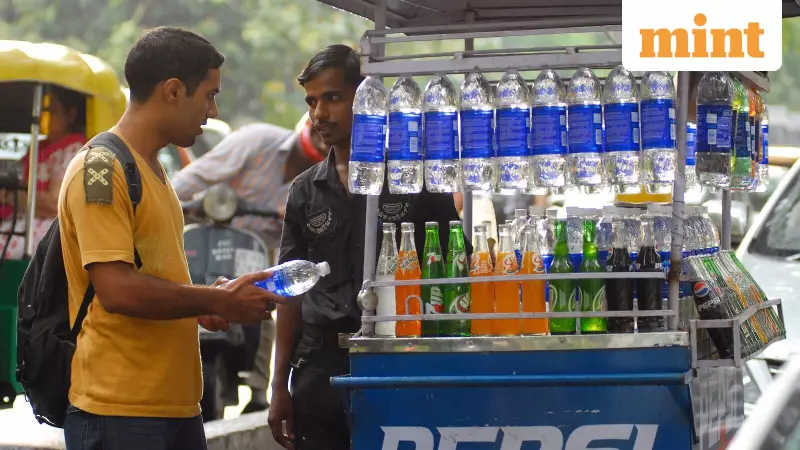
In a thought-provoking critique, writer Manu Joseph has posited that India's progress is being severely hampered by a pervasive mindset that uses the country's poverty as a perpetual excuse for setting low benchmarks. He argues that for standards to rise, the nation must begin to envision all its citizens as upper middle-class, fundamentally shifting its planning and policy paradigms.
The 'Luxury Litigation' That Sparked a Debate
This perspective gains sharp relevance in light of a recent Supreme Court hearing on 29 December 2025. The apex court was deliberating on a writ petition filed by Sarang Vaman Yadwadankar, who sought stricter, internationally-aligned standards for chemicals in packaged drinking water. The court's response was telling.
As reported, the judges questioned the petition's focus, with one remarking, "Where is the drinking water in this country? People do not have drinking water. The quality of bottled water will come later on… This is an urban-centric approach… Water bottle should have this content, that content, these are all luxury litigations." The bench further noted that people in rural areas drink groundwater without apparent harm, invoking Mahatma Gandhi's travels to understand rural plight.

Beyond Water: How Low Standards Perpetuate Deficiencies
Joseph contends that the spirit of the court's observation—while rooted in the stark reality of water scarcity—exemplifies a broader national tendency. The presence of poverty becomes a rationale to sideline aspirations for excellence in various domains, from infrastructure to public services.
The petition highlighted risks from chemicals like antimony and DEHP in plastic packaging, which developed nations regulate due to potential carcinogenic effects. The core issue, however, is not the immediate scientific verdict but the reflexive dismissal of the demand for higher safety norms as an irrelevant 'luxury' in a poor nation.
This attitude, the argument goes, explains why roads remain dangerous and trains derail. Comfort and safety are seen as luxuries rather than integral components of basic service delivery. The author contrasts the Delhi Metro—once deemed a project for the 'rich' but now a public lifeline—with overcrowded, unsafe trains meant 'for the poor,' where accidents remain a grim probability.
The Aspirational Poor and the Cost of Low Expectations
Ironically, the poor themselves often reject the low standards set for them. This is evident in the widespread rejection of government schools in many states (exceptions like Delhi and Kerala noted), with poor and lower-middle-class families spending significant portions of their income on private education. This demand has spawned a whole ecosystem of budget private schools catering to these unmet aspirations.
Joseph warns that India's low standards have created a low threshold for vulgarity and have led to couching grand achievements, like space missions, primarily as services for the poor—a framing he calls the "least romantic aspect of science" for attracting young talent.
The article does acknowledge the Supreme Court's point about certain "urban phobias" and "luxury petitions," such as extreme privacy concerns that threatened foundational projects like Aadhaar. However, it stresses that the automatic assumption that high standards are inappropriate in a poor country is a self-fulfilling prophecy that only ensures the nation stays poor.
The Path Forward: Thinking Big for Collective Progress
The conclusion is a powerful call for a mental shift. The prescription is for India, in its planning and self-conception, to treat every citizen as upper middle-class. This doesn't mean ignoring poverty, but rather refusing to let it cap ambition. When systems are designed for comfort, safety, and high quality, they inherently serve everyone better, as the Delhi Metro demonstrated.

The lesson, as per Manu Joseph, is clear: Individuals, especially the poor, should think big and look above their station. For a nation, the same principle applies—perpetually planning for the poor, with minimal standards, ensures it remains a poor country. Raising the bar universally is not a distraction from fighting poverty; it is a essential strategy to overcome it.





