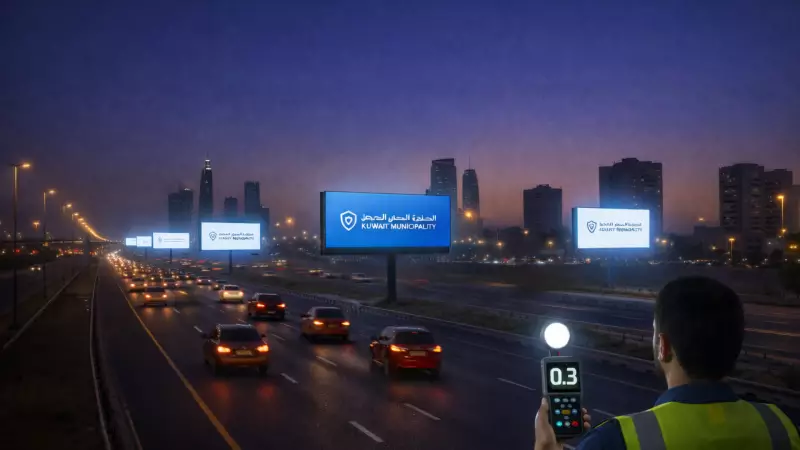
Kuwait Municipality Implements Strict Enforcement of Billboard Lighting Regulations
In a significant move to bolster public safety, the Kuwait Municipality has announced it will strictly enforce regulations set by the Ministry of Interior concerning billboard lighting. This initiative places a renewed emphasis on ensuring safety along highways and in public areas, addressing concerns over excessive brightness and non-compliance with established standards.
Targeting Electronic Advertisements for Enhanced Safety
The enforcement action specifically targets electronic advertisements that surpass permitted brightness levels or fail to meet regulatory requirements. According to Eng. Manal Al-Asfour, Director General of Kuwait Municipality, the Ministry of Interior has outlined clear technical specifications for the lighting power and brightness used in electronic advertising. These regulations mandate that brightness levels must not exceed a defined limit of 0.3 candles per foot in relation to the surrounding ambient light. This standard is designed to minimize glare and visual distractions, which are critical factors in preventing accidents and ensuring driver safety on busy roads.
Mandatory Compliance for Advertising Tenders
Al-Asfour emphasized that adherence to these lighting requirements will be compulsory for all companies and institutions participating in upcoming advertising tenders. This applies across all six governorates of Kuwait and along major highways, where high traffic volumes necessitate stringent safety measures. As part of the tender process, applicants will be required to present lighting intensity measurement devices during preliminary meetings. This step is intended to demonstrate compliance before any approvals are granted, ensuring that all advertisements meet the necessary safety standards from the outset.

Comprehensive Framework for Public Protection
The broader advertising framework implemented by Kuwait Municipality is crafted to prevent harm to the public and reduce disruptions to nearby residents. Key provisions include:
- Rooftop Advertisements: Must not pose safety risks or cause disturbances to the surrounding environment.
- Facade Advertisements: Required to be self-illuminated, securely installed, and restricted to the dimensions of the building they are attached to, preventing overextension or structural hazards.
- Ground-Floor Shop Projections: Permitted in industrial, craft, and investment residential areas only if they do not obstruct neighboring views and maintain a minimum two-metre pedestrian walkway, ensuring accessibility and safety for pedestrians.
Additional Conditions for Billboard Safety
Billboards are limited to companies approved by the municipality and must adhere to several additional conditions to uphold public safety. These include:
- Avoiding lighting that could dazzle drivers, which is crucial for preventing accidents on highways.
- Refraining from displaying illegal or misleading content that could deceive the public.
- Ensuring billboard designs do not resemble traffic signs, as this could confuse motorists and lead to dangerous situations on the road.
Content Licensing and Educational Messages
Al-Asfour further noted that the Ministry of Health is involved in licensing the content of electronic advertisements. Advertisements issued by ministries, government bodies, and public benefit associations are restricted to educational messages only. This measure aims to promote informative and beneficial content that serves the public interest, rather than purely commercial or potentially harmful material.
Kuwait Municipality stated that these measures are part of broader efforts to enforce advertising laws while maintaining public safety and order. By implementing these regulations, the municipality seeks to create a safer and more orderly urban environment, reducing risks associated with poorly regulated advertising and enhancing the overall quality of life for residents and visitors alike.