Mangaluru E-Auto Permit Dispute Escalates Into Public Clash
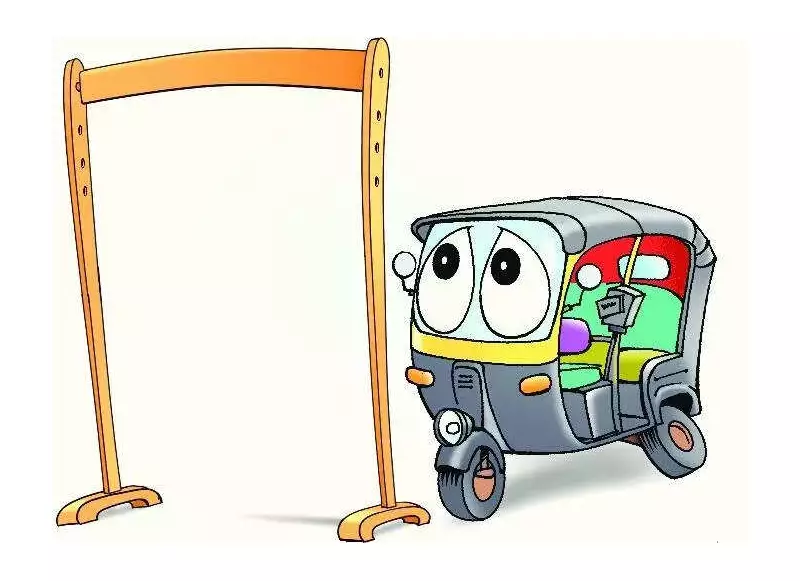
The ongoing permit dispute between e-autorickshaw operators and traditional petrol or diesel auto owners and drivers in Mangaluru has reached a new level of intensity and public mudslinging. This escalation follows the government's recent decision to make permits mandatory for all types of three-wheelers operating within the district, a move that has sparked significant controversy and division among transport stakeholders.
E-Auto Union Voices Strong Opposition to New Permit Rules
Prajesh KJ, the president of the Team Green City Autorickshaw Drivers and Owners Union, expressed that while his forum welcomes the deputy commissioner's order requiring electric autorickshaws to obtain permits, they strongly oppose certain specific conditions. "The requirement to provide a certificate of residence in Mangaluru for the past five years is not appropriate or fair," Prajesh told reporters during a press briefing on Tuesday. He argued that electric autorickshaws should be allowed to operate freely throughout the entire Dakshina Kannada district without such restrictive zoning measures.
Prajesh elaborated on the financial hardships faced by e-autorickshaw drivers due to these regulatory changes. "Previously, e-autorickshaws could operate freely across Dakshina Kannada. Many drivers sold their old petrol or diesel autos and took substantial bank loans to purchase new electric vehicles, expecting stable operating conditions," he explained. However, the district administration's new mandate for zoning has created uncertainty and financial strain.

"If the rules and regulations change every six months, it will become impossible for us to repay our bank loans and sustain our livelihoods," Prajesh emphasized. He urged authorities to allow e-autorickshaws to operate throughout the district without restrictive permits. Additionally, he highlighted the practical difficulties faced by many e-rickshaw drivers who live in rental accommodations for extended periods, often 10 to 15 years, but maintain their voter ID and ration cards in their hometowns, making it challenging to obtain the required city residence certificates.
The union also made a broader demand, insisting that the restriction of one permit per person for e-autorickshaws should be uniformly applied to all categories of vehicles to ensure fairness and equity in the transport sector.
Traditional Auto Federation Demands Immediate Implementation of Restrictions
Meanwhile, the Dakshina Kannada District Auto Rickshaw Drivers and Owners Federation has taken a contrasting stance, urging the immediate implementation of the district administration's order issued on December 6, 2025, regarding e-autorickshaw regulations. Bharath Kumar, the federation president, told reporters that the rapidly increasing number of e-autorickshaws in Mangaluru city is having a detrimental impact on other autorickshaw drivers.
"In this context, we made a formal request to the district administration to curb the unchecked proliferation of e-autorickshaws," Bharath Kumar stated. He noted that while an order was issued accordingly, there have been delays in its implementation by the transport and police departments, which he finds concerning.
RTO Guidelines and Legal Framework
The regional transport authority guidelines, established in response to a high court order, have prompted district authorities to impose restrictions aimed at controlling vehicle traffic within Mangaluru city. According to these guidelines, e-autorickshaws that were registered between January 20, 2022, and October 30, 2025, and are operating in zone-1, which encompasses Mangaluru city, without proper permits must now obtain permits from the regional transport authority.
Furthermore, e-autorickshaw permit holders within zone-1 are required to paint their vehicles sky blue and obtain an official identification number from the police department. These measures are intended to streamline regulation and enhance oversight, but they have become a focal point of contention between the competing auto unions.

The dispute underscores deeper tensions between traditional and emerging transport modes in urban India, highlighting the challenges of balancing innovation with regulation, economic livelihoods with traffic management, and environmental goals with practical implementation. As both sides dig in their heels, the resolution of this conflict will likely have significant implications for Mangaluru's transport ecosystem and could set precedents for other cities grappling with similar issues.