Why Mumbai's Local Trains Are Breeding Violence
The recent stabbing of a 32-year-old lecturer, Alok Singh, during an altercation at Malad railway station has once again spotlighted the dangerous conditions within Mumbai's suburban rail network. Experts point to severe overcrowding, chronic stress, and cramped infrastructure as key factors that routinely transform everyday disagreements into violent flashpoints. This incident underscores why conflicts on the city's trains have become alarmingly frequent.
Massive Passenger Loads and Extreme Crowding
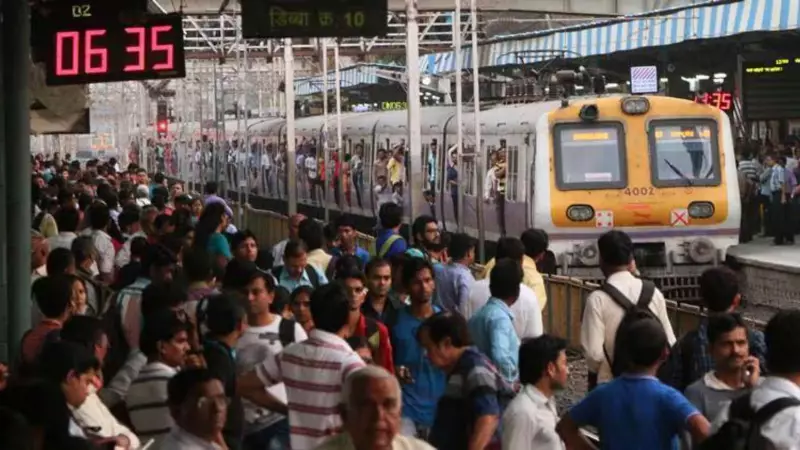
Mumbai's suburban railway ranks among the world's busiest transport systems, ferrying an estimated 7.5 to 8 million passengers each day. During peak hours from 8 am to 11 am and 5 pm to 9 pm, trains often operate at more than double their designed capacity, with 14 to 16 passengers crammed into every square metre of coach space. A 2017 qualitative study titled Frustrations, Fights, and Friendships: The Physical, Emotional, and Behavioural Effects of High-Density Crowding on Mumbai's Suburban Rail Passengers by researchers from Central Queensland University confirmed that Mumbai's local trains endure some of the densest passenger loads globally. Despite some capacity increases since the report's publication, overcrowding and conflicts over boarding and alighting continue to trigger violent incidents.
Physical Stress and Loss of Control
The study reveals that passengers are forced into uncomfortably close body contact while boarding and alighting. Movement becomes severely restricted, maintaining balance is challenging, and personal belongings such as bags, dupattas, and even hair often get trapped in the crush. This constant loss of physical control heightens irritation and fear, particularly near train doors and platform edges where crowd pressure peaks.

Emotional Pressure from Daily Life
Researchers found that many commuters board trains already burdened by work stress, financial anxieties, and family pressures. Overcrowding exacerbates this strain, fostering feelings of helplessness and anger. Commuters frequently report having no alternative but to endure the daily crush, which significantly lowers their tolerance for others' behaviour.
Small Triggers, Big Reactions
In such high-pressure environments, minor incidents like being pushed, stepped on, or brushed against can quickly escalate into arguments. The study notes that accidental contact is often perceived as deliberate, especially when tempers are already frayed. Once personal space collapses, even trivial disputes can spiral into shouting matches or physical violence.
Noise and Phone Use as Flashpoints
Commuters also identify everyday irritants such as loud phone conversations, mobile videos played without earphones, and jostling while recording reels as new sources of friction. In overcrowded compartments, noise travels easily and personal boundaries vanish, making such behaviours frequent triggers for verbal clashes.
Fights as Emotional Release
Some passengers view train arguments as a means to vent bottled-up frustration at strangers they are unlikely to encounter again. Researchers observed that for certain commuters, shouting matches serve as a form of emotional release in an otherwise powerless situation.
Station Design Adds to Pressure
Urban transport studies indicate that narrow staircases, foot-over-bridges, and poorly planned exits worsen crowd stress. At busy junctions like Prabhadevi-Parel and Kurla, commuters are funnelled from wide platforms into narrow stairways, creating panic, bottlenecks, and frequent pushing.
Culture and Collapsed Personal Space
Researchers highlight that social norms regarding personal space break down under Mumbai's extreme crowding. When bodies are forced into constant contact, avoiding confrontation becomes more difficult, and tempers flare more readily. This breakdown in social rules contributes to the volatile atmosphere on local trains.