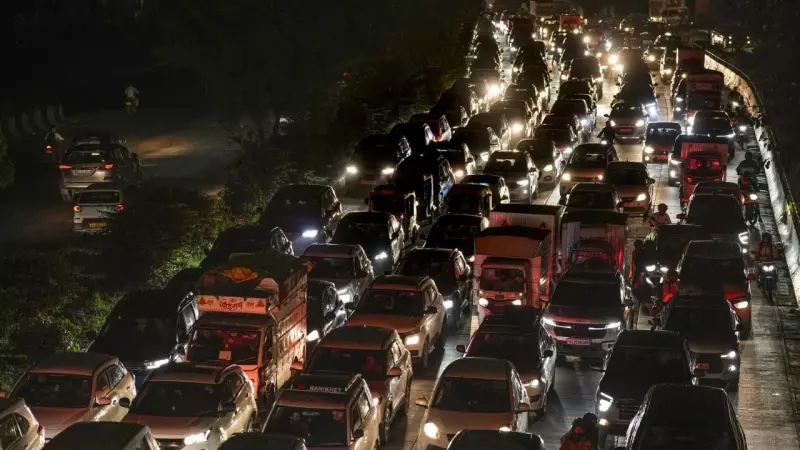
Mumbai's roads have reached a critical juncture, with the number of private cars in the city surging past a historic milestone of 15 lakh, according to the latest data from the transport department. This unprecedented growth has pushed the vehicular density to an alarming 753 vehicles for every kilometre of the city's road network, highlighting a severe infrastructure strain.
Explosive Growth in Private Vehicles
The transport department's figures reveal that total car registrations in Mumbai stood at 15,06,690 last week. This number underscores the relentless addition of private vehicles onto roads that have seen minimal expansion over the years. In a stark illustration of this trend, 49,313 new cars were registered just in the first nine months of the current financial year across the city's four Regional Transport Offices (RTOs).
The data paints a picture of a rapid, long-term motorisation spree. Over the past 13 years, the car population in Mumbai has more than doubled, skyrocketing by 142% from 6.2 lakh in 2012 to the current 15 lakh in 2025. Even in the last two years alone, car numbers have grown by a significant 15%, continuing unabated despite widespread concerns over traffic gridlock and air pollution.

RTO-Wise Breakdown and Statewide Trend
A closer look at the current fiscal year's registrations shows the Tardeo RTO zone leading with 13,408 new cars, followed by Andheri at 12,344, Borivli at 11,822, and Wadala at 11,739. The problem extends beyond just four-wheelers. The overall vehicle count in Mumbai has witnessed an even steeper climb, exploding from 7 lakh in 2005 to a staggering 53 lakh in 2025. Of this massive figure, two-wheelers constitute a dominant 31 lakh.
This trend mirrors a statewide surge in vehicle ownership. Maharashtra now has approximately 4.5 crore registered vehicles, which includes about 78 lakh cars and nearly 3 crore two-wheelers.
Experts Sound Alarm on Congestion and Infrastructure
Transport analysts are raising red flags, warning that the unchecked proliferation of private vehicles will severely worsen congestion and overburden the city's limited infrastructure. With road space remaining virtually constant, the escalating numbers point towards a deepening traffic crisis.
Experts emphasise the urgent need for policy interventions to discourage private car usage for daily commutes and incentivise a shift to public transport. "Office-goers should be discouraged from using private cars for daily commuting and encouraged to shift to public transport. This can be achieved by strengthening public transport systems and introducing measures such as congestion charges," a transport analyst advised. The consensus is clear: without decisive steps to curb private car growth and accelerate investment in mass transit systems, Mumbai's mobility challenges will only intensify.