As the global community observes the International Day of Persons with Disabilities, a stark reality confronts citizens with disabilities in India's financial capital. Despite the legal protections enshrined in the Rights of Persons with Disabilities Act, 2016, Mumbai remains a city of significant barriers for its wheelchair users, deaf community, and other persons with disabilities.
Promises on Paper, Denials on the Ground
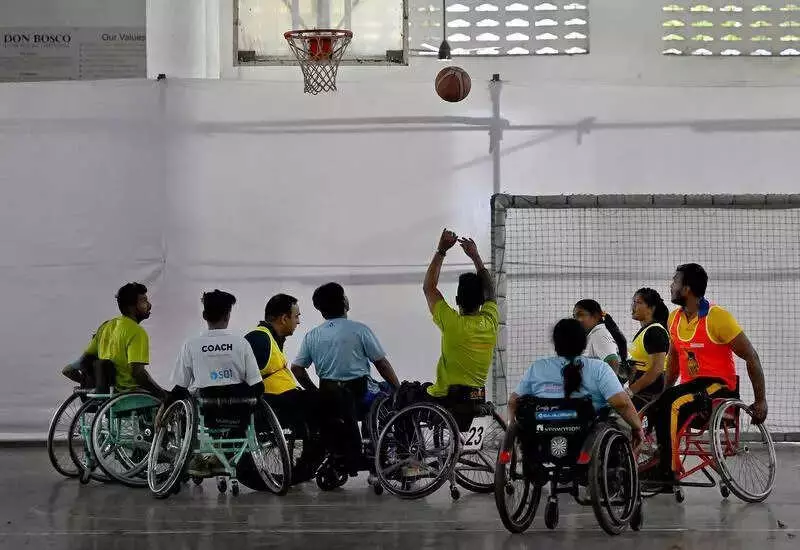
From sports grounds shutting out wheelchair athletes to a public transport system and banking infrastructure that remains largely inaccessible, the fundamental rights guaranteed by law are yet to be fully realized. Rahul Ramugade, a wheelchair cricket captain, encapsulates the collective frustration, stating his basic plea is not for privilege but for access. He has faced repeated denial of entry to local sports grounds, a common experience shared by many.
The hearing-impaired community faces a parallel struggle. Alok Kejriwal, founder and CEO of the Signing Hands Foundation, acknowledges improvements but highlights a critical shortfall. He points out that while the 2016 Act mandates accessibility in education, healthcare, and services, there is still no official recognition for Indian Sign Language. He emphasizes that the responsibility for implementing the act falls equally on private organizations and government bodies.

Infrastructure Inertia and Corporate Apathy
The gaps in daily life are numerous and glaring. Parvez Farid of the Mumbra-based Umeed Foundation, which has worked with persons with disabilities for 14 years, cites the severe lack of ATMs accessible to visually impaired individuals. He notes that except for one or two banks, most have failed to install machines that can be used independently. His NGO recently helped 30 visually impaired persons secure jobs in BPOs, underscoring the potential when empowerment is prioritized. Farid stresses the urgent need for sensitizing corporate entities.
The Brihanmumbai Municipal Corporation (BMC) defends its efforts, claiming it has worked to make public infrastructure accessible. It highlights the Mumbai Coastal Road project, opened in phases since last year, which was designed with universally accessible entry and exit points along the new promenade. The civic body has also installed ramps at several public underpasses to aid wheelchair movement and is incorporating similar provisions in newly concretized roads across the city, including areas like Dadar's Five Gardens.
New Solutions, Old Problems
However, disability advocates argue that these gains are frequently negated by poor planning. A prime example is the installation of bollards on footpaths to prevent bike encroachment. While addressing one safety issue, these bollards create another by leaving narrow gaps that wheelchair users and caregivers find impossible to navigate. Civic officials admit the dilemma, stating that removing bollards is not feasible due to motorists using footpaths as overflow lanes, but acknowledge the challenge of designing barriers that stop vehicles while allowing seamless passage for wheelchairs, stretchers, and prams.
On other fronts, there are incremental changes. Deputy Municipal Commissioner Kiran Dighavkar stated that all new public toilets will include disabled-friendly ramps and at least one specially designed seat. In public transport, the BEST undertaking has introduced accessible electric buses equipped with mechanical lifts for wheelchairs. These 12-meter-long buses are a step forward, but their availability is inconsistent, dependent on the specific vehicle assigned to a route.
The collective testimony from Mumbai's disability community on this International Day paints a clear picture: legislative intent has not yet translated into comprehensive, thoughtful, and universally implemented access. The city's journey from paper promises to an inclusive reality remains a work in progress, demanding sustained action from both public authorities and the private sector.