

Mysuru's Bogadi Road Set for Pedestrian-Focused Transformation Through 'Samavesha' Initiative
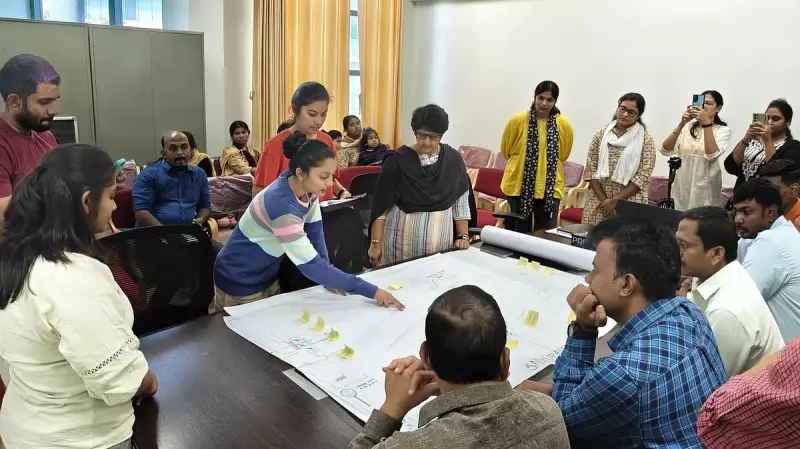
In a significant urban development move, the 'Samavesha' workshop held at the Centre of Excellence on the All India Institute of Speech and Hearing (AIISH) campus in Mysuru on Wednesday focused on reclaiming Bogadi Road for pedestrians. The event featured comprehensive presentations by students from the Mysore School of Architecture (MSA), who showcased detailed mapping studies and innovative design proposals aimed at transforming this key thoroughfare.
Comprehensive Accessibility Solutions for Vulnerable Groups
The student proposals specifically targeted improving accessibility for three crucial demographic groups that often face mobility challenges in urban environments. The designs emphasized creating barrier-free pathways and infrastructure that would benefit:
- People with disabilities through wheelchair-accessible ramps, tactile paving, and auditory signals at crossings
- Students from nearby educational institutions with safer walking routes and designated crossing zones
- Senior citizens through benches, shaded waiting areas, and reduced vehicular speeds in pedestrian zones
Detailed Mapping Studies Inform Practical Design Interventions
The MSA students conducted extensive field surveys and mapping exercises that documented current pedestrian challenges along Bogadi Road. Their research identified specific pain points including inadequate sidewalk widths, missing curb cuts, insufficient lighting during evening hours, and dangerous crossing points where pedestrian-vehicle conflicts frequently occur.

The design proposals presented at the workshop addressed these issues through practical, implementable solutions that balance pedestrian needs with existing traffic patterns. The students emphasized creating a continuous pedestrian network rather than isolated improvements, ensuring that once implemented, the entire stretch of Bogadi Road would become uniformly accessible.
Workshop Marks Collaborative Approach to Urban Planning
The 'Samavesha' workshop represents a collaborative approach to urban development, bringing together architecture students, accessibility experts, and community stakeholders. By hosting the event at the AIISH campus—an institution dedicated to speech and hearing—the organizers highlighted the importance of inclusive design that considers diverse abilities from the outset.
This initiative comes at a time when Indian cities are increasingly recognizing the need to prioritize pedestrian infrastructure alongside vehicular mobility. The detailed proposals presented by Sneha Madiyalkar, Md Hussain, and their MSA colleagues demonstrate how evidence-based design can create public spaces that serve all citizens equitably.
The workshop outcomes are expected to inform future development plans for Bogadi Road, potentially serving as a model for similar pedestrian-focused transformations in other parts of Mysuru and beyond. As cities continue to grow, such initiatives that prioritize vulnerable pedestrians represent a crucial step toward creating truly inclusive urban environments.






