

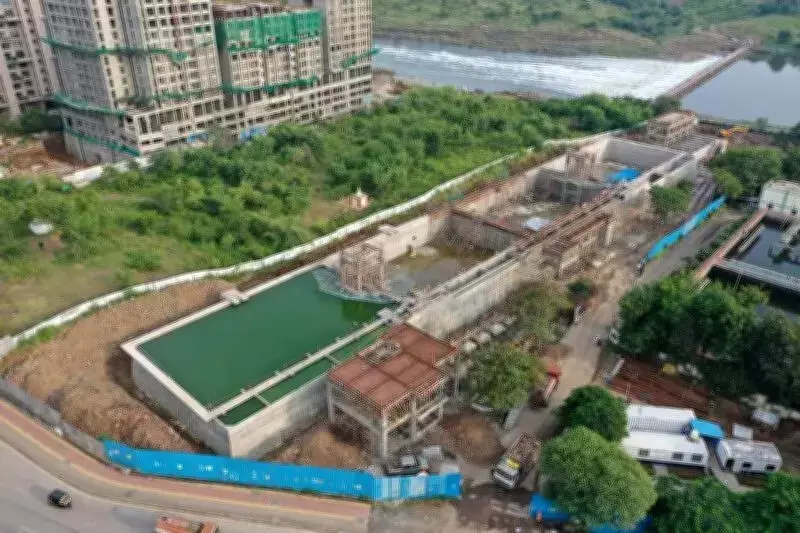
The Maharashtra state government is considering the formation of a special authority to manage the Mula-Mutha river rejuvenation projects. This move comes after various administrative bodies failed to prevent the daily discharge of untreated sewage into the rivers, leading to escalating pollution concerns.
New Authority's Role
If constituted, the new body will oversee the completion of key river infrastructure projects in both Pune and Pimpri Chinchwad. These include not only sewage treatment plants (STPs) but also riverfront development (RFD), according to officials.
Environmental Activists' Concerns
However, environmental activists argue that while efforts to improve project management are welcome, the government should focus on enhancing coordination among existing agencies rather than forming additional authorities. Shailaja Deshpande of Jeevitnadi, an organization working for river restoration, stated, "Only formation of a new authority will not be of help. This agency should work beyond state and Central boundaries. At present, local bodies are not being held responsible for the issues caused to the river in their limits."

Current Sewage Treatment Capacity
According to the Pune Municipal Corporation (PMC), the treatment capacity in its limits is 477 million litres per day (MLD), against total sewage generation of 980 MLD. Under the Pimpri Chinchwad Municipal Corporation (PCMC), total sewage generation is 515 MLD, with a treatment capacity of 423 MLD.
River Infrastructure Projects
Several river-related projects have faced public criticism. Under the National River Conservation Plan (NRCP), the 'Pollution abatement of Mula-Mutha river in Pune, Maharashtra' project, with Japan International Cooperation Agency (JICA) assistance, was sanctioned at a total cost of Rs990.26 crore around a decade ago. Of this, Rs841.72 crore is the Centre's share. The project aims to create 396 MLD sewage treatment capacity in Pune and lay a 53.5 km sewerage network. Initially scheduled for completion by March 2026, it has missed the deadline.
The contentious RFD project spans the entire 44 km length of the Mula and Mutha rivers flowing through the city. In the initial phase, work on a 3.7 km stretch between Sangamwadi and Bund Garden was prioritized, with approximately 90% completion. The 1.5 km Sangamwadi portion is fully ready. Expansion is underway on other sections, including a 5.5 km stretch from Bund Garden to Mundhwa and an 8.1 km stretch between Aundh and Balewadi.
Expert Opinions
Priyadarshani Karve, an environmental expert, told TOI, "The priority of authorities should be to completely treat all generated sewage. Only working on riverfront development will not be efficient unless sewage treatment issues are resolved. The special authority should not be the priority, but the infrastructure to deal with river pollution should be."
State minister for environment and climate change, Pankaja Munde, during her visit to Pune in April, inspected STPs and river infrastructure projects. She said, "The primary objective of these projects is to eliminate pollution in the Mula-Mutha. They aid in treating and reusing sewage water. The projects should be made fully operational at the earliest. The root causes of pollution must be identified and addressed through strong technical and administrative measures."






