

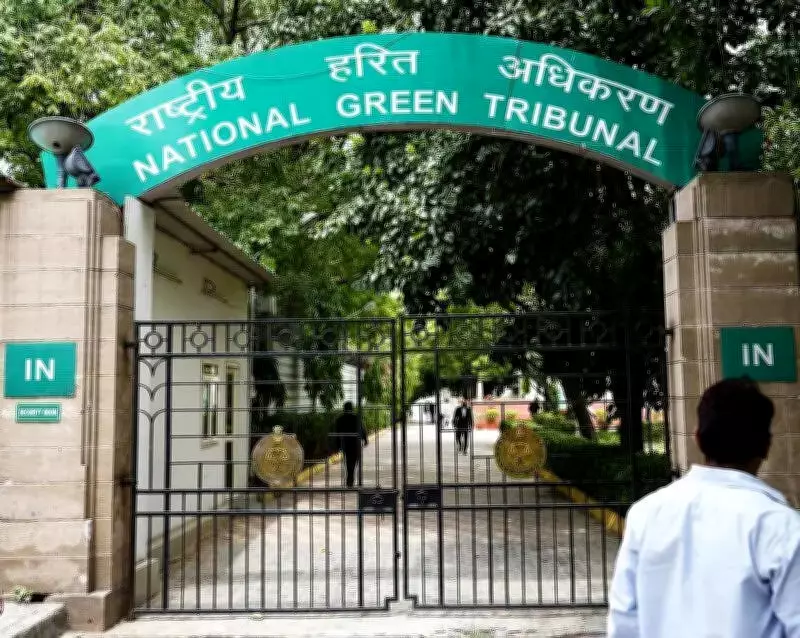
The National Green Tribunal (NGT) has issued notices to the Punjab government and other respondents regarding a petition that challenges the legality and environmental impact of the state's Farm Stay Policy-2026, which was notified on May 6.
Petition Filed by Council of Engineers
The petition, filed by the Council of Engineers, alleges that the policy permits permanent tourism and hospitality infrastructure in ecologically sensitive areas governed under the Punjab Land Preservation Act (PLPA), including both notified and de-listed forest-linked lands. The NGT order was uploaded on May 21.
Key Provisions Challenged
The petitioners have challenged provisions that allow permanent ground-plus-one structures, tourism units, and related infrastructure on agricultural land measuring one acre or more. They argue that the policy permits commercial activity even on de-listed and notified PLPA lands, despite restrictions imposed by the Supreme Court and the Union environment ministry.

Council of Engineers president Kapil Arora and vice-president Mohit Jain stated that the Supreme Court, while permitting de-listing of cultivated and habitation areas from forest records, had clearly barred commercial activity on such lands and restricted their use to agriculture and livelihood purposes.
Violation of Forest Conservation Act
The petition also cites communications issued by the Union Ministry of Environment, Forest and Climate Change under the Forest (Conservation) Act, 1980, which prohibit permanent private construction on forest land except for limited public utility purposes.
Environmental Concerns Raised
According to the plea, the policy promotes commercialisation of ecologically fragile Shivalik areas by allowing nearly 8,500 square feet of permanent structures with up to nine rooms and 18 tourist beds, without conducting carrying-capacity studies, biodiversity assessments, wildlife corridor mapping, or environmental impact assessments.
The petitioners further alleged that the policy is an attempt to bypass environmental safeguards and judicial restrictions imposed on the earlier Low Impact Green Habitats (LIGH) Policy, 2025.
Next Hearing Scheduled
The matter will next be heard on July 21.






