

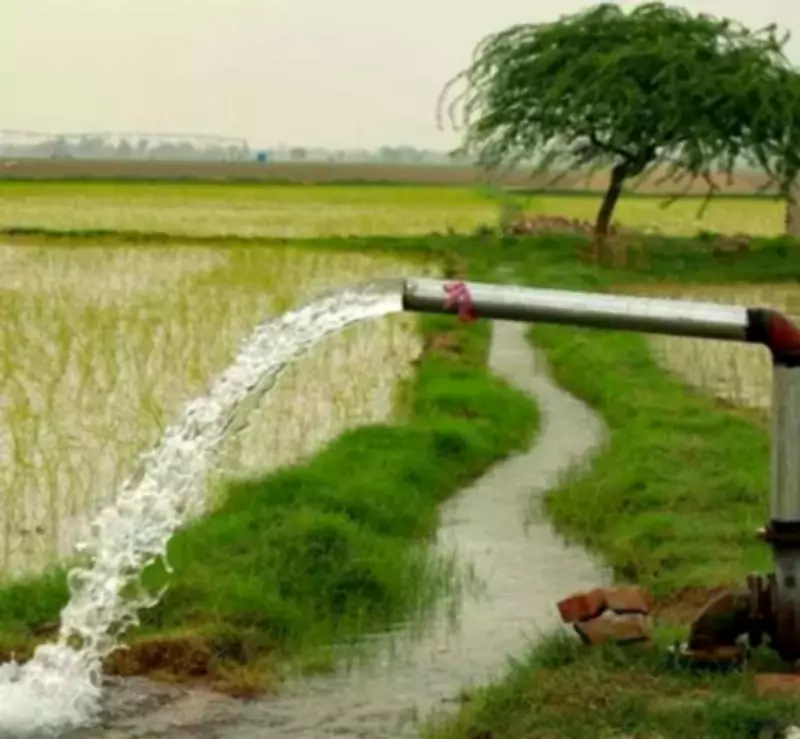
Parliamentary Panel Sounds Alarm on Punjab's Groundwater Crisis
A parliamentary committee has issued a stark warning regarding the severe depletion and contamination of groundwater in Punjab, highlighting escalating stress on the agrarian state's vital natural resource. The Standing Committee on Water Resources, in its report on the demands for grants for 2026–27 of the Union Ministry of Jal Shakti, documented that excessive groundwater extraction nationwide has resulted in aquifer depletion and a sharp decline in water tables.
Critical Imbalance in Key States
The committee observed that numerous states, with Punjab and Rajasthan being most notably affected, face a critical imbalance where water withdrawal rates drastically exceed natural replenishment. During oral evidence, the ministry informed the committee about national guidelines designed to regulate groundwater extraction in over-exploited regions, which states have the authority to implement.
Acknowledging the gravity of the situation, the committee emphasized that the department must adopt a proactive national strategy to curb groundwater exploitation. It prioritized collaboration with states and union territories for strict enforcement of these guidelines and requested a status update within three months of the report's presentation.

Contamination Concerns and Remedial Measures
The committee also expressed deep concern over groundwater contamination in several states, including Punjab. Referencing Central Ground Water Board findings, it noted that heavy metal contamination is generally location-specific, dependent on local hydrogeological conditions and source pressures, and does not necessarily indicate uniform contamination across entire areas.
The department outlined steps being taken to address contamination, including:
- Aquifer mapping under the National Aquifer Mapping and Management Programme (NAQUIM)
- Construction of arsenic- and fluoride-safe wells
- Implementation of the Jal Jeevan Mission (JJM)
- Artificial recharge of aquifers
- Promotion of sustainable agriculture to reduce chemical fertiliser use and encourage organic practices
However, the committee observed that, based on five-year monitoring data, contamination levels for key parameters such as electrical conductivity (EC), fluoride (F), and nitrate (NO3) have increased alarmingly in many partially affected districts across states and union territories.
Monitoring Delays and Flood Impacts
The committee flagged significant delays in installing digital water-level recorders, with several states, including Punjab, reporting zero installations as of January 2026. While acknowledging ongoing efforts, the committee expressed concern over these delays, particularly in water-stressed states, and called for expedited action, requesting a progress report within three months.
Additionally, the committee took note of recent flood events in Punjab, which caused extensive loss of life and property, crop damage, displacement, and infrastructure destruction. It noted that heavy monsoon rainfall in upper catchment areas, especially in Himachal Pradesh and Jammu & Kashmir, combined with surplus releases from dams, intensified flooding in downstream districts along the Ravi, Beas, and Satluj rivers.
The committee urged the ministry to encourage concerned state governments to implement necessary measures, such as constructing dams, reservoirs, and barrages in downstream areas, to control surplus water during monsoon seasons and mitigate damage from recurring floods. It requested to be informed of progress on this front within three months.

Key Observations and Recommendations
- Punjab ranks among the worst-hit states with groundwater extraction far exceeding recharge rates.
- Rapid aquifer depletion and falling water tables have been flagged as critical issues.
- Heavy metal contamination has been reported, though largely location-specific.
- Pollution levels (EC, fluoride, nitrate) are rising across numerous districts.
- Delays in installing digital water-level recorders persist, with Punjab reporting zero installations till January 2026.
- The panel advocates for stricter enforcement of groundwater extraction norms.
- The Centre has been asked to submit a status report within three months.





