

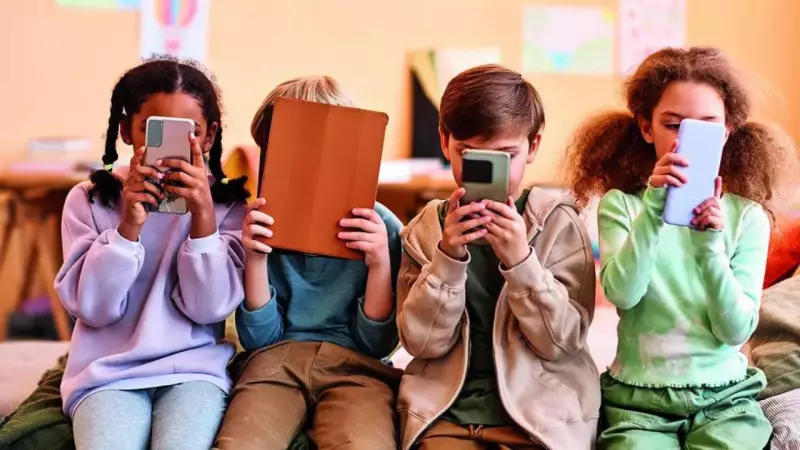
In the wake of Australia's landmark decision to bar children under 16 from using social media, a fierce global debate has erupted among parents. From Spain to Chile, families are grappling with the same question: is government intervention the solution to protecting children online, or is it an overreach that undermines parental responsibility?
The Global Parental Divide: From Support to Skepticism
A frustrated father in Spain, Israel Perez, knows the struggle firsthand. His 14-year-old daughter constantly pesters him to lift the restrictions he places on her social media apps like TikTok and Instagram. "I really see it as necessary, not as a drastic or excessive measure," Perez said, welcoming an Australia-like law for the support it would give parents against a pervasive online culture.
This sentiment finds strong backing in Britain, where a poll by the parenting community Mumsnet found 83% of parents would support a similar ban. Founder Justine Roberts confirmed that screen time is one of the most hotly debated topics on their forums.

However, not all parents are convinced. In Paris, a mother of three, Charlotte Valette, expressed skepticism: "I am not so enthusiastic about the idea of a state taking such a drastic measure." This view is echoed by a mother in Chile, who firmly believes that teaching responsible social media use is a parent's job, not the government's.
Governments Weigh In: A Wave of Potential Regulations
Australia's move has prompted several nations to consider following suit. Malaysia has announced plans to implement a similar ban starting in 2026. Denmark is contemplating what could be Europe's toughest restrictions, though they may not be as extensive as Australia's. In the United States, several states have already passed laws to restrict children's social media use.
The debate is complex. In Germany, a yearlong review of a parent-led petition for social media age limits revealed a deeply split public opinion. One respondent highlighted the practical challenge, questioning, "So, you're supposed to register on social media with a digital ID card now?... The clock can't be turned back." Yet, parent supporter Verena Holler called the issue "a global crisis."
Meanwhile, in Australia itself, surveys show most parents support the new rules, while tech-savvy teenagers are already discussing workarounds like using VPNs.
The On-the-Ground Reality: Parental Exhaustion and Grassroots Action
Many parents globally report feeling overwhelmed. They are worn down by the constant arguments, the required technological know-how, and the time needed to monitor their children's digital lives, often feeling they are fighting a losing battle.
Some are taking matters into their own hands. In Denmark, Anne Kroijer, a mother of four, successfully persuaded about three-quarters of the parents in her daughter's class to forgo smartphones. The children instead use older flip phones, which Kroijer notes are "so incredibly uninteresting that she forgets it half the time."
In other regions, cultural and economic factors play a role. Calvin Odera, a social worker in Nairobi, Kenya, pointed out that in a country betting on technology to boost its economy, it would be exceptionally difficult to persuade parents to take away their children's smartphones.
The conversation, ignited by Australia's bold policy, underscores a universal parental dilemma in the digital age. It pits the desire for protective legislation against fears of state overreach, and highlights the exhausting daily reality of raising children in a world where social media is omnipresent. The question now is whether more governments will decide that a blanket ban is the necessary shield for their youngest citizens.






