

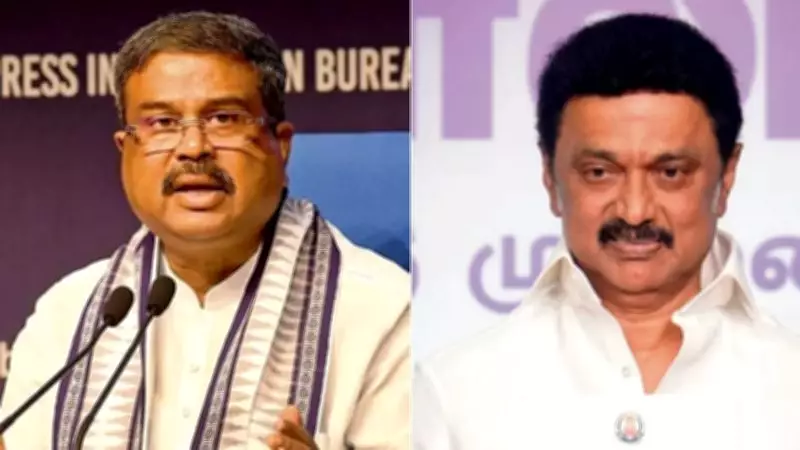
Union Minister Pradhan Rejects Tamil Nadu CM's Claim on Three-Language Formula
Union Education Minister Dharmendra Pradhan has issued a firm rebuttal to Tamil Nadu Chief Minister MK Stalin's recent criticism of the three-language formula in India's education system. Stalin had alleged that the policy amounts to linguistic imposition, particularly favoring Hindi over regional languages. Pradhan, in a detailed response, clarified that the formula is designed to foster multilingualism and uphold the country's rich linguistic heritage, rather than enforce any single language.
Background of the Three-Language Formula
The three-language formula, a longstanding component of India's educational framework, recommends that students learn three languages: the mother tongue or regional language, Hindi, and English. It aims to balance national integration with regional identity, promoting communication across states while preserving local linguistic traditions. The policy has been part of various national education policies since the 1960s, with adjustments over time to address concerns from non-Hindi speaking regions.
Stalin's Allegations and Pradhan's Counterarguments
Chief Minister MK Stalin, in a public statement, accused the central government of using the three-language formula to impose Hindi, arguing that it undermines Tamil and other regional languages. He claimed this could lead to cultural erosion in states like Tamil Nadu, where linguistic pride runs deep. In response, Minister Pradhan emphasized that the formula is flexible and respects India's diversity, allowing states to adapt it based on local needs. He highlighted that the National Education Policy 2020 reinforces this approach, encouraging multilingual education without mandating Hindi.

Pradhan stated, "The three-language formula is not about imposition but about inclusion. It empowers students to learn multiple languages, enhancing their cognitive abilities and cultural understanding. We respect every language in India and ensure that regional languages are given due importance in the curriculum."
Implications for Education and Federal Relations
This exchange underscores ongoing tensions between the central government and states over language policy, a sensitive issue in India's federal structure. Tamil Nadu has historically resisted Hindi imposition, with political parties often rallying around linguistic identity. Pradhan's rebuttal seeks to allay fears, asserting that the formula supports a harmonious blend of languages rather than dominance by any one. Experts note that effective implementation requires collaboration between central and state authorities to address regional concerns while promoting national unity.
The debate also touches on broader educational goals, such as improving literacy rates and preparing students for a globalized world. By learning multiple languages, students can access wider opportunities, but policies must be tailored to avoid marginalizing minority languages.
Looking Ahead: Policy Adjustments and Public Discourse
As the discussion continues, stakeholders are calling for clearer guidelines and consultations to refine the three-language formula. Pradhan's response indicates a willingness to engage with states to ensure the policy aligns with India's linguistic diversity. Public discourse on this issue is likely to intensify, with educationists and politicians weighing in on how best to balance language learning with cultural preservation.
In summary, while Chief Minister Stalin's claims highlight legitimate concerns from Tamil Nadu, Minister Pradhan's clarification aims to reinforce the formula's inclusive intent. The outcome of this dialogue could shape future educational reforms and inter-state relations in India.






