

Rajya Sabha MP Raises Alarm Over Punjab's Severe Groundwater Crisis
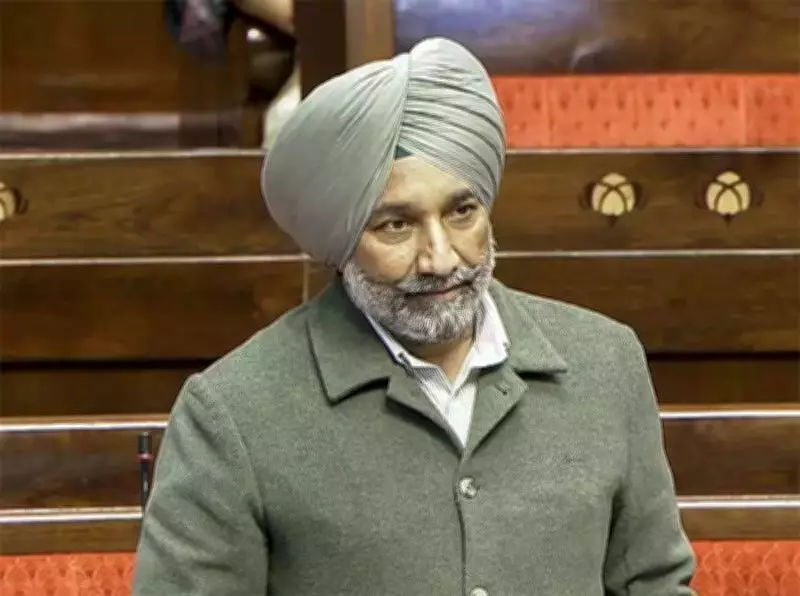
Rajya Sabha MP Satnam Singh Sandhu issued a stark warning on Monday, declaring that Punjab is facing a critical "water emergency" due to the rapid depletion and contamination of its groundwater resources. During the Question Hour in the upper house, Sandhu highlighted that a staggering 19 out of the state's 23 districts have now fallen into the dark zone category, indicating severe over-exploitation of groundwater.
Uranium Contamination Reaches Alarming Levels
The MP presented disturbing data showing that more than 62% of groundwater samples in Punjab contain uranium levels exceeding safe limits, marking the highest contamination intensity recorded anywhere in India. "The high uranium content poses a potential risk of cancer," Sandhu emphasized, raising serious public health concerns for the state's residents.
Sandhu attributed this crisis primarily to extensive paddy cultivation, which requires massive quantities of groundwater for irrigation. He cited findings from the National Green Tribunal's monitoring committee, which warned that if current trends continue unchecked, Punjab's groundwater table could plummet below 300 metres by 2039, potentially triggering catastrophic water scarcity across the state.

Groundwater Extraction Rate Soars Beyond National Average
The statistics presented were particularly alarming: Punjab's groundwater extraction rate has reached 156.36%, more than double the national average of approximately 60%. This makes Punjab the worst-affected state in terms of groundwater depletion in the entire country.
Sandhu referenced a Central Ground Water Board report confirming that around 62.5% of groundwater samples in Punjab contain uranium concentrations above permissible limits, further compounding the public health emergency.
Government Response and Conservation Initiatives
In response to these concerns, Union Jal Shakti Minister CR Patil informed the Rajya Sabha that the central government has allocated Rs 32,000 crore in the current financial year for water conservation and revival of dark zones nationwide under the Viksit Bharat Guarantee for Rozgar and Ajeevika Mission (VB-GRAMG). This initiative replaces the previous MGNREGA framework with enhanced focus and funding.
While acknowledging the discontinuation of the Atal Bhujal Yojana, Minister Patil assured that large-scale water conservation efforts continue under other programs. He noted that funding for water conservation has increased significantly from the previous scheme's Rs 6,000 crore allocation.
Prioritizing Water-Stressed Regions and Public Participation
The minister emphasized that water-stressed regions like Punjab are now receiving priority for funding and intervention. Highlighting Prime Minister Narendra Modi's call to transform water conservation into a mass movement, Patil reported that approximately 44 lakh water conservation structures have already been created across India through public participation.
Additionally, the government has launched the "Karmabhoomi se Matrabhoomi" initiative to encourage non-resident Indians and migrants to contribute to water conservation efforts in their native villages, with an ambitious target of constructing 1 crore such structures nationwide.
The exchange in Parliament underscores the urgent need for coordinated action between state and central authorities to address Punjab's deepening water crisis before it reaches irreversible levels.






