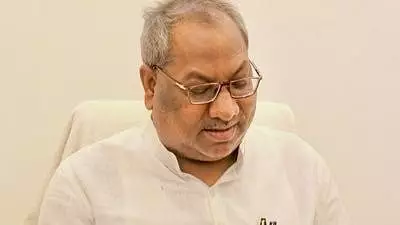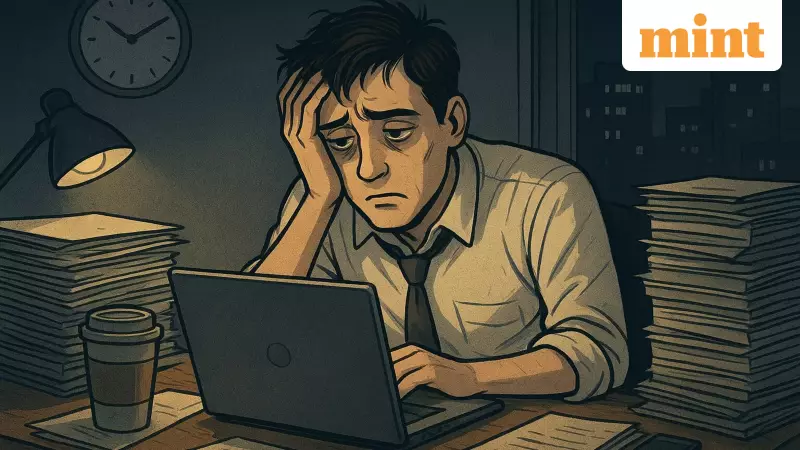
In a significant move that directly counters the growing advocacy for extreme work hours by some of India's top industrialists, Lok Sabha MP Supriya Sule introduced a private member's Bill in the Lower House on Friday. The Right to Disconnect Bill, 2025 aims to legally shield employees from the constant demands of work calls and emails outside their official working hours, seeking to foster a healthier work-life balance.
What Does The Right to Disconnect Bill Propose?
The Bill, which was first introduced back on October 28, 2019, has been reintroduced with provisions designed for the modern, digitally-connected workplace. Its core objective is to reduce burnout by empowering employees to set boundaries after work.
The legislation outlines several key rights for employees:

Firstly, it grants every employee the fundamental right to refuse to answer work-related calls, emails, or other communications outside their stipulated work hours. While an employer may attempt to contact a worker after hours, the employee is under no obligation to respond.
Secondly, if an employee chooses to respond and work during off-hours, they must be compensated with overtime pay at their normal wage rate, provided there is mutual agreement for such work.
Thirdly, the Bill explicitly protects employees from any disciplinary action if they exercise their right to disconnect and do not reply to after-hours communications. It does allow for contact during mutually agreed-upon times, but the power to refuse remains with the employee.
Broader Measures and Penalties
Going beyond just the right to ignore notifications, the Bill proposes holistic support systems. It suggests that the appropriate government should provide counseling services to help employees maintain a work-life balance. Interestingly, it also calls for the establishment of "digital detox centres" and related counseling services to help citizens manage their use of digital tools.
To ensure compliance, the Bill proposes financial penalties for entities that violate its provisions. Companies or societies found non-compliant could face a sanction equivalent to 1% of the total remuneration of their employees.
A Bill Against the Backdrop of Intense Work Culture Debates
The introduction of this Bill comes at a crucial time when the national conversation about work culture, remote work, and the "always-on" digital expectation is particularly heated. This debate has moved from social media chatter to boardrooms, with prominent business leaders voicing starkly contrasting views.
The discourse was notably intensified in 2023 when Infosys co-founder Narayana Murthy advocated for a 70-hour work week. A year later, at the Global Leadership Summit in Mumbai, he doubled down, stating, "I don't believe in work-life balance...I have not changed my view; I will take this with me to my grave."
Other industry figures have echoed similar sentiments. L&T Chairman SN Subrahmanyan expressed regret for not making employees work on Sundays and supported a 90-hour work week narrative. In a viral video, he questioned, "What do you do sitting at home? How long can you stare at your wife?"
Gautam Adani, Founder of the Adani Group, humorously remarked that if someone spends eight hours with family, "biwi bhaag jaayegi" (spouse will leave). He emphasized that work-life balance is personal and should not be imposed.
Adding to this, Ola Electric CEO Bhavish Aggarwal called the five-day workweek a "Western import," suggesting India traditionally followed a lunar calendar with fewer holidays. However, not all leaders agree. Namita Thapar of Emcure Pharmaceuticals and Shark Tank India fame strongly disagreed with applying founder-level work expectations to salaried employees, calling such comparisons "a crock of bull****."
Supriya Sule's Right to Disconnect Bill, 2025, therefore, enters Parliament as a legislative counterpoint to these powerful voices, aiming to legally codify the right of employees to recharge and disconnect in an era of blurred lines between office and home.