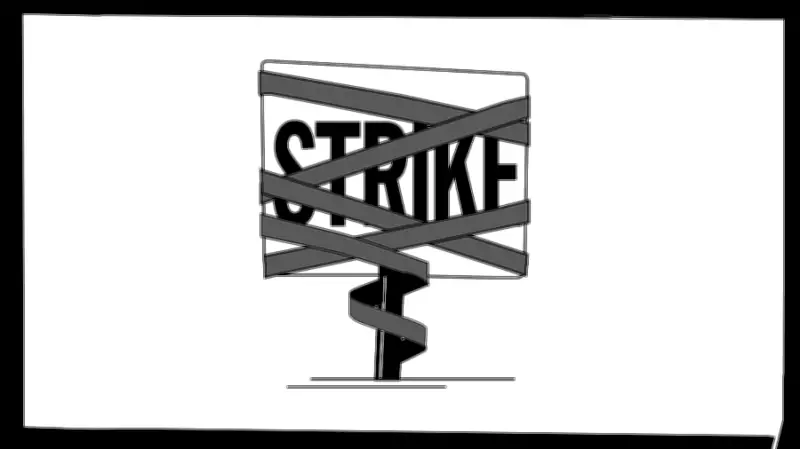
The right to strike, a fundamental tool for workers to collectively bargain and protest, is at a crossroads in India. Recent judicial pronouncements and legislative changes have sparked a debate about the scope and legitimacy of this right, raising questions about its future in the country's evolving labour landscape.
Historical Context of the Right to Strike
India's labour movements have a rich history, with the right to strike being recognized as a constitutional right under Article 19(1)(c) of the Indian Constitution, which guarantees the right to form associations or unions. However, this right is not absolute and is subject to reasonable restrictions imposed by law in the interests of public order, morality, and the sovereignty of the nation. Over the years, various court rulings have shaped the contours of this right, often balancing it against the needs of the economy and public service.
Supreme Court's Stance
In a landmark judgment, the Supreme Court of India has held that there is no fundamental right to strike under Article 19(1)(c). The court observed that the right to strike is a statutory right, and its exercise must be within the framework of the law. This ruling has significant implications, as it restricts the ability of workers to strike in essential services and public utilities, where strikes can cause widespread disruption.

Furthermore, the court has emphasized that strikes should be a last resort after exhausting all other avenues of negotiation. This perspective aligns with the government's push for a more business-friendly environment, aiming to attract investment and promote economic growth.
Current Challenges
Labour unions argue that the right to strike is under threat from multiple fronts. The introduction of labour codes, which consolidate and simplify existing labour laws, has been criticized for diluting workers' rights. For instance, the Industrial Relations Code, 2020, imposes strict conditions on strikes, such as mandatory notice periods and prohibitions on strikes in certain sectors. Unions contend that these provisions make it nearly impossible to legally strike, effectively crippling collective bargaining power.
Moreover, the rise of the gig economy and contract labour has further eroded traditional union structures. Many workers in these sectors are not covered by existing labour laws, leaving them without the right to strike or any meaningful collective representation.
Economic and Social Implications
The restriction on the right to strike has far-reaching consequences. On one hand, it can lead to increased productivity and economic stability, as disruptions are minimized. On the other hand, it may exacerbate income inequality and worker exploitation, as employees lose their only leverage against powerful employers. This tension is particularly acute in sectors like manufacturing, transportation, and public services, where strikes can have a cascading effect on the economy.
Socially, the ability to strike is a crucial democratic right that allows workers to voice grievances and demand fair treatment. Without it, workers may feel disenfranchised and powerless, leading to social unrest and alienation.
Future Outlook
The debate over the right to strike is unlikely to be resolved soon. As India continues to industrialize and integrate into the global economy, the balance between labour rights and economic efficiency will remain a contentious issue. The government, judiciary, and trade unions must engage in a constructive dialogue to find a middle ground that protects workers' rights without stifling economic growth.
One potential path forward is the strengthening of alternative dispute resolution mechanisms, such as arbitration and mediation, to reduce the need for strikes. Additionally, expanding social security nets and ensuring better enforcement of existing labour laws could alleviate some of the pressures driving strikes.

Conclusion
The right to strike in India stands at a pivotal moment. While legal and economic forces are pushing for its curtailment, the fundamental need for worker representation and collective action remains. The outcome of this reckoning will shape the future of labour relations in India for generations to come. It is imperative that all stakeholders work towards a sustainable solution that upholds the dignity of labour while fostering a vibrant and competitive economy.