

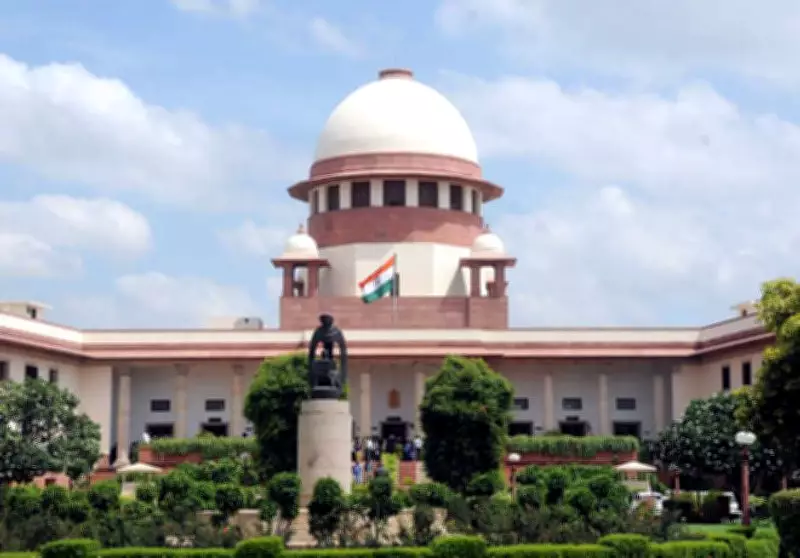
The Supreme Court on Wednesday expressed deep concern over the eroding independence of the Election Commission of India (ECI), observing that successive governments have failed to uphold the constitutional mandate of keeping the poll panel autonomous. A bench comprising Justice K.M. Joseph and Justice B.V. Nagarathna made the remarks while hearing a batch of petitions seeking structural reforms to ensure the ECI's independence.
Court's Observations on Government's Role
Justice Joseph, in his oral observations, stated, "Governments have failed to keep the Election Commission independent. It is a collective failure of all governments." The bench noted that the appointment process of Election Commissioners has been shrouded in opacity, with the executive enjoying unilateral power. The court emphasized that the current system, where the government appoints the Chief Election Commissioner and other Election Commissioners without any input from the opposition or judiciary, undermines the credibility of the electoral process.
Need for a Collegium-like System
During the hearing, the Supreme Court indicated that a collegium system, similar to that used for judicial appointments, might be necessary for selecting Election Commissioners. The bench suggested that a committee comprising the Prime Minister, the Chief Justice of India, and the Leader of the Opposition could be formed to ensure a broader consensus. This, the court argued, would insulate the ECI from executive influence and restore public faith in the electoral machinery.

Petitioners' Arguments
The petitioners, including the Association for Democratic Reforms (ADR) and other civil society groups, argued that the current appointment mechanism violates the basic structure of the Constitution. They contended that the ECI, as a constitutional body, must function without fear or favor, and its independence is non-negotiable for a healthy democracy. The petitioners also highlighted instances where Election Commissioners were appointed close to retirement, raising suspicions of quid pro quo.
Government's Stance
The central government, represented by Attorney General R. Venkataramani, defended the existing process, stating that the government is best placed to decide on appointments. The AG argued that the ECI has functioned effectively and that any change in the appointment process would require legislative intervention. However, the court seemed unconvinced, with Justice Nagarathna remarking that "independence of the Election Commission is the cornerstone of democracy."
Implications for Electoral Reforms
The Supreme Court's observations come at a crucial time when the ECI is facing criticism over its handling of recent elections and allegations of bias. The court has now fixed the matter for further hearing on April 11, 2023, and may consider issuing directions if the government fails to act. Legal experts believe that this case could lead to landmark reforms in the appointment process, potentially bringing India's electoral system in line with global best practices.
The case is part of a broader push for electoral reforms, including the demand for a transparent funding mechanism for political parties and stricter enforcement of the model code of conduct. The Supreme Court's strong stance signals that it is willing to step in to protect the integrity of the electoral process if the executive and legislature fail to do so.






