

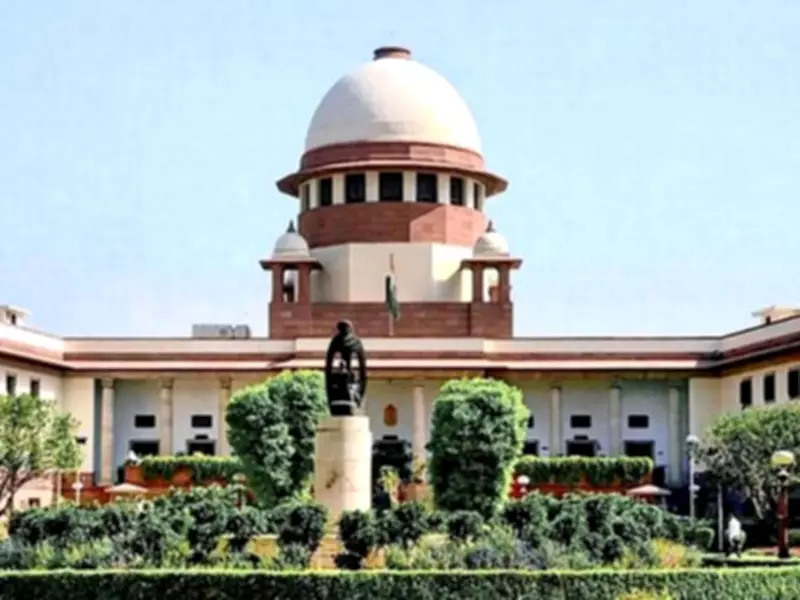
In a landmark judgment, the Supreme Court of India has for the first time recognized homemakers as 'nation builders' and directed that their notional monthly income be considered at least Rs 30,000 for calculating compensation in motor accident death cases. The ruling came while hearing a case involving the death of a homemaker in a road accident on November 25, 2001, where the family's compensation was enhanced from Rs 8.4 lakh to Rs 63 lakh, with 7.5% interest from the date of the accident.
Court's Observations on Homemakers
A bench of Justices Sanjay Karol and N K Singh emphasized the critical role of homemakers in the economy and stability of households. The court stated that women are largely responsible for the preparation of human capital, which is essential for the nation's aspirations of becoming the world's largest economy. The judgment noted that the economy and stability of a house are wholly dependent on the woman, and thus, their contribution must be recognized and valued.
Delay in Compensation
The court expressed pain over the 25-year delay in granting compensation to the family, with 22 years attributed to the case remaining pending in the Punjab and Haryana High Court. To ensure timely payment, the bench warned that if compensation is not paid within three months, the interest rate would increase to 9%, and after six months, it would rise to 12% per annum.

New Formula for Computing Compensation
The Supreme Court devised a new judicial formula for computing accidental death compensation, introducing the concept of 'loss of domestic care'. This includes three heads: loss of the homemaker's ability to manage household chores, loss for children who lose their mother, and loss for the husband who loses his life partner who helped run the house smoothly. The court criticized the gender stereotype approach that previously assumed a homemaker's notional income to be as low as Rs 3,000 per month.
Challenging Gender Stereotypes
The bench scoffed at the notion that a homemaker is dependent on earning members, stating, 'It is ironic to describe a homemaker as dependent on earning members when, in reality, the household’s functioning depends substantially on the homemaker. The earning members are, in fact, solely dependent on the homemaker, but alas, this reality does not receive the acknowledgment.' The court highlighted that women's unpaid caregiving work contributes an estimated 15-17% to India's GDP, yet remains unpaid and unrecognized.
Call for Early Disposal of Pending Cases
The Supreme Court also listed 123 accident compensation claim cases that remained pending for an average of eight years in various high courts. It requested the chief justices of those high courts to prioritize long-pending cases for early disposal.
Conclusion
Writing the judgment, Justice Karol said, 'It is high time that the invisible is made visible or the veil is pierced to make what can be partially seen come out in the open. Homemakers, to put it directly, actually are the nation builders, and they ought to be recognized as such.' The ruling is expected to significantly impact future compensation claims for homemakers across the country.






