

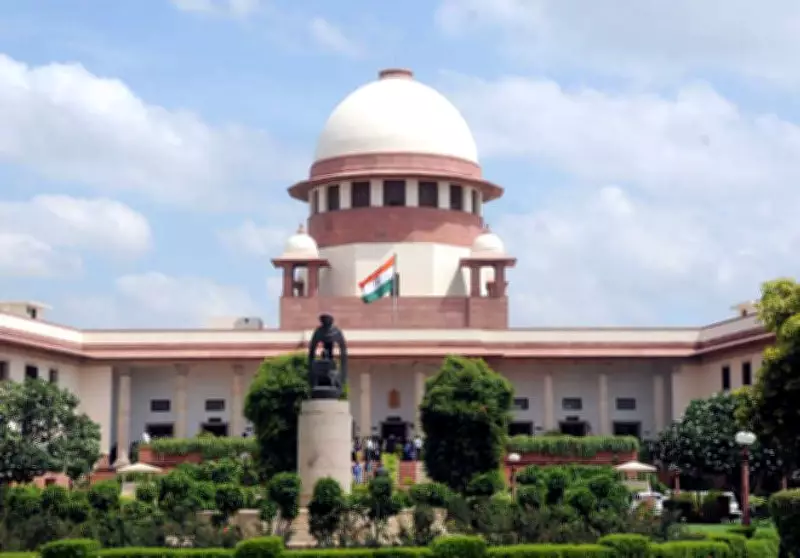
Supreme Court Seeks Response on RTE Act Violations in Punjab
The Supreme Court on Monday issued notices to the central government and the Punjab state government regarding a petition that claims the Right of Children to Free and Compulsory Education (RTE) Act, 2009, has not been properly implemented in Punjab for the past 15 years.
The plea requests the court to direct the Centre to ensure continuous and effective compliance with the RTE Act's provisions, particularly the requirement for private schools to reserve at least 25% of seats in Class 1 for children from weaker sections and disadvantaged groups.
Court's Observations During Hearing
A bench comprising Chief Justice Surya Kant and Justice V Mohana questioned the petitioner, who appeared in person, asking, "Have you been able to identify some schools which are not doing it?"

The petitioner argued that the RTE Act's provisions have not been enforced in Punjab since its enactment. He referenced a 2012 Supreme Court verdict that upheld the Act's constitutional validity.
State's Affidavit and Discrepancies
The bench noted an earlier affidavit from the Punjab government stating that over 450 students from economically weaker sections had been admitted to private schools. However, the petitioner contested this figure, asserting that the actual number should be around 50,000, given that nearly two lakh students are enrolled at the entry level annually according to government data.
The court issued a notice in response to the plea. It also suggested that the petitioner conduct a survey in at least one district to determine how many private schools exist and how many are not complying with the Act.
RTI and Monitoring Mechanism
When the petitioner mentioned filing a Right to Information (RTI) request the previous year, the bench observed that authorities often respond based on the nature of the questions asked, implying limitations of the RTI process.
The plea seeks a direction to the Centre to establish a transparent, time-bound, and verifiable mechanism—including public dashboards—to monitor compliance with Section 12(1)(c) of the RTE Act in Punjab. This section mandates that schools admit at least 25% of Class 1 strength from weaker sections and disadvantaged groups, providing free elementary education until completion.
Additionally, the petition calls for a transparent implementation mechanism in Punjab that includes determining and publishing available seats, admission schedules, accessible application processes, a reimbursement framework, and enforcement of statutory penalties for non-compliance.






