

Supreme Court Mandates Menstrual Hygiene in Schools: A Landmark for Girls' Education
January 30, 2026, will be remembered not just as Martyrs' Day marking Mahatma Gandhi's death anniversary, but as a pivotal moment for gender equality in India. The Supreme Court of India has issued a groundbreaking directive that could transform the educational landscape for millions of girls across the country.
A Historic Judicial Intervention
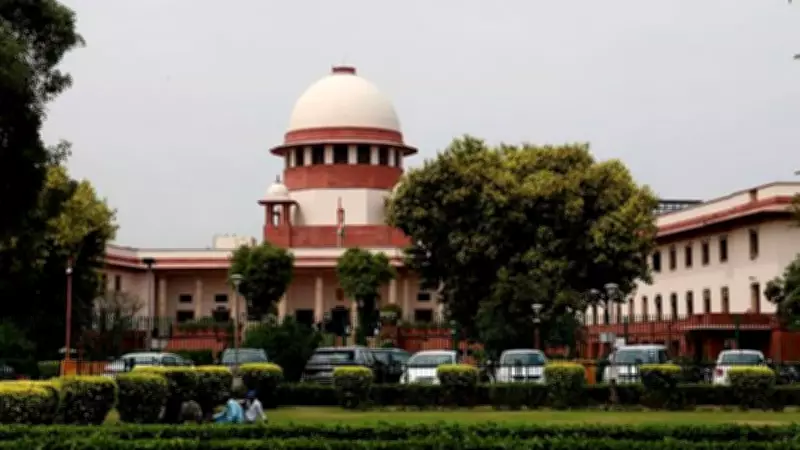
In a significant ruling, the Supreme Court bench comprising Justices J B Pardiwala and R Mahadevan has directed all states and Union Territories to implement comprehensive Menstrual Hygiene Management measures in both government and private schools. The court has mandated the provision of free sanitary napkins as part of these measures, recognizing menstrual health as an integral component of the fundamental right to life under Article 21 of the Constitution.
The court has given authorities a strict three-month deadline for compliance and warned of stringent consequences under the Right to Education Act for any failure to implement these crucial measures. This judicial intervention marks a watershed moment in addressing what has long been a silent crisis affecting girls' education in India.

Breaking the Silence on Menstruation
The Supreme Court's order directly confronts the deep-seated stigma surrounding menstruation in Indian society. The bench observed that the absence of proper menstrual hygiene facilities subjects girls to "stigma, stereotyping and humiliation", emphasizing that "dignity cannot be reduced to an abstract ideal."
This recognition comes at a crucial time when even educated, independent women often feel compelled to hide sanitary products from male colleagues, wrapping them discreetly in handkerchiefs or slipping them into pockets. The court's intervention signals that this hushed topic must finally break free from the shadows of societal taboo.
The Reality of Period Poverty
In many parts of India, particularly in rural hinterlands, girls and women continue to battle period poverty - the lack of access to menstrual hygiene products and proper sanitation facilities. For countless families, hygiene during menstruation becomes a daily struggle with limited resources, often involving just one piece of old cloth and minimal water for cleaning and reuse.
The consequences are severe: girls frequently miss school during their periods or drop out entirely when sanitary facilities remain beyond their reach. Women in these families, who might otherwise provide support, are often fighting their own battles with the same limited resources.
Educational Impact and Societal Change
The Supreme Court specifically addressed the educational implications of inadequate menstrual hygiene management, noting that "the absence of MHM measures at school would lead to recurrent absenteeism, which would result in a gap in learning." Over time, these gaps translate into lower academic performance and reduced classroom participation, creating sociological and psychological imbalances that extend far beyond the school years.
By normalizing menstruation through institutional support, the court's order aims to ease girls' battles with helplessness and indignity. For too long, menstruation has been treated as exclusively "the problem of girls and women" - now, they have received robust support from the country's highest judicial authority.
Implementation Challenges and Paradigm Shift
While implementation challenges exist, particularly in cash-strapped schools struggling to provide basic facilities, the order represents a remarkable step forward in a country grappling with period poverty. The directive has the potential to catalyze a paradigm shift in societal perceptions toward menstruation, helping to annihilate the deep-rooted taboos associated with this natural biological process.
As the Supreme Court rightly emphasized, to give Indian girls wings to chase their dreams, we must begin with the wings of sanitary pads. This landmark decision not only addresses immediate practical needs but also signals a broader cultural transformation in how India approaches women's health and education.






