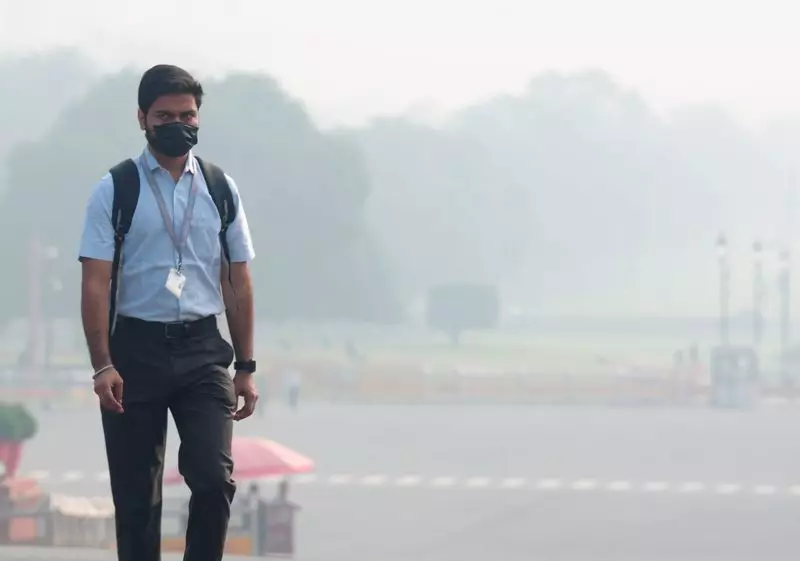
In a significant intervention, the Supreme Court of India has categorically rejected the widespread narrative that places the primary blame for Delhi's toxic air on farmers burning crop stubble. The bench, led by Chief Justice of India Surya Kant, delivered this crucial clarification, urging an end to the vilification of the agricultural community.
A Timely Warning on National Pollution Control Day
The court's remarks came on Monday, December 2, 2025, which was observed as National Pollution Control Day across the country. This timing underscored the urgency of having an honest conversation about the sources of the nation's deepening air-quality crisis. The judiciary warned against turning the complex issue of stubble burning into a simplistic political ego battle, diverting attention from other significant contributors.
The Lockdown Lesson: A Clear Indicator
Chief Justice Surya Kant posed a pivotal question that challenged the conventional blame game. He asked why Delhi experienced remarkably blue skies during the Covid-19 lockdown periods if stubble burning by farmers was the chief cause of pollution. The answer, as highlighted by the court, was evident. During the lockdowns, traffic vanished, construction activities halted, and industrial operations slowed down dramatically. This collective pause from urban and industrial sectors led to clearer skies, even though farmers' practices, including stubble management, largely remained unchanged.

This stark contrast served as a natural experiment, reinforcing the Supreme Court's position that the real drivers of pollution often lie elsewhere. It shifted the focus back to perennial urban and industrial sources that operate year-round.
Call for Holistic Accountability
The Supreme Court's stance emphasizes that achieving clean air requires a more equitable and comprehensive approach. Isolating farmers as scapegoats is neither fair nor effective. The path forward, as indicated by the bench, involves holding all polluters, including powerful industrial and urban entities, equally accountable. A sustainable solution demands coordinated action across sectors—transport, construction, industry, waste management, and agriculture—with supportive policies and technologies for each.
The court's intervention is a call to move beyond finger-pointing and to adopt a multi-source strategy to tackle the public health emergency of air pollution. It champions a justice-oriented framework where responsibility is shared based on evidence, not on convenience or political rhetoric.