

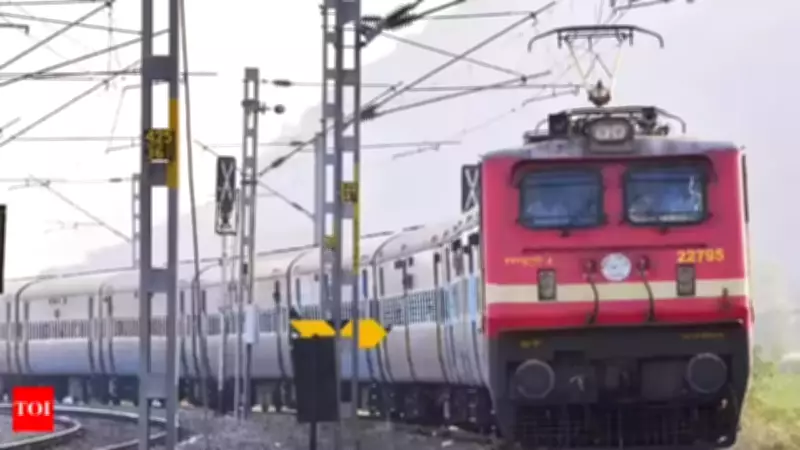
HYDERABAD: South Central Railway (SCR) is witnessing a sharp rise in train cancellations, disrupting passenger services across the zone and leaving thousands of commuters stranded every day. Over the last four years, more than 46,000 trains, including express, mail, passenger, MMTS and DEMU services were cancelled across the SCR network. Though the overall number of cancellations has reduced compared to previous years, cancellations due to non-availability of rakes have increased significantly, rising from just 30 in 2021 to 297 in 2025.
On average, nearly 18 trains are being cancelled daily. With a single express train carrying around 1,000 to 1,500 passengers, the disruptions are affecting thousands of travellers each day. Railway officials attributed most cancellations to maintenance blocks, track works and ongoing infrastructure projects. Adverse weather conditions and delays in paired trains also contributed to the disruptions.
Data accessed through an RTI filed by TOI revealed that nearly 4.1 lakh trains were cancelled during the pandemic years of 2020 and 2021, with close to 90% linked to Covid-related restrictions. Passengers, particularly daily commuters and long-distance travellers, say cancellations have become routine, especially in MMTS and passenger services relied upon by office-goers, students and low-income groups. Many also flagged poor communication and last-minute announcements, which often leave passengers scrambling for alternatives.

Impact on Commuters
The frequent cancellations have taken a toll on daily commuters who depend on MMTS and passenger trains for their daily travel. Office-goers, students, and low-income groups are among the worst affected, as these services are their primary mode of transportation. Last-minute cancellations often lead to chaos at stations, with passengers left with no immediate alternatives. Many have expressed frustration over the lack of timely information from railway authorities.
Reasons Behind Cancellations
Railway officials have cited several reasons for the surge in cancellations. Maintenance blocks, track works, and infrastructure projects are the primary causes. Additionally, adverse weather conditions and delays in paired trains have added to the disruptions. The non-availability of rakes has emerged as a growing concern, with cancellations due to this reason increasing tenfold from 2021 to 2025.
Historical Context
During the pandemic years of 2020 and 2021, nearly 4.1 lakh trains were cancelled across the SCR network, with most cancellations linked to Covid-19 restrictions. While the number has reduced since then, the current trend indicates a shift from pandemic-related cancellations to operational issues. The RTI data highlights that while overall cancellations have decreased, the proportion of cancellations due to rake shortages has grown.
Passenger Grievances
Passengers have raised concerns over poor communication from railway authorities. Many have reported that cancellations are announced at the last minute, leaving them with little time to make alternative arrangements. Daily commuters, in particular, have urged the railways to improve communication and provide advance notice of cancellations. Long-distance travellers have also faced disruptions, with some missing important appointments or events due to sudden cancellations.
Way Forward
To address these issues, railway officials have assured that measures are being taken to minimize cancellations. Infrastructure projects are being expedited to reduce maintenance blocks, and efforts are underway to improve rake availability. However, passengers remain skeptical, as the number of cancellations continues to rise. The SCR has been urged to adopt better planning and communication strategies to mitigate the impact on travellers.
About the Author: Sunny Baski specializes in reporting on civic issues, municipal affairs, and administrative challenges within the Greater Hyderabad Municipal Corporation and Water Board. His reportage includes in-depth analytical stories on transportation sectors, encompassing aviation, railways, and regional transport authority. He also ventures into rural areas to document compelling human interest narratives that resonate across the nation.






