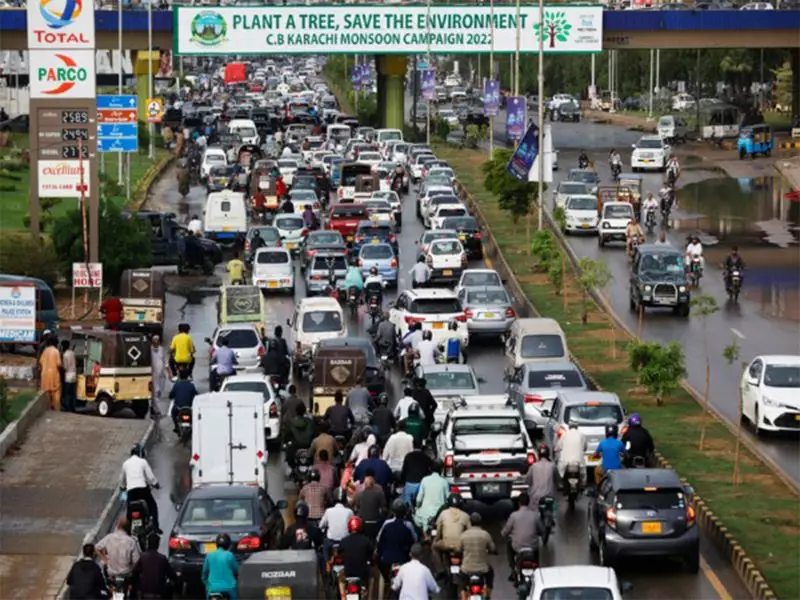
The Sindh Assembly in Pakistan became the stage for a heated confrontation on Monday, as lawmakers clashed over the severe public transport woes plaguing the provincial capital, Karachi. The session, which saw both verbal sparring and a significant government announcement, highlighted the critical state of the city's commuting infrastructure.
Assembly Erupts Over Transport Failures
The debate was triggered by a call attention notice concerning the miserable condition of Karachi's transport system. Opposition members from the Muttahida Qaumi Movement-Pakistan (MQM-P) launched a sharp critique, holding the provincial government responsible for the daily suffering of millions of commuters. The opposition pointed to the collapse of the once-extensive network of private buses and minibuses, leaving citizens stranded.
In a fiery exchange, Opposition Leader Ali Khurshidi directly challenged Sindh Information Minister Sharjeel Inam Memon. Khurshidi questioned the minister's claim of a functional government, arguing that a administration unable to provide basic transport cannot make such an assertion. The opposition's stance was clear: the transport crisis is a direct failure of governance.

Government's Defence and Major Expansion Plan
In response, Information Minister Sharjeel Inam Memon mounted a strong defence. He shifted a portion of the blame onto previous governments, accusing them of neglecting the transport sector and failing to initiate any substantial projects. Memon emphasized the current Pakistan Peoples Party (PPP)-led government's efforts, notably the launch of the Peoples Bus Service and the introduction of electric buses.
The most significant revelation came as part of this defence. Minister Memon announced a major expansion plan for Karachi's public transport. The provincial government plans to add 500 new buses to the city's fleet in the near future. This announcement serves as the government's primary counter to the opposition's accusations, positioning it as a proactive solution to the long-standing problem.
The Core of the Karachi Commuting Crisis
The debate in the assembly underscores a deep-seated crisis. Karachi, a megacity of over 20 million people, has seen its formal transport network erode over years. The reliance on a fragmented system of private operators, often using old and unsafe vehicles, has led to immense commuter hardship. Issues of affordability, safety, reliability, and coverage dominate the daily lives of the city's residents.
The government's Peoples Bus Service, while a step forward, currently operates on a limited number of routes, unable to meet the massive demand. The promise of 500 new buses is therefore a critical pledge. However, the assembly clash reveals the political friction surrounding the issue, with the opposition demanding immediate results and the government citing longer-term planning and past neglect.
The session concluded with the issue far from resolved, but with a concrete promise now on the table. The effectiveness of the Sindh government's planned bus expansion, and its ability to genuinely alleviate Karachi's transport nightmare, will be closely watched by both the opposition and the city's weary commuters.