

The Deadly Cost of Viral Fame: Social Media Reel Obsession Claims Young Lives Across India
What begins as a fleeting moment for the camera—a daring stunt, a dramatic pose, or an attention-grabbing shot—is increasingly ending not in viral fame but in tragedy across India. A disturbing pattern has emerged where the pursuit of social media content has turned fatal, with multiple incidents involving teenagers and young adults losing their lives while attempting to film reels.
A Nationwide Pattern of Tragedy
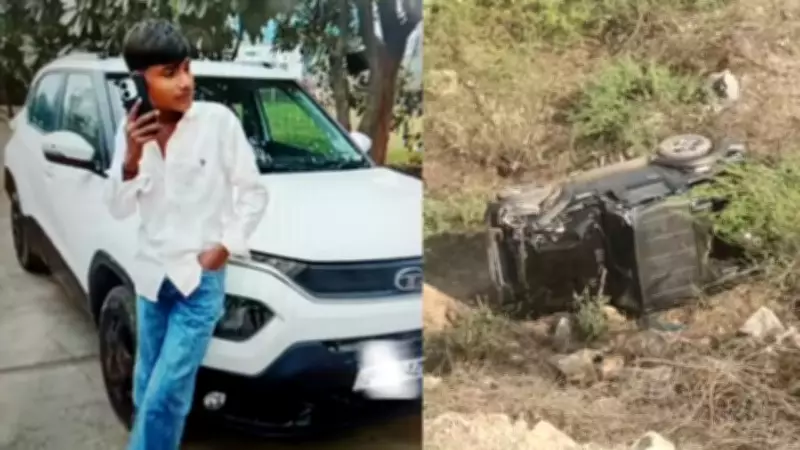
From northern hills to southern rivers, the dangerous consequences of reckless content creation are becoming alarmingly evident. In Faridabad's Sirohi village, a 15-year-old boy named Sohan died after an SUV carrying four friends plunged nearly 50 feet into a gorge in the Aravalli hills. While police cited overspeeding as the cause, sources indicated the teenagers were filming a stunt reel near the dangerous edge. The Class 9 student was declared dead at the hospital, with three others injured, one critically.
In Karnataka's Hubballi, another 15-year-old, Nimish Sangalad, died instantly when an Audi car driven by his friend struck him during a "sudden brake" reel attempt. Police revealed that despite repeated warnings, minors continue operating vehicles without parental knowledge or proper supervision.

Diverse Incidents, Common Thread
The tragedies span various circumstances but share the common element of social media content creation. In Lucknow's Madiaon area, 18-year-old Mohammad Zakir died while filming a hanging scene reel inside his home, losing balance during the shoot. Meanwhile, in Gorakhpur, four teenage boys aged 13 to 15 drowned in the Rapti River while attempting to shoot reels and record videos in water.
Maharashtra witnessed another heartbreaking incident when 18-year-old college student Aniket Sontakke drowned in a deep stepwell in Nagpur while filming reels with friends. He had specifically traveled to Velahari to create content and lost balance while trying to retrieve slippers that had fallen into the water.
Geographical Spread of Incidents
The dangerous trend shows no geographical boundaries. In Assam's Guwahati, 18-year-old laborer Rabil Ali died after falling from the Kumar Bhaskar Varma Bridge while attempting to film a reel on the railings. Madhya Pradesh saw 17-year-old Aniket Ahirwar electrocuted while filming a reel on top of a stationary freight train in Datia district, coming into contact with a high-voltage overhead wire.
Uttar Pradesh recorded another fatality when a 17-year-old boy in Meerut died after falling from a 150-foot-high water tank while filming a video. Karnataka's Kalaburagi witnessed 22-year-old tractor driver Lokesha Kallappa Pujari dying after falling under his vehicle while filming a reel during work, steering with one hand and recording with the other.
Gujarat's Surat saw 18-year-old Prince Patel, known for posting biking reels, die after crashing his motorcycle into a divider while riding at high speed without a helmet.
The Psychology Behind Risky Behavior
Experts point to the rise of short-video platforms as creating intense pressure among young users to produce engaging and viral content. The desire for likes, followers, and online recognition often pushes them to attempt risky stunts without fully understanding the potential consequences.
Psychologists emphasize that social validation plays a crucial role in this dangerous behavior. Young individuals increasingly equate online popularity with success, leading them to take extreme risks for attention. Many are influenced by content creators who perform dangerous stunts, assuming they can replicate them safely without proper precautions or training.
Authorities Respond to Growing Crisis
Police officials across multiple states have repeatedly warned against reckless behavior linked to social media content creation. In numerous cases, authorities have highlighted that minors were operating vehicles or accessing dangerous locations without adequate supervision or safety measures.

Officials stress the urgent need for parents to monitor their children's activities more closely, particularly their online behavior and physical whereabouts. They emphasize that many of these tragic accidents could have been prevented with basic precautions such as avoiding hazardous locations, wearing appropriate safety gear, and following established traffic rules and regulations.
Multi-Pronged Solutions Required
Addressing this growing public safety concern requires a comprehensive approach involving multiple stakeholders:
- Enhanced Awareness Campaigns: Educational institutions including schools and colleges must implement programs to educate students about the dangers of unsafe content creation and the real-world consequences of risky online behavior.
- Increased Parental Supervision: Families need to become more vigilant about their children's activities, particularly their online interactions and the content they consume and produce.
- Platform Responsibility: Social media platforms could introduce stricter guidelines, clearer warnings, and more effective content moderation against dangerous stunts and risky challenges.
- Strengthened Law Enforcement: Authorities may need to consider stricter penalties for reckless behavior, especially when it involves minors operating vehicles or accessing prohibited dangerous areas.
The Larger Societal Implications
These incidents collectively point to a significant societal issue where the boundary between entertainment and danger has become dangerously blurred. The widespread accessibility of smartphones and social media platforms has made content creation remarkably easy, but it has simultaneously exposed young users to risks they may not fully comprehend or appreciate.
The tragedies underscore how rapidly a moment of thrill-seeking can transform into irreversible loss. Many victims were teenagers with their entire lives ahead of them, and in several cases, accidents occurred in the presence of friends who could do little to prevent the tragic outcomes despite their proximity.
A Stark Warning for Digital Culture
The increasing number of deaths linked to social media reels serves as a sobering warning about the unintended consequences of digital culture. While technology has undoubtedly opened new avenues for creativity and self-expression, it has also fostered an environment where risk-taking is frequently rewarded with online attention and validation.
Unless awareness, responsibility, and caution take precedence over the relentless pursuit of viral fame, such preventable incidents are likely to continue occurring across the country. The stories emerging from various Indian states underline a painful reality that no number of likes, shares, or views can ever justify the loss of a human life.





