The current political debate surrounding the proposed Viksit Bharat-Guarantee for Rozgar and Ajeevika Mission (Gramin) Act (VB-G RAM G Act), intended to replace the Mahatma Gandhi National Rural Employment Guarantee Scheme (MGNREGS), overlooks a profound historical legacy. The concept of the state guaranteeing work in times of distress is not a modern invention but a thread woven through centuries of Indian history, evolving from famine relief into a codified legal right.
The Ancient Roots: Public Works as Famine Relief
Long before terms like "rights" or "social protection" entered policy discussions, Indian rulers grappled with a brutal reality: drought led directly to destitution and social unrest. Their solution was public works, not as charity, but as dignified employment. A seminal example is the construction of Lucknow's Bara Imambara in the 1780s. During a devastating famine, Nawab Asaf-ud-Daula commissioned the project to provide years of employment. Legends persist that nobles would dismantle parts of the structure at night to ensure labourers had work again the next day. The core principle was clear: in a crisis, the state must provide work, not alms.
This idea recurred throughout the colonial era via relief works, canals, and roads. However, it was in independent India that this age-old insight was finally transformed into binding law, beginning at the state level.

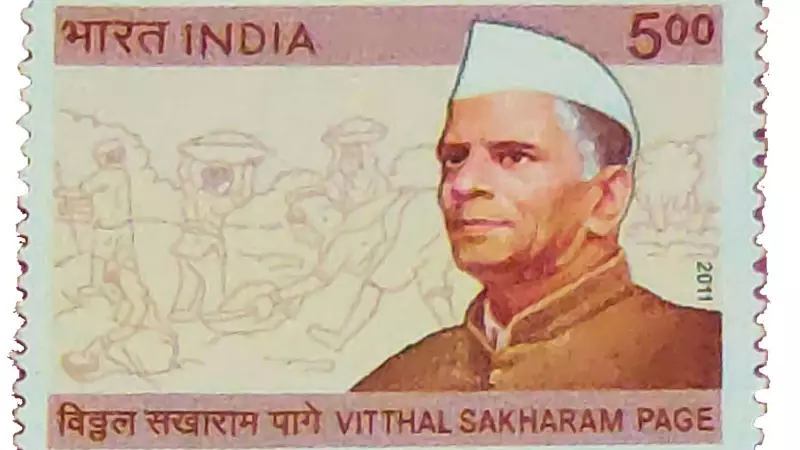
Vitthal Sakharam Page: The Gandhian Architect of EGS
The intellectual force behind this transformation was Vitthal Sakharam Page—a freedom fighter, scholar, poet, lawyer, and chairman of the Maharashtra Legislative Council from 1960 to 1978. A practitioner, not a theorist, Page advocated learning from the ground. As early as 1949, he published an article in the Marathi magazine Mauli arguing for a codified right to employment.
His vision was tested in the mid-1960s amid famine-like conditions in western Maharashtra. In Tasgaon taluka of Sangli district, Page initiated a small experiment, proving that Rs 700 could provide 20 days of work for 15 labourers. In a historic four-line letter to then Chief Minister Vasantrao Naik, he posed a transformative question: "If Rs 700 can support 15 people, how many could Rs 100 crore support?"
The pilot in eleven villages, including Visapur, operated on a revolutionary principle: wages were set slightly below market rates (around Rs 3 per day for men) to ensure the scheme was a last resort, not a replacement for agriculture. This was encapsulated in the Marathi phrase "magela tyala kama" (whoever asks, shall get work).
From State Scheme to National Law
Despite scepticism from New Delhi and the Planning Commission about an uncapped employment promise, Maharashtra launched the Employment Guarantee Scheme (EGS) in July 1969. It offered equal wages to men and women for land levelling, digging wells, and soil conservation. The results were compelling: distress migration slowed, local assets were created, and poverty was alleviated.
A critical innovation came during the severe droughts of the early 1970s. When Prime Minister Indira Gandhi declined central aid citing fiscal strain post the Bangladesh war, Page proposed a dedicated funding source: a profession tax on urban salaried workers earmarked for the EGS. This ring-fenced fund was fiercely protected from diversion.
After a decade of success and cross-party consensus, Maharashtra enacted the pioneering Employment Guarantee Act in 1978. The scheme, while not without its critics—some scholars like Ronald Herrings argued it benefited the rural elite—demonstrated that an open-ended employment guarantee was administratively and fiscally feasible.
Legacy and the Road to MGNREGS
The EGS served as a living laboratory, proving public works could be institutionalised as insurance against drought and unemployment. Its foundational principle—the state as an employer of last resort—stemmed from lived experience, not abstract theory, and was an early implementation of the Directive Principle under Article 41 of the Constitution.

When India finally enacted the MGNREGS at the national level in 2005, it effectively nationalised the Maharashtrian model refined over four decades. The scheme stood as a proxy for formal unemployment insurance, rooted in a history that stretches back to the famine works of the pre-colonial era.
As India debates its next generation of employment guarantee policy, understanding this forgotten history is crucial. It reminds us that the right to work is not a novel political promise but a time-tested response to India's enduring challenges of scarcity and livelihood security.