

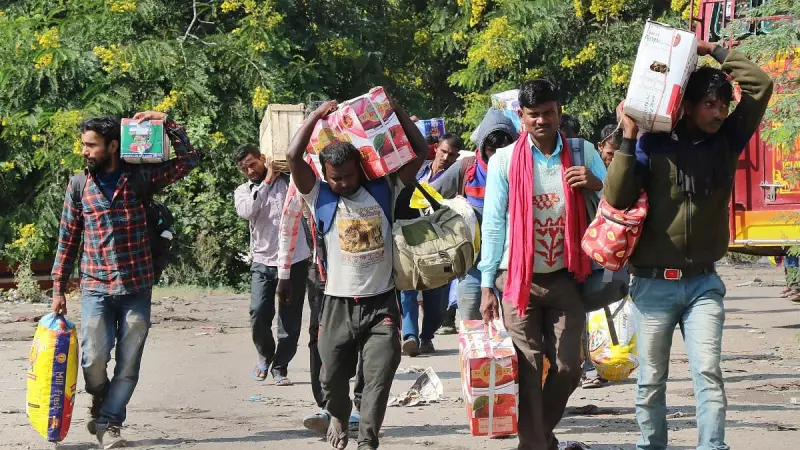
In a powerful critique of India's official discourse, labour rights advocate Rejimon Kuttappan has called for retiring the widely used term 'Pravasi' when referring to the country's vast migrant workforce. Writing in an opinion piece dated 18 December 2025, Kuttappan argues that this label, often celebrated in state ceremonies, actively erases the grim realities of exploitation and denies workers their legal identity.
The Ceremonial Veil of 'Pravasi'
Kuttappan contends that the term 'Pravasi' is steeped in what he describes as 'ceremonial nationalism.' It is a word frequently invoked during high-profile events like the Pravasi Bharatiya Divas, which honors the Indian diaspora. However, this usage creates a veneer of respectability that blinds society and policymakers to the systemic abuse and precarious conditions endured by millions of domestic migrant labourers. The term, he suggests, packages migration as a matter of pride rather than a circumstance often born out of economic desperation.
A Demand for Rights-Based Language
The core of Kuttappan's argument is a plea for linguistic and legal precision. He forcefully advocates for adopting the term 'migrant worker' instead. This phrase is not merely semantic; it is rooted in national and international law, carrying with it a framework of specific rights, protections, and recognitions. Unlike 'Pravasi,' which is vague and ceremonial, 'migrant worker' connects directly to legislation and conventions designed to safeguard this vulnerable group. It acknowledges their lived reality of seeking livelihood away from home, often in informal sectors with little security.

From Words to Action: Implications for Policy
This shift in terminology has profound implications. Recognising individuals as 'migrant workers' legally obligates the state and employers to address issues like fair wages, safe working conditions, access to social security, and protection from trafficking. Kuttappan's critique implies that the continued use of 'Pravasi' allows for a performative celebration that requires no substantive action on these fronts. By moving to a rights-based vocabulary, the conversation is forced to center on accountability, legal frameworks, and tangible welfare measures, moving beyond symbolic gestures.
Rejimon Kuttappan's intervention, published on 18 December 2025, is a timely reminder that language shapes perception and policy. His call to retire 'Pravasi' in favor of 'migrant worker' is a strategic move to strip away ceremonial obfuscation and focus on the hard legal and economic realities faced by one of India's most essential yet marginalized populations.






