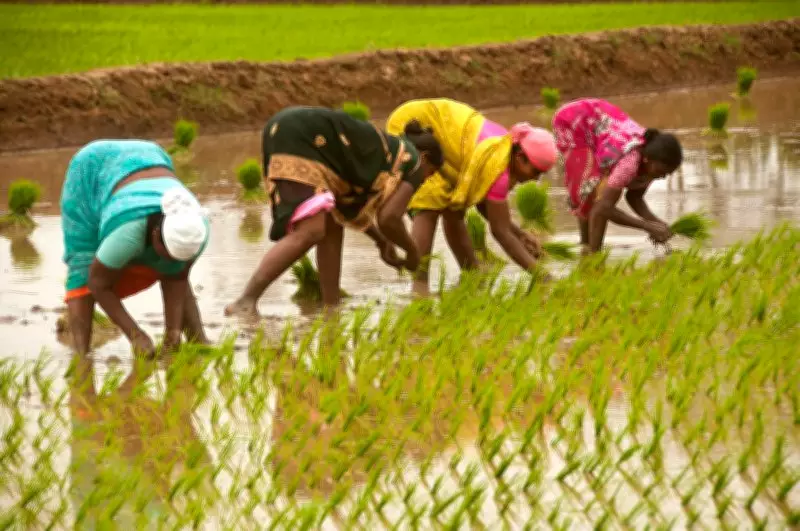
India's Agriculture Feminization: Women Lead Farms Without Recognition
Indian agriculture is experiencing a profound transformation that remains largely overlooked in mainstream policy discussions. Across countless villages, a significant demographic shift is occurring as men increasingly abandon farming to pursue employment opportunities in urban centers. This exodus has created a vacuum that women are now filling, taking on the critical responsibility of sustaining agricultural operations and ensuring household survival.
The Compulsory Transition to Female Farm Management
This agricultural feminization is not primarily driven by empowerment initiatives or progressive social change, but rather by economic necessity and compulsion. As male migration intensifies, women are stepping into roles that encompass the full spectrum of farm management, including:
- Cultivation of crops across multiple seasons
- Livestock management and animal husbandry
- Water resource management and irrigation
- Post-harvest processing and storage
- Market coordination and produce sales
Despite assuming these comprehensive responsibilities, women farmers continue to operate within a system that systematically excludes them from formal recognition and support structures.

The Invisible Workforce: Women's Labor Without Legal Standing
The most significant barrier facing women in agriculture remains their lack of legal recognition as farmers. Without formal land ownership titles, women's contributions remain largely invisible to agricultural policies, financial institutions, and government support programs. This creates a paradoxical situation where women are effectively managing farms while being excluded from the very systems designed to support agricultural producers.
The consequences of this exclusion are far-reaching and multifaceted:
- Limited access to credit and agricultural loans from formal financial institutions
- Exclusion from government subsidy programs and agricultural insurance schemes
- Inability to participate in farmer producer organizations and cooperatives
- Lack of representation in agricultural decision-making bodies
- Vulnerability to exploitation in land transactions and market dealings
The Systemic Undervaluation of Women's Agricultural Labor
Beyond legal recognition, women's agricultural labor suffers from systematic undervaluation. The work performed by women on family farms is often categorized as "family labor" rather than professional agricultural work, which has significant implications for:
- Wage parity and compensation for agricultural work
- Social security benefits and retirement provisions
- Skill development and training opportunities
- Technology adoption and mechanization support
- Access to agricultural extension services and expert guidance
This systemic undervaluation perpetuates a cycle where women's contributions remain economically invisible, despite their critical role in maintaining India's agricultural productivity and food security.
The Path Forward: Recognizing and Supporting Women Farmers
Addressing this paradox requires comprehensive policy interventions that acknowledge women's central role in Indian agriculture. Potential solutions include:
- Legal reforms to recognize women as farmers regardless of land ownership status
- Joint land titling initiatives that ensure women's property rights
- Gender-sensitive agricultural extension services and training programs
- Financial products specifically designed for women farmers
- Representation of women in agricultural decision-making bodies
As India's agricultural landscape continues to evolve, the recognition and support of women farmers will be crucial not only for gender equity but for the sustainability and productivity of the agricultural sector as a whole. The current situation, where women manage farms while remaining outside the formal agricultural system, represents both a significant challenge and an opportunity for transformative change in rural India.