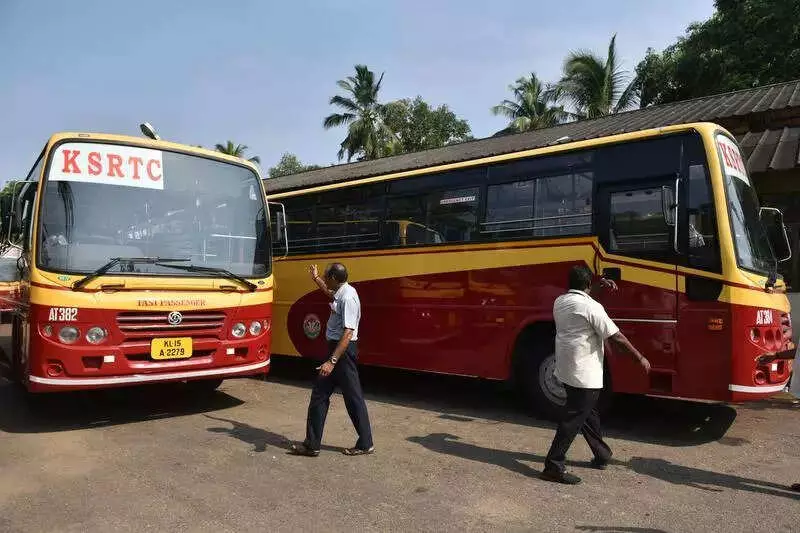
Alarming new district-level data has exposed a massive insurance gap within the fleet of the Kerala State Road Transport Corporation (KSRTC) and its Swift subsidiary. More than half of the state-run buses are currently operating on roads without any valid insurance coverage, raising significant concerns about passenger safety and corporate liability.
District-Wide Breakdown Reveals Stark Reality
The figures paint a concerning picture across Kerala. Out of a total fleet of 5,565 buses, only 2,425 are insured, leaving a staggering 3,140 vehicles without any insurance protection. The situation is most critical in the capital district. Thiruvananthapuram, which houses the largest fleet of 1,466 buses, has 880 running uninsured.
Other districts show similar troubling trends. Kollam has 378 uninsured buses out of 623, while Ernakulam has 299 out of 531 operating without coverage. The scenario is particularly severe in Kasaragod, where barely 48 of its 165 buses are insured. Palakkad presents a perfect 50-50 split, with 116 insured and 116 uninsured buses.

Official Explanation and Financial Burden
KSRTC officials have clarified that despite the wide gaps, every Fast Passenger and super class service is covered by insurance, along with all newly introduced buses. Currently, 137 KSRTC buses and 476 Swift buses benefit from package insurance policies.
The corporation attributes this uneven coverage to a long-standing exemption. A 1965 government notification frees KSRTC from the mandatory insurance requirement under Section 146 of the Motor Vehicles Act. As an alternative, passengers and staff are covered under a personal accident community insurance scheme introduced in 2014 via the KSRTC Cess Act.
Compensation for accident victims, including incidents involving uninsured buses, is paid directly by KSRTC following awards from the Motor Accidents Claims Tribunal (MACT). This places the entire financial burden of every claim on the already debt-strapped corporation, as uninsured buses continue daily operations in districts like Kannur, Kottayam, Thrissur, and others.
Electric Bus Transition: A Costly Dilemma
The insurance crisis brings renewed focus to the severe cost pressures facing KSRTC, especially amid ongoing debates about switching to electric mobility. While electric buses drastically cut running costs—Rs 6.89 per km on electricity versus Rs 17.32 per km for diesel—the initial investment remains a major hurdle.
A 9-metre non-AC electric bus costs approximately Rs 92.43 lakh, which is more than three times the price of a new BS-VI diesel bus at Rs 27.72 lakh. After the two-year warranty expires, electric buses incur an additional Rs 4.61 per km in Annual Maintenance Contract (AMC) charges for critical systems. The battery alone constitutes 30–35% of the vehicle's cost, and with its lifespan still uncertain, planners warn of looming major replacement expenses.
Officials stated that while earlier unaudited projections suggested potential savings from electric operations, updated assessments from other states show a lack of clarity on long-term financial benefits. KSRTC has concluded that environmental gains are the primary argument for electrification, and a complete transition is not financially viable in the current economic climate.