

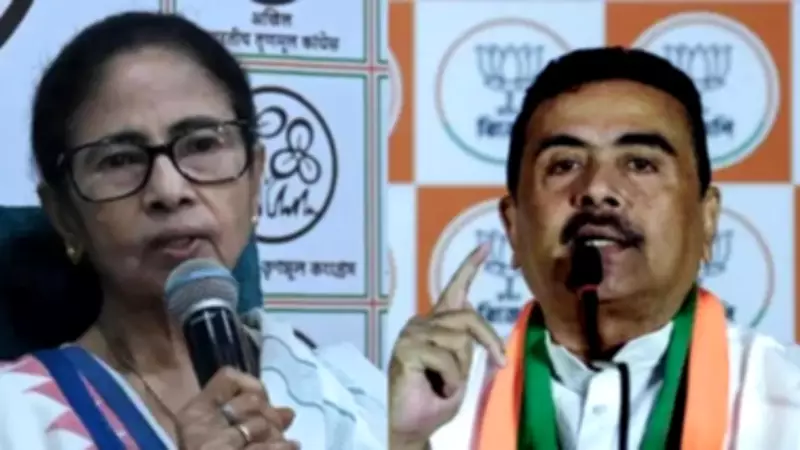
High Voter Turnout Shapes Election Dynamics in Bengal
The second phase of polling in West Bengal is being influenced by a very high turnout trend, making results less predictable and turning traditional voting calculations into a complex battle between political strategies. Voters across the state are showing increased participation, which could benefit either major party depending on local factors.
Seven Key Districts Decide Political Control of Bengal
Kolkata, North and South 24 Parganas, Nadia, Howrah, Hooghly, and East Burdwan are voting today. These seven districts are crucial in deciding which party will govern West Bengal. Together, they comprise a significant number of assembly seats and have diverse demographic profiles, ranging from urban centers to rural hinterlands.
Trinamool Congress Faces Challenge in Stronghold Areas
Despite historically strong support, the Trinamool Congress (TMC) is facing resistance in several constituencies, including Kolkata and suburban regions. Opposition activity and voter sentiment have increased in multiple areas, with local issues such as unemployment and infrastructure development taking center stage. The party's traditional vote bank appears to be showing signs of strain.

BJP Attempts to Capitalise on Anti-Incumbency Sentiment
The Bharatiya Janata Party (BJP) is trying to convert anti-incumbency feelings into electoral gains, especially in select pockets like Matua regions, industrial belts, and suburban zones across North 24 Parganas and Nadia. The party has focused its campaign on development promises and the narrative of change, or "paribartan," to attract voters dissatisfied with the current government.
SIR Concerns Influence Voter Behaviour and Turnout
Special Intensive Revision (SIR) fears are affecting voter sentiment and turnout patterns in some areas, adding uncertainty to traditional voting trends. The SIR process, which involves updating electoral rolls, has raised concerns about potential disenfranchisement, particularly among minority communities. This has influenced campaign strategies of both parties, with TMC highlighting the issue and BJP dismissing it as a routine exercise.
Localised Strongholds and Resistance Shape Constituency Battles
Different communities and regions show varied political leanings, with BJP, TMC, and the Indian Secular Front (ISF) holding influence in specific belts. The electoral contest is highly fragmented and region-specific. For instance, the Matua community in North 24 Parganas is a key swing group, while minority-dominated areas in South 24 Parganas lean toward TMC. In Howrah and Hooghly, industrial workers have shown mixed preferences.
Urban-Rural Divide Impacts Voting Preferences
Voting patterns show a divide between upper-middle-class and lower-income groups, with differing political preferences influenced by welfare schemes, development promises, and opposition messaging. Urban voters in Kolkata and Howrah appear more receptive to the BJP's anti-incumbency pitch, while rural voters in Nadia and East Burdwan have traditionally backed TMC's welfare programs. The final outcome will depend on which party can mobilise its base effectively in these diverse constituencies.






