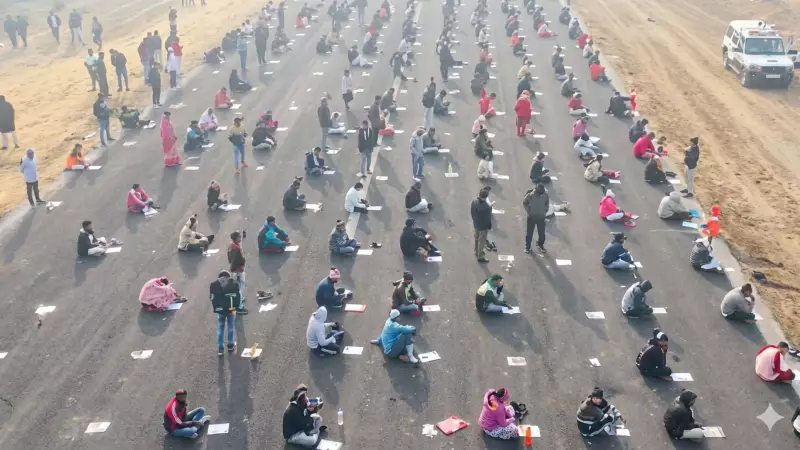
In a stark reflection of the intense competition for government jobs in India, a staggering 8,000 applicants recently sat for a written examination to fill merely 187 posts for Home Guards in Odisha's Sambalpur district. The sheer volume of candidates forced authorities to employ an unconventional venue: the runway of the Jamadarpali Airstrip.
An Airstrip Transforms into a Massive Exam Hall
The recruitment drive, conducted by the Sambalpur police on December 16, 2025, was for positions across 24 police stations in the district. Faced with a significant logistical challenge due to the enormous number of applicants, officials decided to use the open space of the airstrip's runway. This ensured all candidates could be accommodated comfortably and the exam conducted smoothly.
A senior district police officer explained the decision, stating that conventional halls were insufficient. The use of such large, open spaces like stadiums or airstrips has become common in other districts with similar applicant turnout. For this exam, authorities deployed adequate personnel and even used drones to monitor the proceedings, ensuring integrity across the vast area.

Highly Qualified Candidates for Entry-Level Posts
The most striking aspect of this recruitment is the qualification mismatch. The advertised posts for Home Guards require a minimum educational qualification of just Class V. However, officials revealed that the majority of the 8,000 applicants were graduates. A significant number even held Master's degrees, as well as technical and management qualifications.
The written test itself was a 90-minute exam carrying 50 marks. Candidates who clear this stage will be called for a physical fitness test. The position is contractual, with the Odisha government providing a daily duty allowance of Rs 639.
A Symptom of a Larger Employment Crisis
This event underscores the severe scarcity of formal employment opportunities, especially in the government sector, which continues to attract lakhs of youth despite relatively modest pay scales. The image of thousands of highly educated individuals competing for a limited number of low-skill, contractual positions highlights the deepening job crisis.
The scramble for these 187 posts in Sambalpur is not an isolated incident but a common phenomenon across districts in Odisha and likely other states. It points to a critical need for job creation aligned with the skills and education levels of India's burgeoning workforce. The sight of an airstrip filled with examinees serves as a powerful metaphor for the long runway many Indian graduates face in their search for stable employment.