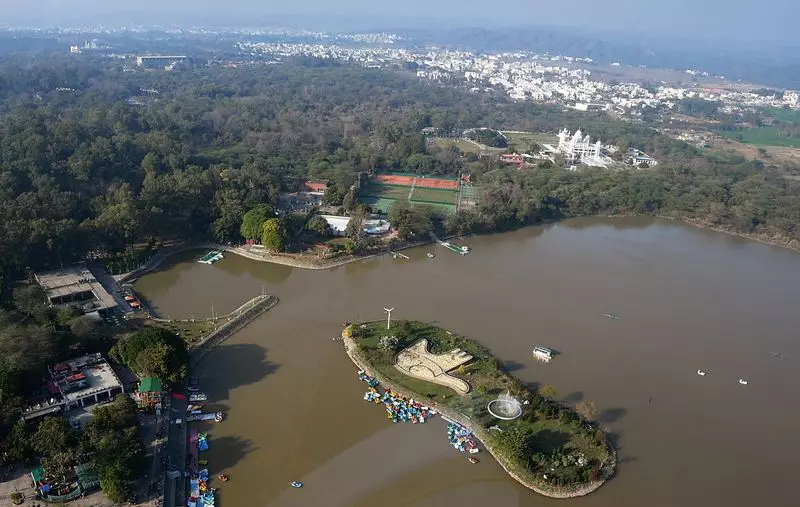
The Aam Aadmi Party (AAP) has launched a sharp critique against the central government's recent initiative concerning the Sukhna Wildlife Sanctuary in Chandigarh. The party has strongly opposed the proposal to declare an Eco-Sensitive Zone (ESZ) around the sanctuary, labeling the move as detrimental to the city's environment and against the wishes of its residents.
What is the Centre's ESZ Proposal?
The controversy stems from a directive issued by the Union Ministry of Environment, Forest and Climate Change. The ministry has asked the Chandigarh Administration to submit a formal proposal for notifying an Eco-Sensitive Zone around the Sukhna Wildlife Sanctuary. This zone would impose specific restrictions on activities and development in the surrounding areas to protect the sanctuary's ecological balance.
However, AAP's Chandigarh unit, led by its president and Member of Parliament, Kuldeep Kumar, has taken a firm stand against this push. The party argues that Chandigarh is already a planned city with limited land and a carefully managed green cover. They contend that imposing an ESZ would effectively halt all future development projects in the city, including crucial infrastructure and housing initiatives meant for the public.

AAP's Accusations and Public Interest Concerns
Kuldeep Kumar did not mince words in his criticism. He accused the central government, led by the Bharatiya Janata Party (BJP), of using the ESZ proposal as a tool to stall Chandigarh's progress and undermine public welfare. He pointed out that the city's development is already guided by a master plan, and an additional layer of restrictions from an ESZ would be unnecessary and harmful.
"This is a conspiracy against the people of Chandigarh," Kumar stated. He emphasized that the move appears designed to prevent the AAP-led municipal corporation from executing development works that benefit common citizens. The party fears that declaring the ESZ would freeze large tracts of land, making it impossible to build schools, hospitals, roads, or housing societies that the growing population of the city requires.
The Environmental Protection Debate
The central government's perspective, as implied by the ESZ push, is rooted in environmental conservation. Eco-Sensitive Zones are typically created to act as a protective buffer around national parks and wildlife sanctuaries, mitigating the negative impacts of urbanization and human activity on fragile ecosystems. The Sukhna Sanctuary is home to diverse flora and fauna, and its protection is a stated priority.
Yet, the AAP counters that Chandigarh's existing planning mechanisms are sufficient for this task. They argue that the city's unique character as a "green city" is already preserved through its architectural and planning norms. The party suggests that the ESZ notification is a politically motivated step rather than a genuine environmental concern, alleging that it aims to create administrative hurdles for the local government.
Kuldeep Kumar has urged the Chandigarh Administration to outright reject the Centre's directive and not submit the requested proposal. He has called upon the citizens of Chandigarh to recognize this move as a threat to their city's future development and to oppose it. The party has promised to raise the issue on all relevant platforms to protect what they call the rightful development of Chandigarh.
This confrontation sets the stage for a potential conflict between urban development needs and environmental regulation protocols. The outcome of this dispute will significantly impact Chandigarh's master plan, its green cover, and the scope of future civic projects undertaken for its residents.