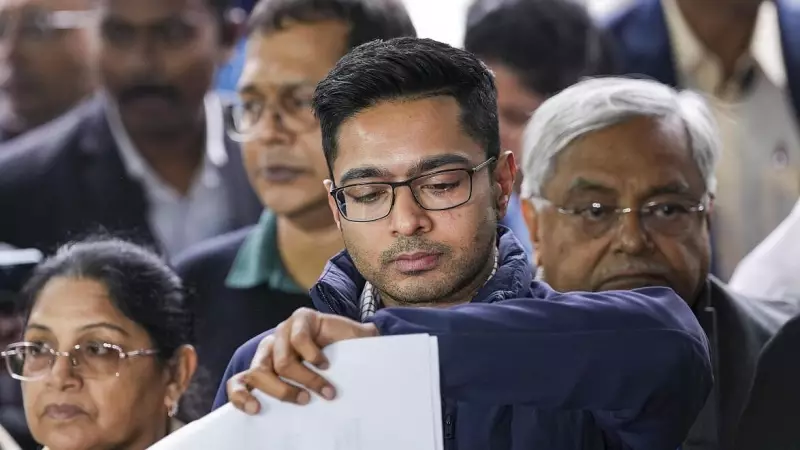
Trinamool Congress (TMC) national general secretary Abhishek Banerjee has made a serious allegation, claiming that his arrival at a scheduled meeting was significantly delayed on Monday due to what he termed as 'anti-Bengal forces' intentionally obstructing his travel plans.
The Alleged Delay and Last-Minute Arrangement
According to Banerjee, the Directorate General of Civil Aviation (DGCA) did not grant the mandatory permission for his helicopter to fly in time. This forced him to make an alternative arrangement at the last minute. His chopper eventually took off from the Behala Flying Club airstrip in Kolkata at around 2:20 PM, but not before a significant scramble.
To circumvent the delay, Banerjee's team secured an aircraft belonging to Jharkhand Chief Minister Hemant Soren. The TMC leader used this borrowed aircraft to reach his destination after the necessary clearances for his own helicopter failed to materialize. The incident occurred on January 6, 2026, casting a spotlight on the intersection of political travel and bureaucratic processes.
Political Accusations Take Center Stage
Banerjee did not mince words when explaining the cause of the delay. He directly accused forces opposed to the interests of West Bengal of deliberately withholding the DGCA nod. This framing immediately politicized the logistical hiccup, suggesting it was a targeted move to disrupt his schedule and, by extension, his political work in the state.
The allegation hints at a deeper political conflict, where administrative procedures are being viewed through a partisan lens. For a senior leader like Banerjee, who is often seen as the second-in-command of the ruling TMC in Bengal, such an incident is portrayed not as a mere bureaucratic delay but as a strategic obstruction.
Implications and Reactions
This event is likely to fuel further political rhetoric in West Bengal, where the TMC and the central government have often been at odds. The use of another chief minister's aircraft underscores the urgency of the situation from Banerjee's perspective and the lengths to which his team went to keep his commitments.
While the specific details of why the DGCA permission was delayed have not been independently verified, the public allegation by a figure of Banerjee's stature ensures the story will have political ramifications. It raises questions about the autonomy of regulatory bodies and their potential use in political maneuvering, a charge often levelled by opposition parties across the spectrum.
The incident serves as a reminder of the high-stakes nature of Indian politics, where even travel clearances can become a flashpoint for larger accusations of bias and obstructionism between state and central authorities.