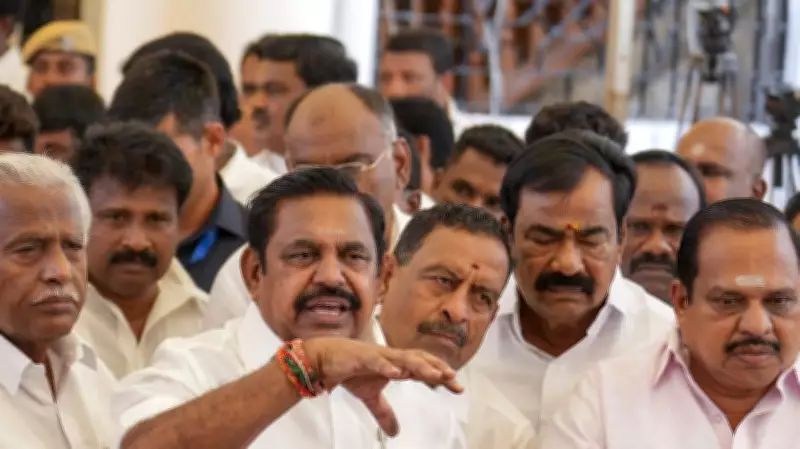
The All India Anna Dravida Munnetra Kazhagam (AIADMK) is witnessing a deepening internal rift as two key factions held separate discussions on Thursday. The developments come amid growing tensions within the party, with both sides claiming support from a majority of party legislators.
Current Strength of Factions
At present, former Tamil Nadu Chief Minister Edappadi K. Palaniswami has the support of 22 MLAs in the state assembly. On the other hand, the rebel faction led by senior leaders K. A. Sengottaiyan and C. V. Shanmugam is backed by 25 AIADMK legislators. The rebel group also includes prominent leaders such as former ministers K. P. Munusamy and S. P. Velumani.
Separate Meetings Held
The Palaniswami faction held a meeting at the party headquarters in Chennai, where they discussed organizational matters and strategies to strengthen the party. Meanwhile, the Velumani-led group convened at a private resort on the outskirts of the city, deliberating on the future course of action and asserting their claim over the party's leadership.

Both factions have been at loggerheads since the party's defeat in the 2026 Tamil Nadu assembly elections. The internal strife has intensified over the past few weeks, with each side accusing the other of working against the party's interests.
Leadership Claims
Palaniswami, who served as Chief Minister from 2017 to 2021, has been projecting himself as the rightful leader of the AIADMK. However, the rebel faction argues that the party needs a change in leadership to revive its fortunes. The Velumani camp has been demanding a transparent election for the party's top post.
The party's internal crisis has also drawn attention from the BJP, which is a key ally of the AIADMK in the state. Sources indicate that the BJP leadership is closely monitoring the situation and may attempt to mediate between the warring factions to prevent a split.
Political analysts believe that the ongoing feud could have significant implications for the AIADMK's future in Tamil Nadu politics. With both factions refusing to back down, the party faces the risk of a formal split, which could further weaken its position ahead of the next assembly elections.