AIADMK Accuses Chief Minister MK Stalin of Employing 'Team Tamil Nadu vs Delhi' Narrative as Pre-Election Diversion Tactic
In a significant political development from Chennai, the AIADMK has launched a sharp critique against Tamil Nadu Chief Minister MK Stalin, alleging that his recent "Team Tamil Nadu vs Team Delhi" narrative represents a calculated diversion tactic deployed ahead of the crucial upcoming polls. The opposition party contends that this rhetoric is designed to mislead voters and shift focus from substantive governance issues.
Udhayakumar Labels CM's Remarks as Political Gimmickry
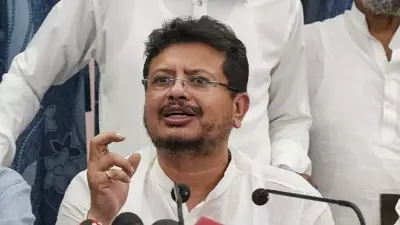
Deputy Leader of Opposition R B Udhayakumar, speaking on Thursday, directly addressed Stalin's comments made at a DMK booth agents' conference. The Chief Minister had asserted that "Tamil Nadu will be ruled by Delhi if AIADMK was voted to power." Udhayakumar categorically dismissed this statement as a political gimmick intended to deceive the people of Tamil Nadu.
"It would be a 'people's government' if AIADMK was voted to power," Udhayakumar emphasized, underscoring his party's commitment to grassroots governance. In a video statement, he elaborated that the citizens of Tamil Nadu have decisively resolved to terminate what he termed "dynastic politics" and are rallying behind AIADMK General Secretary Edappadi K Palaniswami to establish this people-centric administration.

"Stalin will realize this truth when the election verdict is out," Udhayakumar declared confidently, predicting a favorable outcome for the AIADMK in the impending electoral battle.
Internal AIADMPerspectives Reveal Nuanced Stance on Delhi Remarks
While Udhayakumar vehemently criticized Stalin's narrative, another senior AIADMK leader, Dindigul C Sreenivasan, presented a more measured perspective on the "Delhi government" remarks. Sreenivasan suggested that the comment need not be taken with excessive seriousness, adopting a pragmatic view of center-state relations.
"Even if it's Delhi government, let it be," Sreenivasan told reporters, arguing that Tamil Nadu's development is inherently linked to central support for critical infrastructure projects. He highlighted the state's dependence on the central government for railway initiatives and various development schemes, implying that cooperative federalism is essential for progress regardless of political narratives.
This internal variation within the AIADMK response illustrates the party's multifaceted strategy: simultaneously challenging the ruling DMK's campaign tactics while acknowledging the practical realities of governance that require collaboration with the central authorities in Delhi.
Political Context and Electoral Implications
The exchange occurs against the backdrop of intensifying political campaigns in Tamil Nadu, where both major Dravidian parties are positioning themselves for the upcoming elections. The AIADMK's accusations reflect a broader attempt to frame the DMK as relying on scare tactics rather than substantive policy debates.
Key elements of this political confrontation include:
- AIADMK's assertion that Stalin's narrative diverts attention from governance failures
- The opposition's promotion of Edappadi K Palaniswami as the alternative for a "people's government"
- Differing views within AIADMK on how to address the central government relationship issue
- The underlying tension between regional autonomy rhetoric and practical governance requirements
As Tamil Nadu approaches election season, these exchanges are likely to intensify, with both parties refining their messages to resonate with voters concerned about autonomy, development, and effective administration.