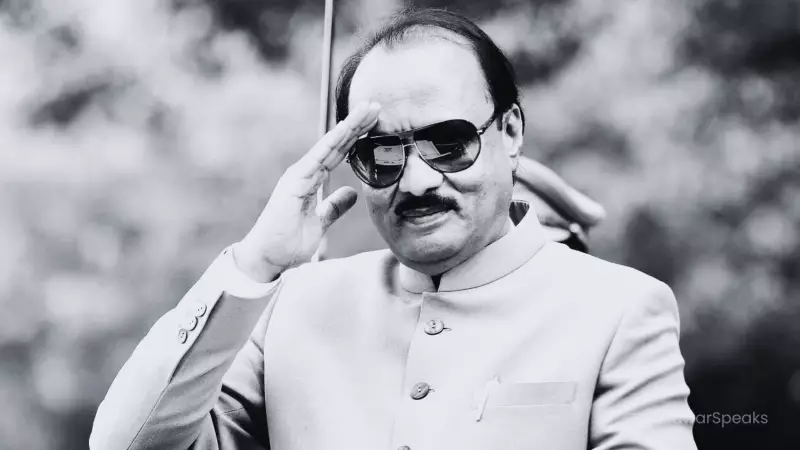
NEW DELHI: He was affectionately called 'dada' by his supporters, while opponents viewed him as a persistent headache—a workhorse politician whose sharp tongue was matched only by his sharper political instincts. Ajit Pawar's relentless pursuit of the top position in Maharashtra politics always carried the urgency of a man who felt time was slipping away. A six-time deputy chief minister, he was both feared for his authority and respected for his administrative prowess, though his rough edges often drew criticism. Throughout his career, Pawar seemed perpetually on the verge of claiming the chief minister's chair, yet that ultimate goal remained just beyond his grasp. On Wednesday morning, his life came to a sudden and tragic end in a plane crash near Baramati, his political stronghold, leaving behind a legacy defined as much by his immense influence as by his unfulfilled ambitions.
The Tragic Incident and Immediate Aftermath
Ajit Pawar, aged 66, was traveling from Mumbai to Baramati to campaign for local elections when the aircraft crashed during its approach. All five individuals on board lost their lives, including two of his staff members and two crew members. Authorities have launched investigations into the crash, though the exact cause remains unconfirmed at this time. This sudden demise has sent shockwaves through Maharashtra's political landscape, cutting short the career of one of its most formidable operators.
Beyond the Headlines: A Political Legacy Forged in Grassroots
Beyond the immediate tragedy lies a larger narrative of a grassroots leader who mastered the intricate power networks of rural Maharashtra. Pawar repeatedly positioned himself at the doorstep of ultimate power, only to watch the chief ministership elude him. His story is one of strategic maneuvering, organizational strength, and personal ambition. Here are five key turning points that defined his life and political trajectory:

1. Built in Baramati, Forged in the Co-operative Belt
Ajit Pawar's political education did not begin in television studios or urban centers; it was rooted in Maharashtra's most enduring power factory—the sugar and co-operative ecosystem. Born on July 22, 1959, to Asha and Anantrao Pawar, he entered politics in 1982 when he was elected to a sugar factory board, following in the footsteps of his uncle, Sharad Pawar. The Baramati brand provided him with a unique advantage: a constituency that functioned like an impregnable fortress and a political machinery that operated year-round. His rise was not a product of accidental charisma but rather the result of meticulous organizational engineering.
2. Deputy CM and the Punctual 'Workaholic'
Pawar served as deputy chief minister multiple times across various shifting coalitions, holding the record with six stints. He earned a reputation as a punctual workaholic, a trait that stood out in a political culture often criticized for delays. This phase solidified his identity as an administrator who could "deliver" results. Even his rivals grudgingly acknowledged his deep understanding of the state's bureaucratic machinery and his ability to push it effectively. His command over finance and planning ministries further cemented his authority. Notably, he was expected to table the Maharashtra budget for 2026–27 next month, highlighting his ongoing influence.
3. Controversies That Bruised but Did Not Break Him
While supporters viewed Pawar as a decisive doer, critics saw a leader who attracted controversies as routinely as he amassed power. Allegations linked to the irrigation scam and later issues surrounding his son Parth's land deal became recurring political ammunition used against him. Yet, through it all, he consistently managed to remain standing. His most infamous public controversy occurred in 2013 when he mocked the state's drought crisis during a rural gathering in Indapur, sparking widespread outrage and forcing him to issue an apology. This episode revealed the dual aspects of his persona: politically astute yet often unfiltered.

4. The 2019 Dawn Swearing-In and Unabashed Power Hunger
In November 2019, Pawar executed a political move that elevated him from a state heavyweight to a national storyline: a surprise early-morning swearing-in alongside Devendra Fadnavis. He became deputy chief minister in a government that lasted barely two days, but its impact resonated far longer. This was not merely an act of opportunism; it was a clear signal of his ambitions. Pawar never concealed his desire for the chief minister's post. That morning was widely interpreted as him stepping out of the shadow of being the "uncle’s heir" and asserting himself as someone who could seize power independently. Although the move did not succeed, it permanently cemented his image as Maharashtra's most unpredictable power player.
5. The 2023 Split from Sharad Pawar and Subsequent Reunion
In July 2023, Ajit Pawar orchestrated the most significant rupture of his career by rebelling against Sharad Pawar. He walked away with a majority of MLAs and aligned with the BJP-Shiv Sena government. This move did not just split a political party; it fractured a family legacy. However, politics often disregards personal drama. After a disappointing Lok Sabha performance where his faction secured only one seat, he rebounded strongly in the assembly polls, winning 41 seats and temporarily silencing his critics. Then came another twist: ahead of civic polls in Pune and Pimpri-Chinchwad, Ajit Pawar and Sharad Pawar were seen strategically reuniting to prevent vote-splitting. Pawar publicly justified this as practical politics, arguing that internal conflict would only benefit their opponents. This "reunion" fueled speculation about a potential future merger of the factions—a possibility that now remains unresolved following his sudden death.
A Legacy of Relentless Political Operation
As a six-time deputy chief minister, Ajit Pawar remained Maharashtra's most relentless power operator, feared by rivals and valued by allies. He played pivotal roles in shaping governments, splitting parties, and rewriting political equations, often with overnight decisions. While he never ascended to the chief minister's position, few in Maharashtra's political arena controlled the field with the same intensity and strategic acumen that he demonstrated throughout his career. His sudden departure leaves a void in the state's political dynamics, marking the end of an era defined by ambition, resilience, and an unwavering pursuit of power.