The Political Odyssey of Ajit Pawar: A Legacy of Power Without the Crown
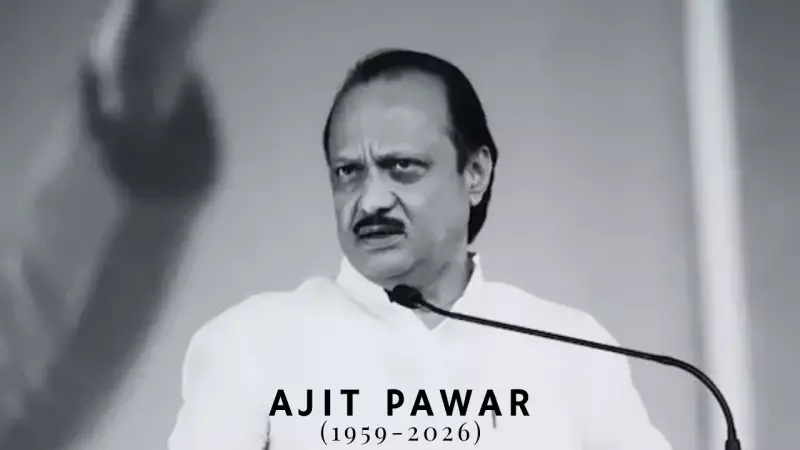
PUNE: Ajit Pawar's remarkable political journey unfolded across more than four decades, encompassing six distinct terms as deputy chief minister, participation in multiple state governments, and countless intricate power negotiations. Yet, despite his formidable influence and experience, the one position he openly coveted—the role of Maharashtra's chief minister—remained tantalizingly out of reach until his tragic demise.
A Grassroots Leader's Rise and Tragic End
The 66-year-old political stalwart, affectionately known as "Dada" by supporters and colleagues alike, met his untimely end in a devastating plane crash on Wednesday in Baramati. This very constituency served as the foundation of his political ascent, sustained his authority throughout his career, and ultimately became the poignant setting for his final chapter. From the influential sugar cooperatives of western Maharashtra to the highest corridors of state power, Ajit Pawar established himself as a political survivor, a master strategist, and an indefatigable workhorse. Many political observers described him as the most powerful leader in Maharashtra's history who never wore the chief minister's crown.
The Unfulfilled Ambition: A Story of Near Misses
Ajit Pawar never made any secret of his burning ambition to lead the state. At a significant public event in May last year, attended by Chief Minister Devendra Fadnavis and former chief ministers Narayan Rane and Ashok Chavan, Pawar spoke with striking candor. He openly admitted that becoming chief minister represented his "strong desire," but lamented that there was simply no yog—no favorable alignment of timing and circumstance. This elusive opportunity slipped through his fingers on multiple critical occasions throughout his career.

In 1999, he stood at the threshold of the chief minister's office, but political calculations dictated that the party with the most legislators would claim the position. Since Congress held the maximum seats at that time, Vilasrao Deshmukh was selected instead. The 2009 assembly elections brought renewed hope when the Nationalist Congress Party secured more seats than Congress, making Ajit Pawar's elevation appear imminent. However, a complex power-sharing formula once again delivered the chief minister's post to Congress, with NCP receiving key ministerial portfolios instead. A visibly disappointed Pawar accepted this decision, later publicly acknowledging that his party leadership had made an error in judgment. NCP leaders would subsequently admit that this arrangement was deliberately designed to keep him away from the top position.
His brief tenure as deputy chief minister alongside Devendra Fadnavis in November 2019 proved equally fleeting, lasting merely 48 hours before the government collapsed almost immediately after being sworn into power.
From Cooperatives to Corridors of Power
Born on July 22, 1959, in Deolali Pravara within Ahmednagar district to Asha and Anantrao Pawar, Ajit Pawar's political foundation was built through the cooperative movement—the traditional launchpad for leadership in western Maharashtra. He entered public life in 1982, winning election to the board of a local sugar factory, and later assumed leadership of the Pune District Central Cooperative Bank, thereby constructing a formidable organizational base that would serve him throughout his career.
His formal electoral debut occurred in 1991 when he was elected to the Maharashtra Legislative Assembly from Baramati—a Pawar family stronghold he would represent repeatedly over the subsequent three decades. He also served briefly as a Lok Sabha MP, vacating the seat for his uncle Sharad Pawar when the latter joined P V Narasimha Rao's Cabinet as defence minister.
Throughout his extensive career, Ajit Pawar held virtually every key ministerial portfolio, most notably finance and planning, earning widespread recognition as a no-nonsense administrator with an exceptional grip on numbers and bureaucratic files. Known for his remarkable punctuality and long working hours, he often began his day as early as 6 am—a rarity in the world of politics.

Controversies, Candid Remarks, and Political Resilience
Pawar's career was punctuated by significant controversies, yet also marked by extraordinary political resilience. He weathered serious allegations linked to the irrigation scam and later faced criticism over a land deal involving his son Parth Pawar, emerging from each challenge with his political standing largely intact.
Blunt to the point of being occasionally abrasive, Pawar was renowned for his unfiltered remarks, particularly before rural audiences. In 2013, his comments mocking drought-hit farmers and power shortages triggered massive public backlash, forcing him to issue a public apology. Yet this same candor endeared him to countless supporters, who viewed him as a leader who spoke his mind authentically and delivered tangible development results.
Breaking from Sharad Pawar's Shadow
The most defining turn in his career arrived in July 2023 when Ajit Pawar orchestrated a dramatic split within the Nationalist Congress Party, rebelling against his uncle and party founder Sharad Pawar. Backed by a majority of NCP MLAs, he joined the BJP-Shiv Sena government led by Eknath Shinde, successfully securing the party's name and symbol for his faction.
Despite suffering a setback in the 2024 Lok Sabha polls—where his faction won just one seat—Pawar staged a spectacular comeback months later, winning 41 assembly seats in alliance with the BJP, while Sharad Pawar's NCP (SP) managed only 10. Following this victory, Ajit Pawar firmly entrenched himself within Maharashtra's power structure, repeatedly insisting that his alliance with the BJP was driven by development priorities rather than ideological compromise.
Baramati: The Cradle of Power and Final Irony
Nowhere was his political dominance more evident than in Baramati. During the 2024 assembly elections, Pawar defeated his grandnephew Yugendra Pawar, the NCP (SP) candidate, by a staggering margin of 1,00,899 votes—a verdict widely interpreted as the electorate choosing Ajit Pawar over Sharad Pawar in their most personal political confrontation. After this decisive victory, his wife and Rajya Sabha MP Sunetra Pawar summarized the situation bluntly: "Baramatikars are Dada's true family."
On Wednesday, that same town witnessed his tragic death. The irony proved difficult to overlook—Baramati, the cradle of his political power and personal identity, became the place where his remarkable journey concluded. For a man who ruled the corridors of power but never occupied the chief minister's office, Ajit Pawar's life closed where it began politically, leaving behind a complex legacy of relentless ambition, substantial authority, and a crown that remained forever beyond his grasp.