

Farmers in Amaravati Express Anxiety Over Unclear Temple Land Acquisition Guidelines
Farmers who have been cultivating temple Inam lands in the capital region of Amaravati are experiencing significant anxiety due to the state government's failure to issue clear guidelines regarding the acquisition of these lands under the second phase of the Land Pooling Scheme, commonly referred to as LPS-II. This lack of clarity has created a pervasive sense of uncertainty among hundreds of farmers who have depended on these lands for their livelihoods over many decades.
Extent of Cultivated Temple Lands and Historical Context
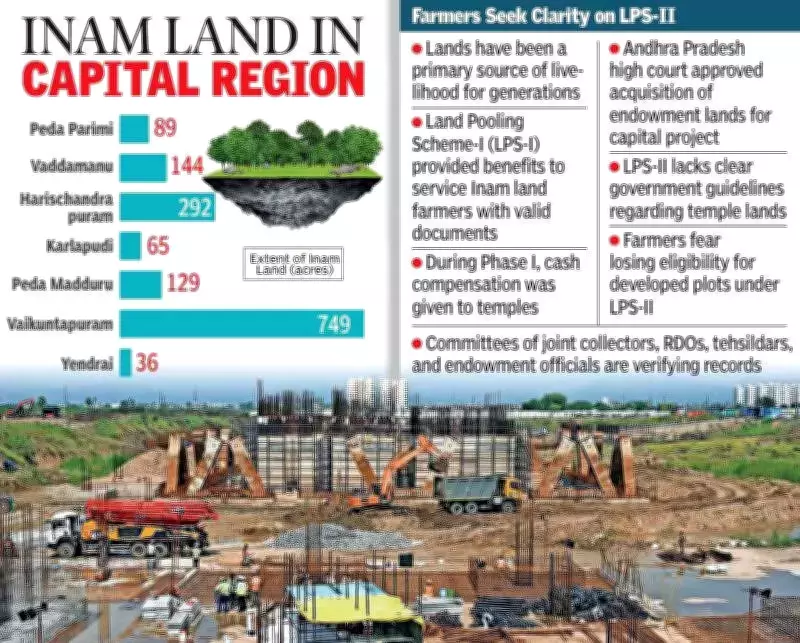
Local estimates indicate that approximately 1,500 acres of temple Inam lands are currently under active cultivation across several villages within the proposed LPS-II area. For multiple generations, these agricultural plots have served as the primary source of income and sustenance for the farming communities. With the ongoing expansion of the capital development plan, the future of these cultivators has emerged as a critical and pressing concern that demands immediate attention from authorities.
During the initial phase of the Land Pooling Scheme, the government successfully extended LPS benefits to farmers who were cultivating service Inam lands, provided they could produce valid documentation proving long-term occupation. To prevent any potential disputes, cash compensation was concurrently provided to the respective temples involved. This well-structured arrangement ensured that both the cultivators and the temple authorities received fair benefits, facilitating a smoother implementation process.

Legal Framework and Current Challenges
The government had previously secured permission from the Andhra Pradesh High Court to acquire endowment lands specifically for the capital project, which enabled Phase-I to proceed without major legal hurdles. However, farmers now report that the situation remains markedly unclear for LPS-II. Despite numerous requests and formal representations made by the affected parties, they assert that the authorities have not issued any specific policy or detailed guidelines outlining how temple Inam lands under cultivation will be treated during this second phase.
Many cultivators express deep-seated fears that the absence of a clear and transparent policy could potentially jeopardize their eligibility for the LPS benefits that were granted to farmers in the first phase. These benefits include developed residential and commercial plots, which are crucial for their future economic stability and well-being.
Voices from the Ground and Administrative Actions
"Neither the minister nor the officials are giving any clarity on the issue. The uncertainty is giving us sleepless nights," stated Jammula Venkatramaiah, a farmer from Vaddamanu, echoing the widespread concerns shared by numerous farmers throughout the capital region. His sentiment highlights the emotional and psychological toll that this prolonged ambiguity is taking on the agricultural community.
In response to the situation, committees headed by joint collectors have been appointed in the districts of Guntur and Palnadu. These committees, which include Revenue Divisional Officers (RDOs), tehsildars, endowment officials, and survey settlement officers, have been tasked with verifying temple land records meticulously and submitting a comprehensive report to the government. This step is seen as a preliminary measure to gather accurate data, but farmers await concrete policy decisions.
Detailed Breakdown of Inam Land Extents in Key Villages
The following list provides a detailed overview of the extent of Inam lands in specific villages within the capital region, underscoring the scale of the issue:
- Peda Parimi: 89.16 acres
- Vaddamanu: 143.99 acres
- Harischandrapuram: 292.21 acres
- Karlapudi: 64.86 acres
- Peda Madduru: 128.59 acres
- Vaikuntapuram: 748.99 acres
- Yendrai: 35.92 acres
As the capital development plan continues to advance, the resolution of this issue remains paramount for ensuring the welfare of the farming community and the successful implementation of the Land Pooling Scheme in Amaravati.






