Andhra Pradesh Assembly Implements Digital Attendance System to Enhance Legislative Accountability
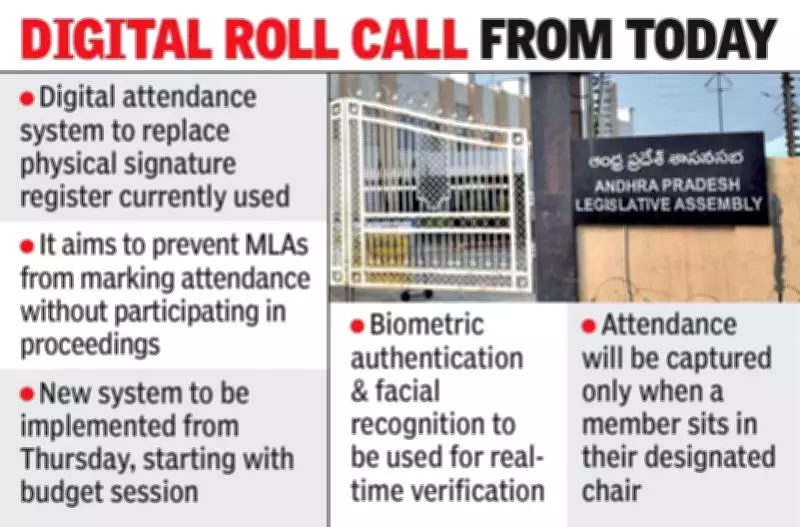
In a significant move towards modernizing legislative procedures, Speaker Ch Ayyanna Patrudu has initiated the implementation of a fully digital attendance system for Assembly members in Vijayawada. This innovative system will replace the traditional physical signature register, aiming to address long-standing concerns about legislators marking attendance without actively participating in House proceedings. The new digital mechanism is scheduled to be operational from Thursday, marking a pivotal shift in how legislative presence is monitored and verified.
Technological Integration for Real-Time Verification
According to Assembly Secretary-General Suryadevara Prasanna Kumar, the digital attendance system will incorporate advanced biometric authentication and facial recognition technology. These features are designed to ensure real-time verification of members' presence inside the House, eliminating the possibility of proxy attendance. Attendance details will be digitally displayed within the assembly premises, providing greater transparency and accessibility to the legislative functioning.
A senior official confirmed that Speaker Patrudu has thoroughly reviewed the technical modalities and directed officials to implement the system starting from the upcoming budget session. This decision stems from persistent concerns that some legislators have allegedly appended their signatures in the attendance register without remaining present for the day's business. The new system will capture attendance only when a member is physically seated in their designated chair within the assembly, thereby plugging existing loopholes and reinforcing legislative discipline.

Speaker's Advocacy for Accountability and "No Work-No Pay" Principle
Speaker Patrudu has consistently maintained that the principle of "no work–no pay" should apply to legislators who abstain from sessions without valid reasons. He advocates that public representatives, much like employees in any institution, must be held accountable for their participation, especially considering the substantial public funds expended on conducting assembly sittings. This digital reform aligns with his vision of enhancing legislative efficiency and ensuring that elected officials fulfill their constitutional duties.
Political Implications and Potential Controversy
The proposed digital attendance system is expected to trigger significant political controversy, particularly concerning opposition parties. Members of the YSRCP have abstained from House proceedings for nearly two years, raising questions about their legislative engagement. With strict monitoring through biometric and facial recognition systems, continued absence could potentially lead to disqualification under existing legislative rules.
As per current regulations, the Speaker is entitled to disqualify any member who abstains from the House for 60 consecutive days of proceedings. Deputy Speaker K Raghu Ramakrishnam Raju has already demanded that YSRCP leader Jagan Mohan Reddy and his party members attend sessions to avoid such disqualification. However, Jagan and his legislators have consistently skipped the assembly, primarily demanding the grant of Leader of Opposition (LoP) status.
While treasury benches reportedly support this reform in the interest of transparency and efficiency, opposition parties may perceive it as a pressure tactic. Historical precedents add complexity to the situation: Jagan skipped the assembly for over two years during his padayatra between 2018-19, returning only after coming into power. Similarly, former Chief Minister Chandrababu Naidu boycotted the House for nearly two years between 2021-24, returning only upon assuming the chief ministerial role.
Broader Impact on Legislative Functioning
The introduction of a digital attendance system represents a broader effort to modernize legislative practices and enhance public trust in democratic institutions. By leveraging technology, the Andhra Pradesh Assembly aims to set a precedent for other state legislatures in India, promoting greater accountability and reducing absenteeism among elected representatives.

This reform underscores the evolving nature of legislative governance, where technological advancements are increasingly integrated to ensure ethical conduct and operational efficiency. As the system becomes operational, its effectiveness in curbing absenteeism and fostering a more disciplined legislative environment will be closely monitored by stakeholders across the political spectrum.