Andhra Pradesh has established itself as a leading example for other Indian states in the critical areas of energy efficiency and conservation, according to Chief Secretary K Vijayanand. The state's success is attributed to its proactive policies, effective program implementation, and a sustained commitment from industries, institutions, and urban local bodies.
Foundations of Success: From LED Lights to PAT Cycles
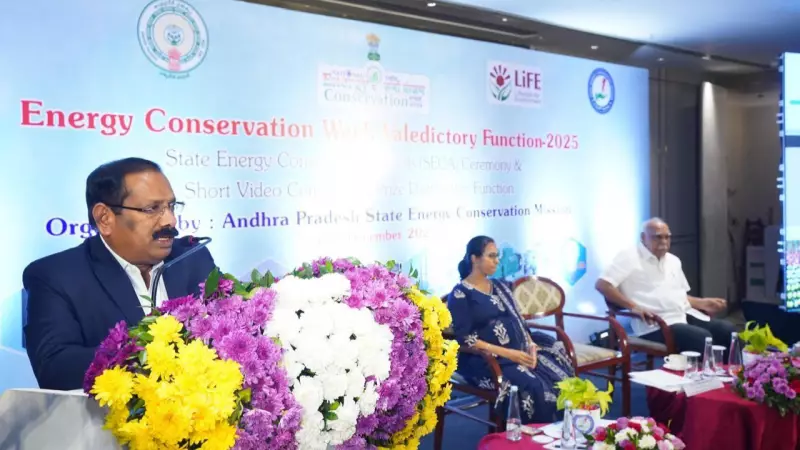
Addressing the National Energy Conservation Week–2025 celebrations organized by the Andhra Pradesh State Energy Conservation Mission (APSECM), Vijayanand detailed the state's journey. He traced the origins to a structured approach initiated in 2015. A key early project was the conversion of street lighting in Visakhapatnam to LED lights after the devastating Hudhud cyclone, which resulted in impressive energy savings of 40–45%.
With support from the Energy Efficiency Services Limited (EESL) and the Bureau of Energy Efficiency (BEE), the state expanded this effort to cover over two crore households with LED lighting, achieving nearly 30% savings. In the agricultural and industrial sectors, the adoption of energy-efficient motors and interventions under the Perform, Achieve and Trade (PAT) scheme have been highly successful. The state has completed three PAT cycles, leading to cumulative energy savings of about 1.35 million tonnes of oil equivalent (MTOE).

Policy Framework and Ambitious Green Goals
Vijayanand emphasized that technology adoption was bolstered by strong policy measures. The state introduced mandatory energy-efficient and green building norms, which have led to approvals for 2,000–3,000 green buildings. Looking ahead, he highlighted the ambitious Integrated Clean Energy Policy, which aims for Net Zero carbon emissions.
The policy sets a formidable target of generating 160 GW of green energy. Significant progress has already been made, with nearly 100 GW of this capacity already approved. The Chief Secretary also stressed the importance of public awareness, noting that about 1,550 Energy Literacy Clubs have been established in schools to instill the value of conservation as a shared social responsibility.
Celebrating Achievements and Fostering Future Stewards
The event also served as the valedictory function for the State Energy Conservation Awards. Chief Secretary Vijayanand and APSECM's MD & CEO, S Nagalakshmi, presented awards to winners from schools, universities, industries, and commercial establishments. They specifically appreciated the creativity of students who won a short video competition on energy conservation.
Nagalakshmi detailed the week-long activities, which included large-scale awareness rallies, school-level programs, training for industries and farmers, and a three-day exhibition on EV technologies. She appealed to students to promote the use of BEE Star-rated appliances and judicious consumption of electricity and water at home, helping to embed a culture of conservation in every household.
APSECM, as the State Nodal Agency, has been implementing the State Energy Efficiency Action Plan since 2017 with cross-sector support. CMD of APCPDCL, P Pulla Reddy, also congratulated the award-winning institutions and students, underscoring the collective effort behind the state's exemplary status in energy conservation.