

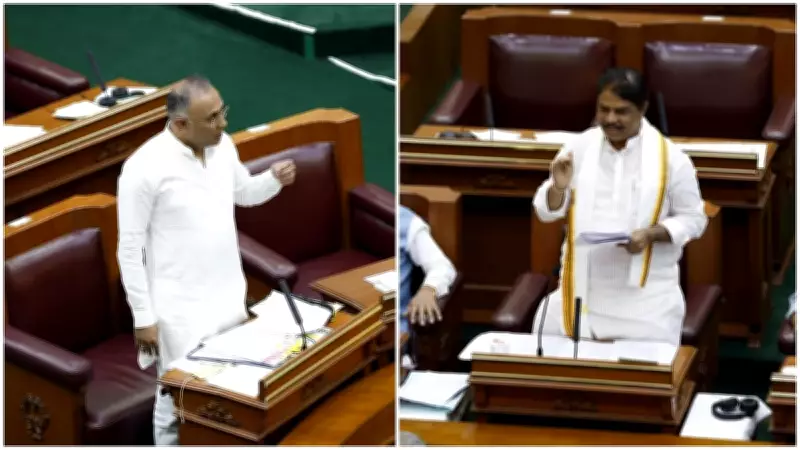
R Ashoka Launches Scathing Attack on Dinesh Gundu Rao Over Karnataka's Healthcare Crisis
In a sharp political confrontation, Bharatiya Janata Party leader R Ashoka has launched a blistering critique against Karnataka Health Minister Dinesh Gundu Rao, accusing his department of severe systemic failures while personally targeting the minister's fitness for office. The controversy erupted during a heated legislative session where Ashoka presented what he described as alarming evidence of healthcare deterioration across the state.
'Health Minister is Healthy, But His Department is Sick': Ashoka's Stinging Rebuke
R Ashoka delivered his most cutting remark by stating, 'The health minister himself may be in good physical condition, but the department he oversees is critically ill and requires immediate intensive care.' This metaphorical attack highlighted what opposition leaders claim is a growing disconnect between ministerial well-being and departmental dysfunction.
The BJP leader substantiated his allegations by pointing to widespread shortages of essential medicines across government healthcare facilities and a significant deficit of medical professionals in rural and urban centers alike. According to Ashoka's presentation, these deficiencies have created what he termed 'a healthcare emergency that the current administration seems unwilling or unable to address.'

Dinesh Gundu Rao's Startling Revelation About Primary Health Centre Closures
In a dramatic counter during the same session, Health Minister Dinesh Gundu Rao made a startling admission that has intensified the political storm. Rao disclosed, 'I have with me a list of 270 primary health centres that the government is preparing to shut down due to various operational challenges and resource constraints.'
This revelation about potential PHC closures has sparked immediate concern among healthcare advocates and opposition members who argue that shuttering these facilities would disproportionately affect vulnerable populations in remote areas. The minister's statement appears to confirm systemic issues within Karnataka's public health infrastructure that opposition leaders have been highlighting for months.
Deepening Healthcare Crisis in Karnataka: Medicines, Doctors, and Infrastructure
The political exchange has brought to light multiple dimensions of what appears to be a deepening healthcare crisis in Karnataka:
- Medicine Shortages: Reports indicate consistent stockouts of essential drugs at government hospitals and clinics
- Doctor Vacancies: Significant unfilled positions for medical professionals, particularly in rural PHCs
- Infrastructure Strain: Aging facilities and equipment that compromise patient care quality
- Accessibility Concerns: Potential closure of 270 PHCs would severely limit healthcare access for millions
Healthcare experts monitoring the situation warn that these combined factors create a perfect storm that could undermine public health outcomes across the state if not addressed urgently.
Political Implications and Public Health Consequences
This healthcare debate occurs against the backdrop of increasing political polarization in Karnataka, with the BJP seeking to capitalize on perceived governance failures by the ruling party. The timing is particularly sensitive as the state prepares for upcoming local elections where public services often become central campaign issues.
Public health advocates emphasize that beyond political point-scoring, the situation requires immediate bipartisan attention. The potential closure of hundreds of primary health centres represents not just a political controversy but a genuine public health emergency that could have life-or-death consequences for Karnataka's most marginalized communities.
As the controversy continues to unfold, all eyes remain on how Health Minister Dinesh Gundu Rao's department will respond to these allegations and whether concrete measures will be implemented to address the medicine shortages, doctor vacancies, and infrastructure challenges plaguing Karnataka's healthcare system.






